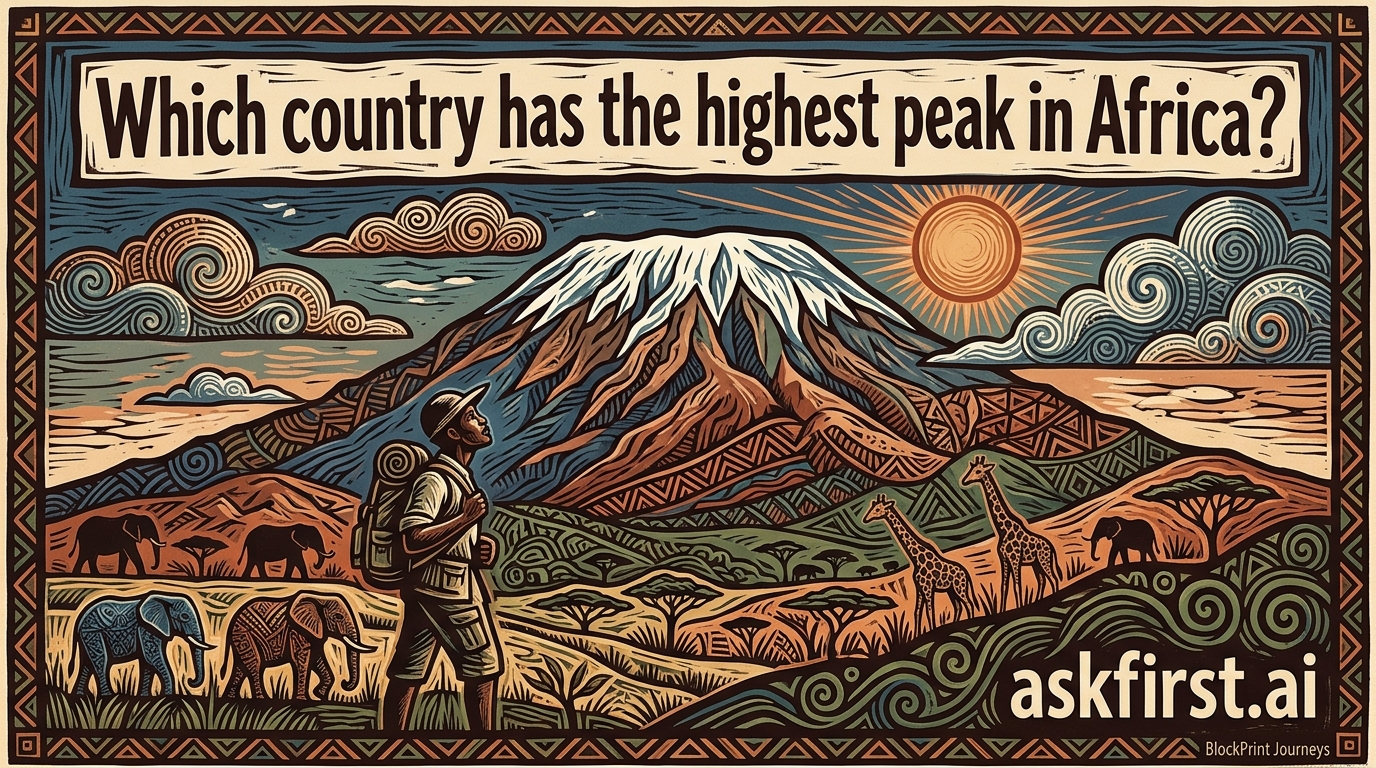
The Highest Peak in Africa: Mount Kilimanjaro
The continent of Africa is home to a diverse array of geological features, but none commands as much reverence as Mount Kilimanjaro. Located in the East African nation of Tanzania, specifically in the Kilimanjaro Region near the border with Kenya, this dormant stratovolcano holds the title of the highest peak on the African continent.
Geological and Geographical Profile
Mount Kilimanjaro rises approximately 5,895 meters (19,341 feet) above sea level. It is not merely a single mountain but a massive volcanic massif composed of three distinct volcanic cones: Kibo, Mawenzi, and Shira.
- Kibo: The highest and youngest cone, featuring the famous "Uhuru Peak," which serves as the summit.
- Mawenzi: A rugged, jagged peak that is technically challenging and no longer active.
- Shira: The oldest cone, which has collapsed to form a high-altitude plateau.
Geologically, Kilimanjaro is a stratovolcano that formed roughly 2.5 million years ago. While Mawenzi and Shira are extinct, Kibo is dormant and could potentially erupt again, though it has remained quiet for thousands of years.
Climbing and Practical Guide
Mount Kilimanjaro is often referred to as a "walk-up" mountain because it does not require technical mountaineering skills (like ropes or ice axes) to reach the summit. However, the extreme altitude poses a significant risk of Acute Mountain Sickness (AMS).
- Choose a Route: There are seven official trekking routes, including Marangu (the "Coca-Cola" route), Machame (the "Whiskey" route), Lemosho, Rongai, Shira, Umbwe, and the Northern Circuit.
- Acclimatization: The key to success is the "pole pole" (slowly, slowly) approach. Most professional guides recommend a minimum of 6 to 8 days on the mountain to allow the body to adjust to the thinning oxygen levels.
- Permits and Guides: By Tanzanian law, all climbers must be accompanied by a licensed guide and a crew of porters. Independent trekking is prohibited within Kilimanjaro National Park.
- Best Time to Visit: The driest months, which offer the best visibility and climbing conditions, are typically January to March and June to October.
Pros, Cons, and Environmental Concerns
Pros:
- Accessibility: No technical climbing skills required.
- Ecological Diversity: Hikers pass through five distinct climate zones: cultivated land, rainforest, heath and moorland, alpine desert, and the arctic summit zone.
Cons:
- Cost: Expeditions can be expensive due to park fees, guide wages, and equipment requirements.
- Altitude Risk: The summit is high enough that oxygen saturation drops significantly, leading to potential health emergencies.
Environmental Trends:
The most pressing issue regarding Kilimanjaro is the rapid recession of its glaciers. Scientists estimate that the ice cap has shrunk by more than 80% since 1912. Climate change is the primary driver of this loss, and researchers predict that the iconic glaciers may disappear entirely within the next few decades, significantly altering the mountain's character and the surrounding hydrological systems.
In summary, Tanzania is the proud home of Africa’s highest peak, a destination that balances physical challenge with unparalleled natural beauty.