The Global Consequences of Climate Change: A Comprehensive Analysis
Climate change represents the most significant existential threat to the stability of the Earth's biosphere and human civilization in the 21st century. Driven primarily by the anthropogenic emission of greenhouse gases (GHGs) such as carbon dioxide, methane, and nitrous oxide, the phenomenon has triggered a rapid warming of the planet. While the climate has naturally fluctuated throughout geological history, the current rate of change is unprecedented. The drawbacks of this shift are profound, multifaceted, and interconnected, affecting everything from global economic stability to the basic biological survival of countless species.
1. Disruption of Hydrological Cycles and Water Scarcity
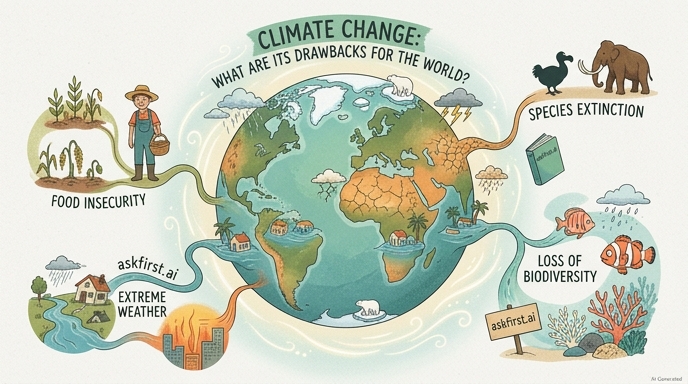
One of the most immediate drawbacks of climate change is the radical destabilization of global water cycles. As the atmosphere warms, its capacity to hold moisture increases, leading to a "more intense" hydrological cycle. This manifests in two extreme, contradictory ways:
- Intensified Droughts: Regions already prone to aridity, such as the Mediterranean, sub-Saharan Africa, and parts of the American Southwest, are experiencing prolonged, multi-year droughts. This leads to the depletion of aquifers, the failure of agricultural systems, and severe potable water shortages.
- Extreme Precipitation Events: Conversely, increased atmospheric moisture leads to catastrophic flooding. When rain does fall, it often arrives in torrents that overwhelm existing drainage infrastructure, causing soil erosion, destruction of property, and the contamination of clean water sources.
2. Loss of Biodiversity and Ecosystem Collapse
The rate of modern climate change is outpacing the adaptive capacity of many species. Ecosystems are essentially "mismatched" with their environments as temperatures shift.
- Coral Reef Bleaching: The oceans absorb approximately 90% of the excess heat generated by GHG emissions. This leads to ocean acidification and rising temperatures, which cause coral reefs—the "rainforests of the sea"—to bleach and die. This loss threatens the survival of roughly 25% of all marine life.
- Phenological Mismatches: Many species rely on environmental cues (such as temperature) to migrate, hibernate, or bloom. When these cues shift, the timing between pollinators and flowers, or predators and prey, becomes desynchronized, leading to population crashes that ripple throughout the food chain.
3. Socio-Economic and Geopolitical Instability
Climate change acts as a "threat multiplier," exacerbating existing political and social tensions.
- Climate Migration and Displacement: As sea levels rise due to the thermal expansion of seawater and the melting of polar ice caps, low-lying coastal regions and island nations face the risk of becoming uninhabitable. This is projected to create hundreds of millions of "climate refugees," leading to potential geopolitical friction over borders, resources, and humanitarian aid.
- Food Insecurity: Agriculture is highly sensitive to temperature and precipitation. Heat stress reduces crop yields for staples like wheat, maize, and rice. Simultaneously, the spread of pests and diseases—which thrive in warmer climates—into previously temperate zones threatens global food supply chains, driving up prices and increasing the risk of famine in vulnerable populations.
4. Public Health Crises
The changing climate poses direct and indirect threats to human health that strain global healthcare systems.
- Vector-Borne Diseases: Warmer winters and expanded tropical zones allow disease-carrying vectors, such as mosquitoes and ticks, to migrate into higher latitudes and altitudes. This increases the transmission range of diseases like malaria, dengue fever, Zika, and Lyme disease.
- Heat-Related Mortality: As extreme heatwaves become more frequent and prolonged, the mortality rate among the elderly, the poor, and those working outdoors increases significantly. Urban "heat islands," where concrete and asphalt trap heat, further exacerbate these risks in densely populated cities.
5. Economic Costs of Infrastructure Damage
The financial burden of climate change is staggering. Extreme weather events—hurricanes, wildfires, and floods—are causing billions of dollars in annual damages.
- Asset Depreciation: Coastal real estate faces devaluation as flood risks become permanent. Insurance markets are beginning to collapse in high-risk areas, as private insurers become unable to calculate or cover the risks associated with recurring natural disasters.
- Supply Chain Disruption: Global trade relies on stable weather patterns and infrastructure. Ports, railways, and energy grids are increasingly vulnerable to extreme weather, leading to frequent, costly disruptions in the production and distribution of goods, which in turn fuels global inflation.
Conclusion: The Need for Systemic Adaptation
The drawbacks of climate change are not merely future possibilities; they are current, active realities. The systemic nature of these problems means that a localized change in one region—such as the melting of the Greenland ice sheet—has global consequences for sea-level rise and ocean circulation patterns. Mitigating these drawbacks requires a dual-track strategy: aggressive decarbonization to limit the extent of future warming, and robust adaptation policies to build resilience against the changes that are already "baked into" the climate system. Failure to address these challenges comprehensively will likely lead to a permanent reduction in the standard of living and a significant increase in global human suffering.