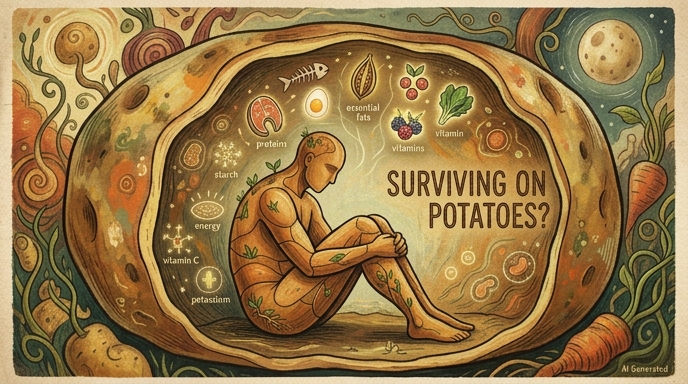
The Feasibility of a Potato-Only Diet: A Comprehensive Nutritional Analysis
The question of whether humans can survive on a diet consisting exclusively of potatoes is a classic inquiry in nutritional science. While the humble potato (Solanum tuberosum) is often dismissed as a mere source of "empty" carbohydrates, it is, in reality, one of the most nutritionally complete staple crops available to humanity. However, while a potato-only diet can sustain life for an extended duration, it is fraught with complexities regarding micronutrient density, protein quality, and long-term metabolic health.
The Nutritional Profile of the Potato
To understand the viability of a potato-only diet, one must first look at the potato’s chemical composition. A medium-sized, skin-on potato contains approximately 160 calories, 4 grams of protein, 37 grams of carbohydrates, and 4 grams of fiber. Crucially, potatoes are rich in essential vitamins and minerals, specifically:
- Vitamin C: A single large potato can provide nearly 50% of the daily recommended intake, which is essential for preventing scurvy.
- Potassium: Potatoes contain more potassium than bananas, which is vital for heart health, nerve signaling, and muscle contraction.
- Vitamin B6: Essential for brain development and immune function.
- Complex Carbohydrates: These provide the primary fuel source for the human body, specifically for the brain and central nervous system.
When consumed with the skin intact, the potato provides a significant amount of dietary fiber, which aids in digestion and helps regulate blood sugar levels, preventing the rapid glucose spikes associated with refined grains.
The Protein Factor: Can You Build Muscle?
One of the primary concerns regarding a mono-diet is protein quality. The human body requires nine essential amino acids that it cannot synthesize on its own. While potatoes are not a "complete" protein source in the same way that meat, eggs, or soy are, they actually contain all nine essential amino acids in small amounts.
The protein content in potatoes is relatively low—a person would need to consume a massive volume of potatoes (often 10–15 pounds) to meet the standard daily protein requirements for an active adult. While the protein quality is surprisingly high—the amino acid profile is actually superior to that of many grains—the sheer caloric intake required to get enough protein could lead to a significant caloric surplus, potentially resulting in weight gain if the individual is not highly active.
Critical Micronutrient Deficiencies
While a potato-only diet can prevent death, it is not optimized for long-term "thriving." Several critical nutrients are either absent or present in insufficient quantities:
- Fat-Soluble Vitamins (A, D, E, K): Potatoes contain virtually no fat. Fat-soluble vitamins require dietary lipids for absorption. Without a source of fat, the body will eventually develop deficiencies in vitamins A, D, E, and K, leading to impaired vision, weakened bone density, and compromised immune responses.
- Vitamin B12: This is the most significant "deal-breaker." Vitamin B12 is found almost exclusively in animal products. A deficiency in B12 leads to megaloblastic anemia and irreversible neurological damage over time. A potato-only diet would inevitably lead to B12 deficiency within a few years.
- Calcium: While potatoes contain trace amounts, they do not provide the levels of calcium required for long-term skeletal maintenance. This could lead to an increased risk of osteoporosis and bone fractures.
- Zinc and Selenium: These minerals are essential for hormonal regulation and thyroid function. Potatoes provide only marginal amounts, and long-term consumption without supplementation would likely result in metabolic slowing and hormonal imbalances.
Historical Context and Practical Experiments
History provides us with the "Potato Paradox." During the 19th century, the Irish peasantry subsisted almost entirely on potatoes supplemented with milk (which provided the missing fat, B12, and calcium). This diet was surprisingly robust, and historical records indicate that the Irish population was generally taller and healthier than their counterparts in the industrialized cities of England who were consuming bread and tea.
In modern times, individuals have attempted "potato challenges," where they eat nothing but potatoes for 30 to 60 days. Most report rapid weight loss and improved satiety, largely because the potato is extremely high on the Satiety Index. However, these short-term experiments do not account for the long-term physiological decay that would occur once internal stores of B12 and fat-soluble vitamins are depleted.
Conclusion: Survival vs. Optimal Health
Can a human survive on potatoes alone? Yes, for a limited time. If one were forced to choose a single food source for survival, the potato is arguably the best candidate in the plant kingdom due to its balanced amino acid profile and high vitamin C content.
However, from a medical and physiological perspective, it is not a sustainable diet. Over months and years, the lack of dietary fats and the absence of B12 would cause severe health degradation. To transform a potato-based diet into a truly sustainable one, one would need to supplement it with a reliable source of fat (such as butter or oil) and a source of B12. Without these additions, the human body would eventually succumb to the cumulative effects of specific micronutrient deficiencies. While you would not starve, you would certainly struggle to maintain long-term physical and cognitive vitality.