The Evolution of Social Syntax
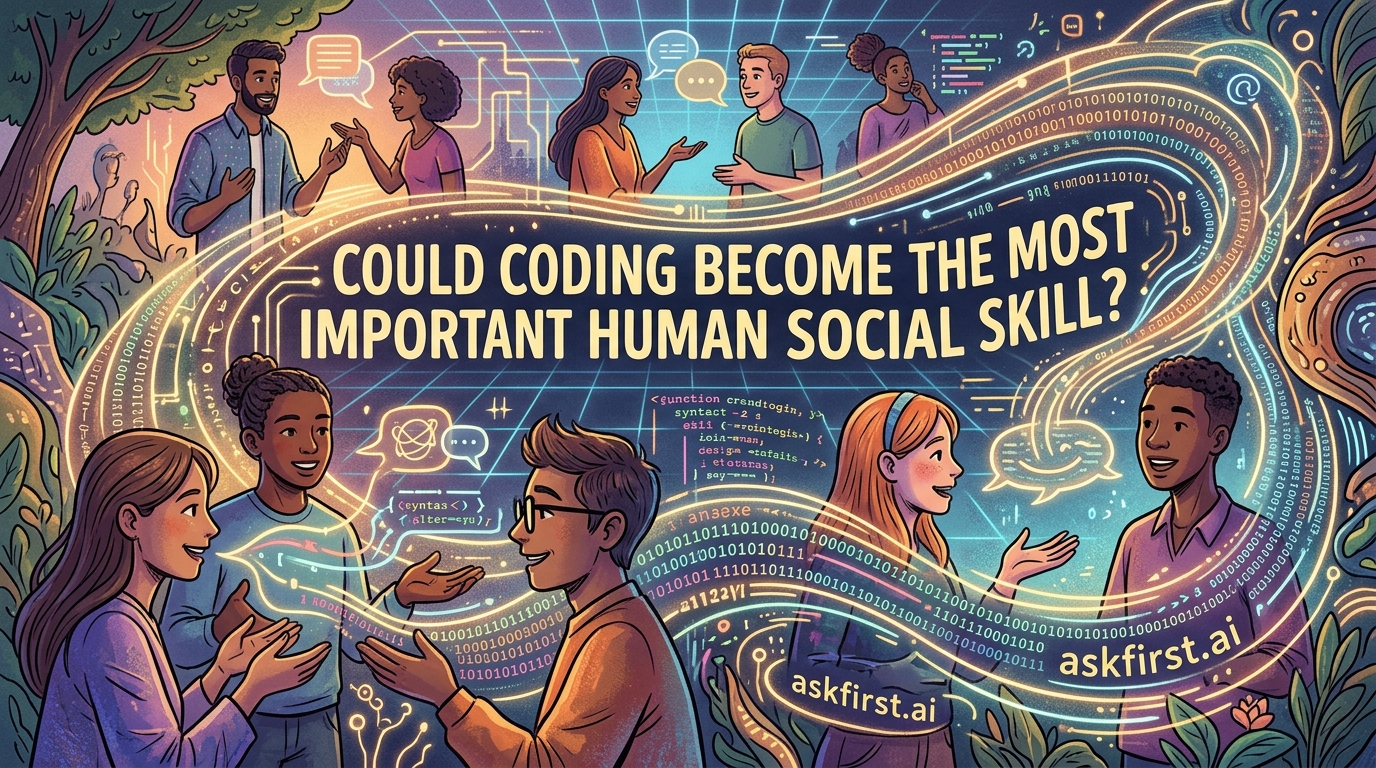
In the grand tapestry of human civilization, the definition of a 'social skill' has never been static. Historically, success was determined by oratory prowess, the ability to read body language, or the capacity to build complex alliances within physical tribes. Today, however, humanity is witnessing a radical transformation. As the digital layer overlays every facet of existence—from financial systems to interpersonal communication—coding is emerging not merely as a technical craft but as the fundamental grammar of our shared reality. To ask if coding is becoming the most vital social skill is to interrogate how we participate in the collective architecture of the future.
Coding as a New Literacy
Just as literacy transitioned from an elite privilege to a basic necessity for navigating society, programming languages are currently undergoing a similar shift. Coding provides the mental framework required to dismantle complex systems into manageable logic paths. When an individual understands the principles of algorithmic thinking, they are no longer just passive consumers of technology; they become active participants in the design of their social environment. This agency is the cornerstone of modern influence. The ability to articulate an idea in a language that computers interpret as command represents a new form of rhetoric. It is the bridge between human intent and machine execution, making it arguably the most potent tool for manifestation in the twenty-first century.
The Social Utility of Algorithmic Thinking
Social skills are fundamentally about connection and facilitation. Traditionally, we connect through language, tone, and empathy. Coding enhances these traditional pillars by introducing precision and modularity. Consider the impact of automation on interpersonal relationships and professional collaboration. When people possess the ability to write scripts that simplify workflows, organize data, or create digital interfaces, they become the facilitators of their communities. They are the individuals who remove friction from the lives of those around them. In an increasingly dense digital landscape, the person who can 'debug' a social issue—whether it is a flawed communication channel, an inefficient logistics system, or a misunderstood data trend—holds immense social capital.
Debunking the Myth of the Isolated Coder
One of the most persistent myths surrounding software development is that it is a solitary, antisocial endeavor. In reality, the most significant projects in history, such as the Linux kernel or the infrastructure of the internet itself, are monuments to massive, distributed collaboration. Coding is inherently a collaborative act of architecture. It involves version control, peer review, documentation, and continuous negotiation of standards. These are profound social practices. Mastering the 'soft' skills of code—such as empathy for the end-user, clarity in documentation, and patience in collective troubleshooting—represents a mastery of human organization at scale. Coding is not just talking to a machine; it is the art of expressing concepts in a way that allows humanity to build together without physical presence.
Future-Proofing Through Logic
As we look toward the horizon of 2030 and beyond, the automation of rote tasks is inevitable. However, the requirement for strategic, high-level structural thinking will only increase. By treating coding as a social skill, individuals position themselves as 'architects of consensus.' If a community lacks the ability to understand the code that governs its daily interactions—be it algorithms that influence news feeds or systems that manage local governance—it risks becoming a subject rather than a creator. Therefore, proficiency in programming logic serves as a protective layer, ensuring that human autonomy remains preserved within a digital society.
Bridging the Great Digital Divide
Ultimately, coding is the ultimate tool for democratization. It allows for the rapid scaling of ideas that can improve lives across the globe. When a social skill allows for the creation of open-source solutions that are accessible to anyone with an internet connection, it transcends traditional barriers. It becomes a bridge. Teaching coding is no longer just about preparing students for 'tech jobs'; it is about equipping future citizens with the power to influence their own destiny. It is a fundamental shift from being a user of the world to being a co-author of its future state.
Conclusion: The New Social Currency
To view coding merely as 'math for computers' is to ignore its immense sociological impact. It is the language of efficiency, the blueprint for modern collaboration, and the dialect of influence. As we move deeper into the era of artificial intelligence and ubiquitous computing, the social skill of understanding, critiquing, and implementing code will distinguish those who merely exist in the system from those who actively shape it. Coding is the new literacy, the new rhetoric, and undoubtedly, the most significant skill for the social architecture of our time.