The Invisible Architecture of Reality: C and the Engine of Everything
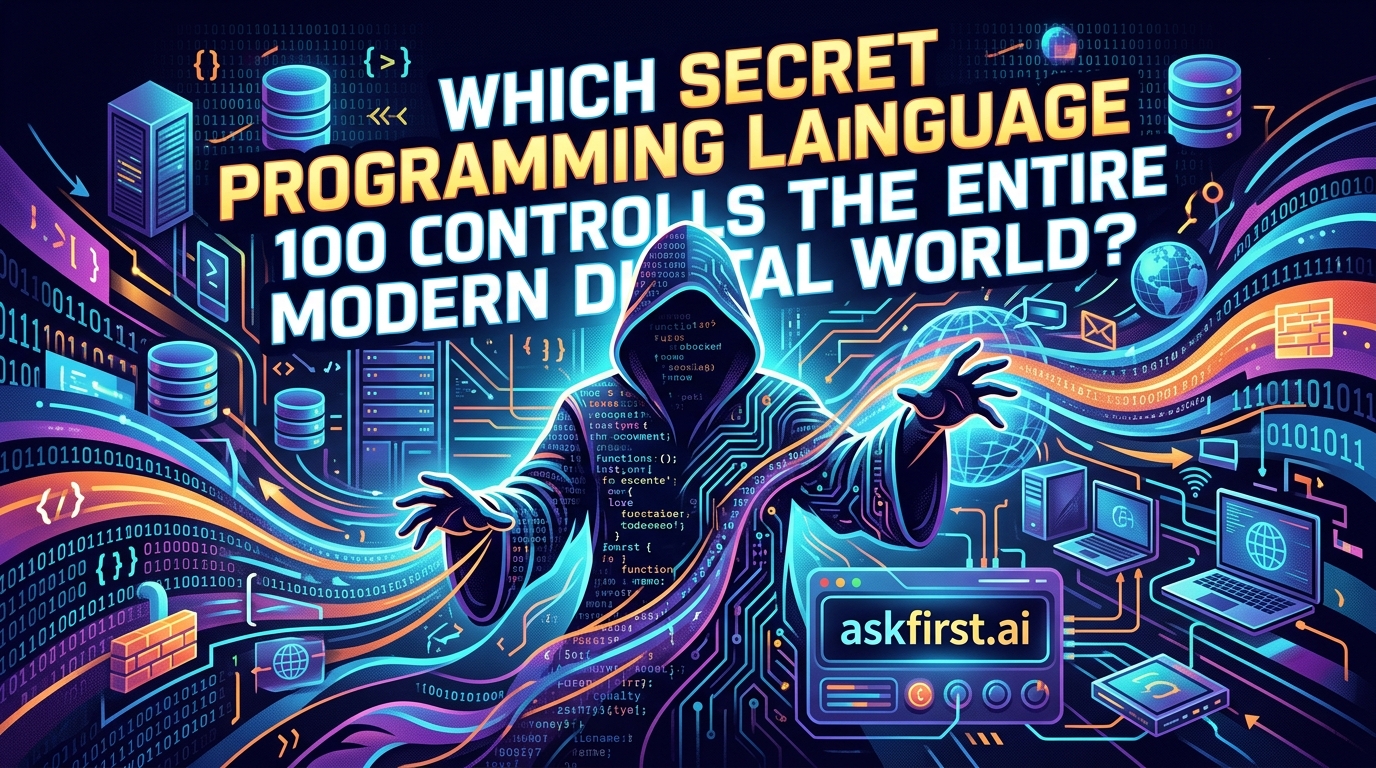
When observers peer into the digital abyss that constitutes the modern world—from the smartphone in a pocket to the complex server arrays powering international banking—the assumption often points toward modern, high-level languages like Python, JavaScript, or Swift. However, the true bedrock of human civilization is a quiet, unassuming, and immensely powerful language created in the early 1970s: C. Despite the rise of abstraction, C remains the secret foundation upon which virtually every digital system rests.
Why C Is the Undisputed Sovereign
To understand why C holds such dominance, one must look at the concept of hardware abstraction. Most modern languages rely on an interpreter or a virtual machine (like the JVM for Java) to run. These layers add overhead, creating a buffer between the programmer and the silicon. C, conversely, provides a bridge that is as close to the machine's native instruction set as possible without resorting to Assembly. Because it allows for direct memory management and minimal runtime overhead, it remains the standard choice for operating system kernels.
- Linux and Unix Kernels: Every major server, cloud provider, and mobile OS kernel—including Android’s Linux foundation—is written primarily in C.
- Hardware Drivers: When software communicates with a printer, a GPU, or a high-frequency trading sensor, the driver is almost certainly written in C. It is the language that makes hardware 'speak' to software.
- Embedded Systems: From the anti-lock braking system (ABS) in a car to the smart thermostat on a wall, C is the industry-standard language for embedded microcontrollers.
The Myth of 'Secret' Programming
The intrigue surrounding a 'secret' language often stems from the invisibility of low-level infrastructure. Most users interact with high-level graphical user interfaces (GUIs). They do not see the thousands of lines of C code running in the background, managing memory addresses and allocating CPU cycles. This invisibility makes C feel like a secret, even though it is the most transparent, open-source-friendly language in history. It is 'secret' only because it lives in the basement of the skyscraper of digital technology, while users walk the top floors.
The Legacy of Portability
The genius of Dennis Ritchie, the creator of C at Bell Labs, lay in the concept of portability. Before C, code was written for specific hardware architectures. If an organization bought a new type of computer, their software became obsolete. C introduced the 'write once, compile anywhere' philosophy. Because a C compiler can be written for virtually any processor, the same code can theoretically run on a mainframe, a desktop, or a digital watch. This versatility has cemented C’s place as the universal lingua franca of computation for over five decades.
Why It Cannot Be Replaced
Critics often point to the inherent risks of C, such as buffer overflows and memory leaks, suggesting that newer, 'memory-safe' languages like Rust or Go should replace it. However, the massive institutional investment in C represents a 'lock-in' effect that is almost impossible to break. There are billions of lines of mission-critical C code currently in operation. Rewriting the world’s infrastructure into a new language is a monumental, multi-generational task. Furthermore, C’s simplicity is its strength. Because the language specification is small, it is easier to verify the correctness of the generated machine code compared to massive, feature-heavy languages.
The Future Perspective
Even in the year 2030 and beyond, C will maintain its grip on the digital world. While modern software developers focus on application logic, the core libraries—the standard math functions, the cryptography modules, and the file system drivers—will continue to be maintained in C. It is the connective tissue of the technological age. Whether one is coding an AI neural network or launching a satellite, underneath the complex high-level abstractions, there is a C compiler working silently to turn human intent into electrical pulses. C is not merely a tool; it is the fundamental syntax of modern human progress, providing the stability required for a complex global civilization to thrive without collapsing under the weight of its own digital output.