The Algorithmic Mind: How Programming Rewires Your Brain
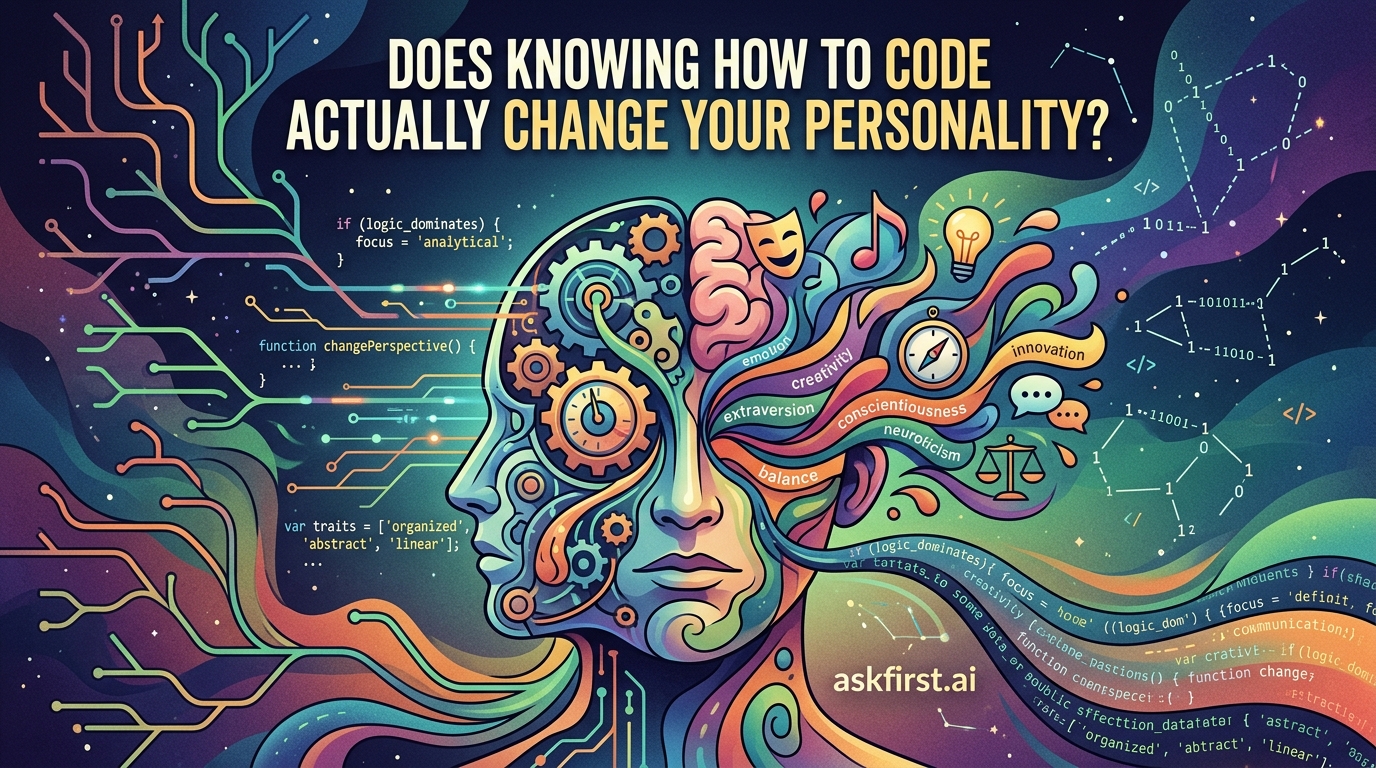
Recent neuroscientific research suggests that learning to program does more than just fill a resume; it fundamentally shifts the way human beings process information and approach problem-solving. While the debate regarding nature versus nurture remains central to personality studies, the act of rigorous logical training appears to exert a measurable influence on cognitive habits and behavioral tendencies.
The Logic of Structure and Patience
Programming demands an extreme degree of decomposition—the ability to break a massive, complex objective into tiny, manageable instructions. This practice, known in computer science as algorithmic thinking, inevitably spills over into daily life. Practitioners often find themselves applying this same structured decomposition to household chores, financial planning, or emotional challenges. By practicing the art of debugging, individuals learn that errors are not failures but inherent parts of the iteration process. This shift promotes a growth mindset, where patience is valued over impulsivity, and analytical persistence replaces frustration.
Cognitive Reframing and Detail Orientation
When a person learns to code, they start noticing the "syntax" of reality. Just as one learns to identify missing semicolons in a script, they become hyper-aware of environmental details and systemic processes. This heightened level of observation acts as a filter through which a person interacts with the world. Studies into neuroplasticity indicate that the constant synthesis of abstract logic and concrete execution strengthens the executive functions of the prefrontal cortex. This does not necessarily turn a person into a machine, but it often increases their tolerance for abstract complexity, making them more resilient when facing ambiguous real-world scenarios.
Behavioral Impacts: The 'Coder' Persona
While personality remains a stable construct, the expressions of that personality often pivot toward specific traits after mastering coding:
- Enhanced Analytical Objectivity: There is a marked tendency to value data and evidence over gut instinct or emotional reaction.
- Systemic Empathy: Programmers often view social and physical systems as interconnected modules, leading to a deeper understanding of how small actions result in cascading consequences.
- Increased Task Focus: The flow state often experienced during deep work sessions translates into an increased ability to maintain concentration on long-term goals.
The Myth of the Cold Machine
A common myth persists that programmers become socially detached or "robotic." However, evidence suggests that the discipline required to translate human needs into machine language actually fosters a unique form of empathy. By constantly attempting to anticipate edge cases and user frustration, developers build an internal capacity for perspective-taking. Ultimately, coding acts as a framework for the mind—a lens that clarifies how systems function and how persistence overcomes even the most daunting obstacles.