The Evolutionary and Psychological Architecture of Self-Protective Deception
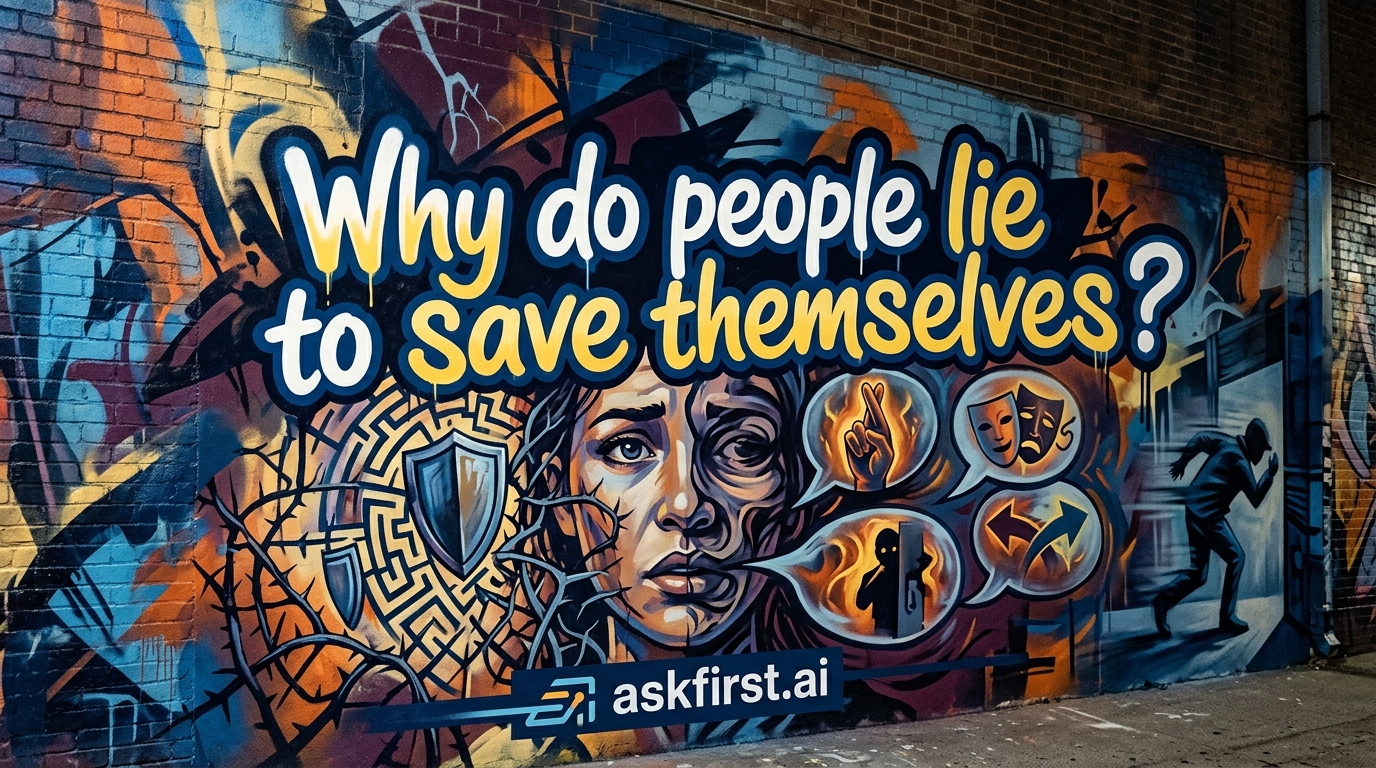
The act of lying to save oneself is one of the most fundamental, albeit complex, behaviors in human social interaction. From the perspective of evolutionary biology, cognitive psychology, and behavioral sociology, deception is not merely a moral failing; it is a sophisticated survival strategy. When an individual perceives a threat to their social standing, physical safety, or psychological integrity, the brain often triggers a "fight, flight, or freeze" response that manifests linguistically as a lie.
The Evolutionary Imperative: Deception as an Adaptive Strategy
To understand why we lie, one must look at the work of evolutionary psychologist Robert Trivers in his seminal book The Folly of Fools: The Logic of Deceit and Self-Deception in Human Life. Trivers argues that deception is deeply woven into the fabric of our evolutionary history. In early human societies, survival depended heavily on social cohesion and reputation. If an individual committed an error that threatened their status within a group, the cost of honesty—ostracism or physical punishment—was often fatal.
Therefore, lying became a "prosocial" or self-protective mechanism to bridge the gap between our actual behavior and the idealized expectations of the tribe. By masking our mistakes, we preserve our social "fitness." In modern terms, this translates to the employee who lies about why they missed a deadline to avoid termination, or the partner who lies about an indiscretion to avoid the dissolution of a relationship. In both cases, the lie serves as a shield against the immediate negative consequences of the truth.
The Cognitive Load and the "Self-Preservation" Mechanism
From a cognitive standpoint, lying is a high-cost endeavor. According to Dr. Bella DePaulo, a leading researcher on deception at the University of California, Santa Barbara, humans are wired to avoid the "cognitive load" associated with lying, yet we do so reflexively when the stakes are high. When we lie to save ourselves, we are engaged in a process called "impression management."
Sociologist Erving Goffman, in his foundational text The Presentation of Self in Everyday Life, describes the world as a stage where we are all actors performing roles. When a threat arises, the "front stage" persona is endangered. The lie is a desperate attempt to maintain the integrity of that persona. If you are caught in a lie, your credibility—the currency of your social existence—is devalued. Consequently, the brain calculates that the risk of being exposed as a liar is lower than the immediate, certain damage caused by the truth.
The Role of Fear and Emotional Regulation
Why does this happen so reflexively? The answer lies in the amygdala, the brain's emotional processing center. When an individual is confronted with a situation where they are likely to be judged or punished, the amygdala initiates a stress response that impairs the prefrontal cortex—the area responsible for rational, long-term decision-making.
In this state of "emotional hijacking," the individual does not weigh the long-term ethical consequences of lying. Instead, they prioritize immediate emotional regulation. We lie to lower our own anxiety. By providing an alternative narrative, we momentarily soothe our fear of rejection or retribution. This is why people often lie even when the truth would have resulted in a relatively minor consequence; the fear response is disproportionate to the actual threat.
Concrete Examples of Defensive Deception
Consider the following archetypal scenarios:
- The Workplace Error: An analyst makes a calculation error that costs a client money. Fearing the loss of their job, they blame a software glitch. Here, the lie is a defense against the loss of livelihood. The individual perceives the "self" as "the professional," and the lie protects that identity from collapse.
- The Interpersonal Concealment: A person hides a financial debt from their spouse. They fear that the truth will lead to a loss of trust and the potential end of the marriage. The lie is not necessarily malicious toward the partner; it is a protective barrier erected by the individual to delay a confrontation they feel ill-equipped to handle.
The Paradox of the "Self-Serving Bias"
We are also susceptible to the "self-serving bias," a concept extensively documented by social psychologists like David Myers in his textbook Social Psychology. This bias leads us to attribute our successes to our internal character and our failures to external circumstances. When we lie to save ourselves, we are essentially acting out this bias. We convince ourselves that "the system is unfair" or "the circumstances were beyond my control," making the lie feel more like a justified correction of a misunderstanding rather than an act of deceit.
Conclusion
Lying to save oneself is a multifaceted phenomenon rooted in the primal urge for self-preservation. It is an interaction between the evolutionary necessity of maintaining social status, the cognitive limitations of the human brain under stress, and the psychological defense mechanisms we use to protect our self-concept. While honesty is often championed as the highest virtue, the human tendency to deceive is a deeply ingrained survival instinct. Understanding this does not excuse the behavior, but it provides a necessary context: we lie not always because we are inherently malicious, but because we are fragile creatures constantly seeking to protect the vulnerable construct of "self" from a world that we perceive as inherently threatening.