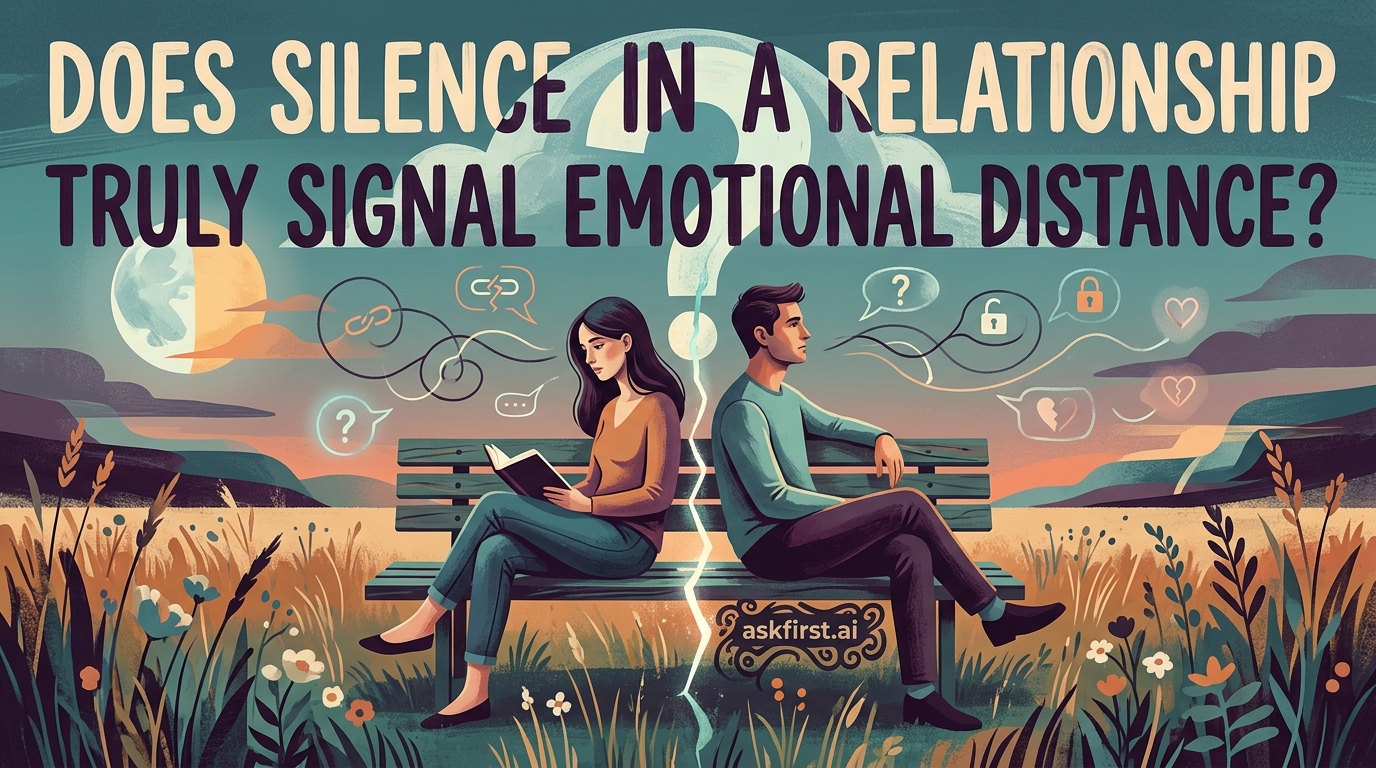
The Paradox of Quietude: Decoding Silence in Relationships
In the landscape of human connection, silence is often viewed as a void—a sign that conversation has failed or that emotional intimacy is waning. However, psychological research suggests that silence is far more nuanced than simply a marker of disconnect. To categorize every moment of quiet as 'emotional distance' is a fundamental misinterpretation of the dyadic dance between partners. True emotional intelligence involves recognizing when silence serves as a bridge rather than a barrier.
The Spectrum of Silence: From Comfort to Contempt
To understand the true nature of silence, one must first identify its specific function within a partnership. Not all quiet moments are created equal.
- Comfortable Silence: This is the hallmark of a secure attachment style. It occurs when two individuals can exist in the same space without the need for performative chatter. It signals deep trust and a lack of need for constant validation.
- Strategic Silence: Used during conflicts, this may be a tool for emotional regulation. When one partner pulls back to prevent a volatile outburst, it is a preservation of the bond, not a withdrawal from the affection.
- The Void of Distant Silence: This is characterized by a palpable lack of energy. It is marked by a refusal to engage, avoidance of eye contact, and a general dampening of curiosity about the other person’s internal state.
Psychological Frameworks: The Science of Quiet
Psychologists like Dr. John Gottman have identified that the absence of conflict does not equal the presence of happiness, but neither does the absence of speech equal the absence of love. In fact, the ability to sit in silence is often correlated with higher relationship satisfaction. When individuals are secure in their attachment, silence functions as a meditative state shared between two people. Conversely, for those with anxious attachment styles, silence can trigger a 'protest behavior' loop, where the quiet is misinterpreted as abandonment, leading to unnecessary attempts to force interaction.
Breaking the Myth: Why Silence Often Means Safety
Societal pressure suggests that healthy relationships are always 'on'—always communicating, always resolving, always engaging. This is an exhausting and inaccurate standard. Research into mindfulness in relationships demonstrates that shared silence can actually synchronize heart rates and decrease cortisol levels in both partners. Far from signaling emotional distance, this synchronization indicates a profound level of physiological comfort. If silence is present, ask if it feels peaceful or if it feels hollow. Peace is a sign of alignment; hollowness is a sign of neglect.
Distinguishing Withdrawal from Restoration
One must distinguish between avoidance (which keeps partners apart) and refinement (which brings them together). Avoidance is marked by a cold, persistent wall that resists penetration. It is an active choice to withhold. Restoration, on the other hand, is the quiet processing of emotions so that the individual can return to the relationship with more presence. If a partner is quiet because they are processing a challenge or simply decompressing from a high-stimulation day, the silence is a bridge toward a healthier reconnection.
Navigating the Quiet: Practical Exercises
If the silence in a relationship feels ambiguous, consider these strategies to ensure it remains a sign of health:
- The Shared Activity Check: If you can perform a side-by-side activity (cooking, reading, walking) in silence without tension, the connection is likely secure.
- The Curiosity Assessment: Does the silence feel heavy, or are you both simply resting? Healthy silence is resting; unhealthy silence is bracing for impact.
- Active Transparency: When you feel the need to be quiet, practice identifying the intent. Say, 'I am feeling a bit drained and need to sit in silence for a while to recharge,' rather than simply withdrawing without explanation. This prevents the partner from projecting their own anxieties onto the quiet.
Conclusion: Redefining Intimacy
Silence is not a symptom of a failing relationship; it is often a symptom of a matured one. Emotional distance is not defined by the lack of words, but by the lack of concern and mutual investment. When silence is accompanied by warmth, eye contact, and touch, it is arguably one of the most intimate states two people can achieve. Stop viewing quiet moments as threats and start viewing them as the canvas upon which trust is painted. A truly deep connection is one where the words do not need to be spoken, because the bond is already understood in the quiet.