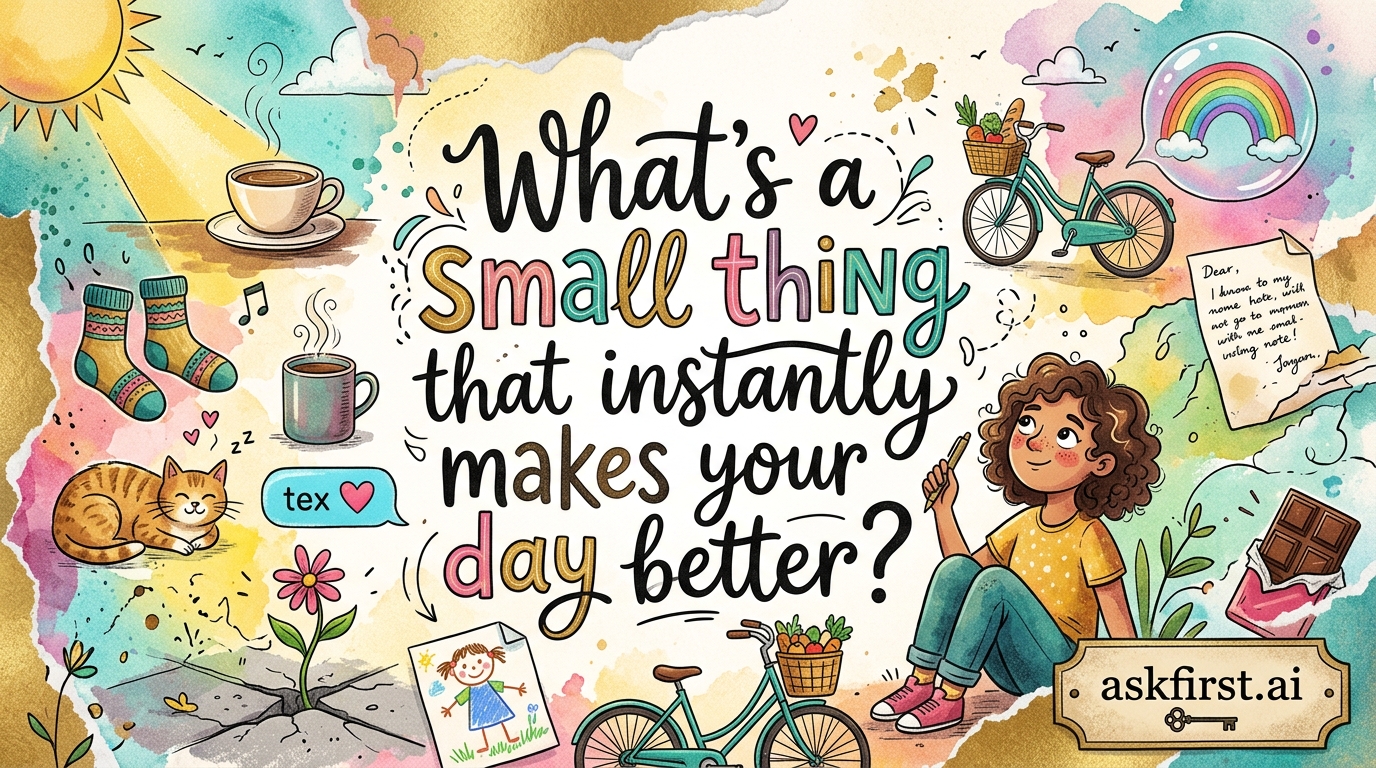
The Architecture of Small Joys: Why Micro-Habits Shape Our Daily Well-Being
In the relentless pursuit of major life milestones—career promotions, financial stability, or grand travel experiences—we often overlook the profound psychological power of "micro-joys." These are small, repeatable, and easily accessible actions that act as emotional anchors in our day. While it might seem trivial to focus on the minutiae of daily living, research in positive psychology consistently suggests that our baseline happiness is not dictated by monumental events, but by the accumulation of small, positive reinforcements.
One of the most potent, yet frequently ignored, small things that can instantly elevate your day is the intentional practice of a sensory-rich morning ritual, specifically the act of preparing and consuming a high-quality cup of coffee or tea in silence. This practice, when stripped of distractions, functions as a meditative reset button for the nervous system.
The Neuroscience of the "Micro-Pause"
To understand why a simple ritual works, we must look at the concept of "cognitive load." In The Organized Mind, neuroscientist Daniel Levitin explains that our brains are constantly processing a barrage of information. When we jump straight from waking up into checking emails or social media, we are essentially forcing our brain to shift into a state of high-alert task-switching.
By dedicating just ten minutes to a sensory-focused activity—like the tactile experience of grinding coffee beans or the visual observation of tea leaves steeping—you engage the parasympathetic nervous system. This "micro-pause" reduces cortisol levels and provides a sense of agency over your time before the external world dictates your schedule. This is not just about the caffeine; it is about the transition from sleep to wakefulness being managed on your own terms.
The Psychology of Ritual vs. Routine
It is essential to distinguish between a "routine" and a "ritual." A routine is a sequence of actions performed to get something done, often done mindlessly. A ritual, conversely, is an action performed with intention and mindfulness.
In The Power of Full Engagement by Jim Loehr and Tony Schwartz, the authors argue that human energy—not time—is our most precious resource. They posit that rituals are the key to managing that energy. When you turn the act of making a morning beverage into a ritual, you are practicing what psychologists call "mindful presence." By focusing entirely on the temperature of the mug, the aroma of the drink, and the silence of the room, you are effectively training your brain to be present. This skill of presence is a transferable asset; when you later face a stressful meeting or a difficult deadline, you are better equipped to return to that state of calm.
Concrete Examples of Low-Barrier Happiness
If the morning ritual does not resonate with your lifestyle, consider these other high-impact, low-effort practices that serve the same psychological function:
- The "Nature Window" Reset: Place a small, living plant on your desk. Research from the University of Exeter suggests that office environments enriched with plants increase productivity and well-being by up to 15%. Simply taking thirty seconds to notice new growth on a leaf serves as a grounding mechanism.
- Tactile Gratitude: Keep a physical notebook. Writing down one specific thing you are grateful for—not a general concept like "family," but a specific moment like "the way the light hit the floor this morning"—activates the brain’s reticular activating system (RAS). This filters your reality to seek out more positive inputs throughout the remainder of the day.
- The "Transition Walk": If you work from home, take a five-minute walk around the block before you start your workday. This mimics the psychological "commute," providing a spatial boundary between your personal sanctuary and your professional obligations.
The Cumulative Effect of Small Choices
The cumulative effect of these practices is known in behavioral science as the "compounding interest of habits." Just as financial investments grow exponentially over time, small emotional investments do the same. If you start your day with a sense of control and sensory pleasure, you are statistically more likely to make healthier dietary choices, interact with colleagues more patiently, and remain resilient in the face of unexpected stressors.
In his seminal work Atomic Habits, James Clear emphasizes that we do not rise to the level of our goals; we fall to the level of our systems. By implementing a "small thing" that makes your day better, you are effectively upgrading your system. You are not just drinking coffee or taking a walk; you are building a foundation of self-regulation that supports your long-term mental health.
Conclusion
The secret to a better day is rarely found in grand gestures. It is hidden in the moments of deliberate, intentional action that we weave into the fabric of our morning. Whether it is the aroma of a freshly brewed cup of coffee, the silent observation of nature, or the deliberate act of writing down a thought, these micro-habits provide the stability required to navigate a chaotic world. By choosing to prioritize these small rituals, you reclaim ownership of your internal state, proving that the most significant changes in our lives often begin with the smallest, most consistent actions.