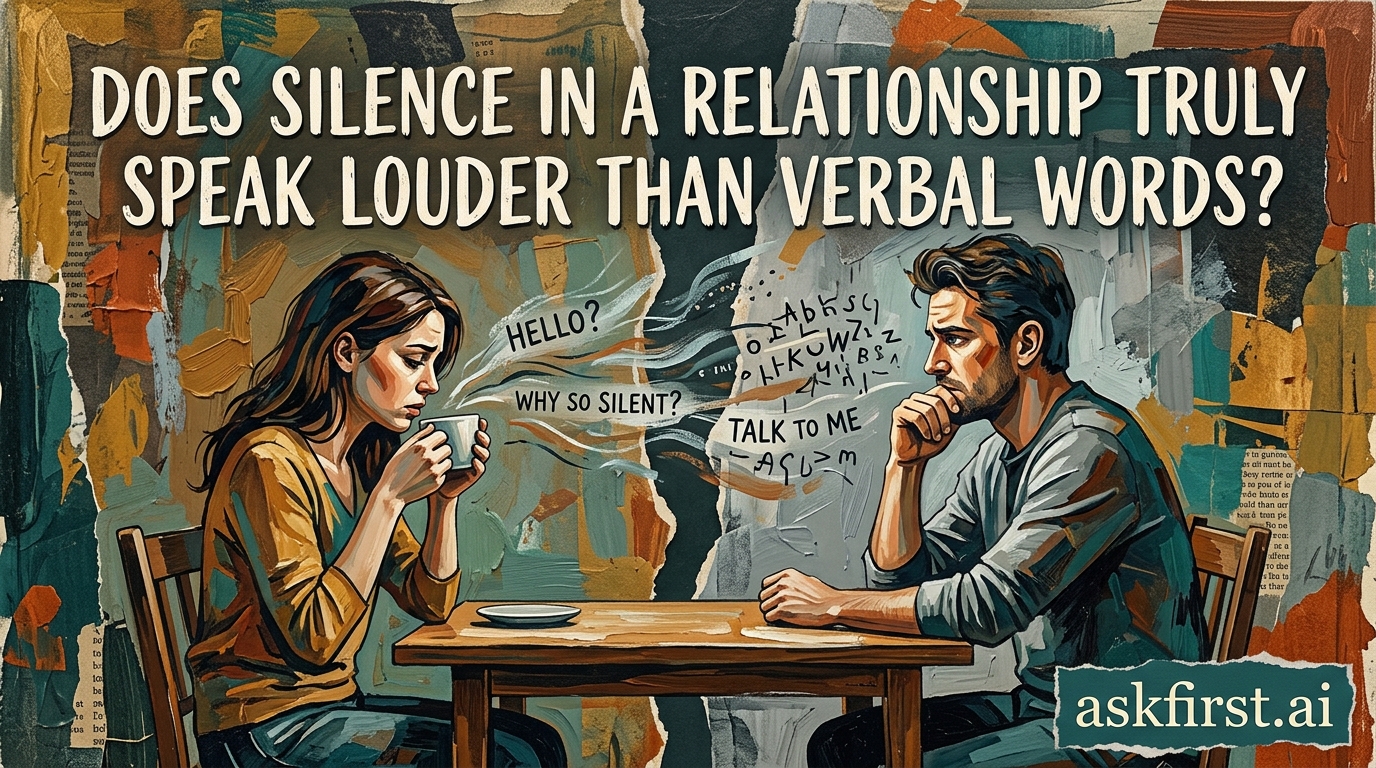
The Power of the Unspoken: Decoding Relational Silence
In the intricate landscape of human connection, communication is often equated exclusively with the spoken word. However, psychological research consistently suggests that the most profound relational shifts occur in the spaces between sentences. Silence is not merely the absence of sound; it is a complex, communicative state that functions as a mirror for underlying intimacy or detachment. When partners learn to interpret the language of silence, they unlock a higher tier of emotional intelligence that transcends superficial conversation.
The Spectrum of Relational Silence
To understand whether silence truly speaks louder than words, one must categorize its manifestations. Silence serves as a versatile tool, serving different functions depending on the context of the relationship:
- The Comforting Silence: This is the hallmark of secure attachment. It signifies a level of ease where external stimuli or verbal validation are unnecessary to maintain a sense of belonging. In these moments, the silence is additive—it creates space for shared presence.
- The Thoughtful Silence: Often observed during conflict resolution, this type of silence is intentional. It represents the active processing of complex emotions before articulating them. This is a constructive silence that prevents impulsive verbal damage.
- The Defensive Silence (Stonewalling): This is a destructive form of non-communication. It acts as a barrier, intended to shut down discourse and exert control. Dr. John Gottman, a renowned expert in relationship dynamics, identifies this as one of the 'Four Horsemen'—a behavior that, if left unchecked, poses a significant threat to long-term relational health.
- The Void of Apathy: The most dangerous form of silence, characterized by a lack of emotional engagement. It signals that the relationship has shifted from dynamic interaction to passive coexistence.
Why Silence Amplifies Meaning
Psychologically, silence acts as a natural amplifier for whatever emotion is currently dominant. When individuals remain silent during a heated argument, the silence often feels 'heavy' because it is pregnant with projected intent. If the surrounding context is tense, silence is interpreted as hostility. If the context is one of mutual support, silence is interpreted as empathy. As the linguist Edward T. Hall argued in his work on high-context versus low-context cultures, the meaning of an interaction is frequently embedded within the setting rather than the literal dialogue. In intimate relationships, the setting is the history of the partnership itself.
Neurobiological Perspectives on Non-Verbal Connection
Recent studies in neurobiology indicate that prolonged mutual gaze and shared silent moments can trigger the release of oxytocin, the so-called 'bonding hormone.' When verbal input is removed, the brain is forced to process non-verbal cues—micro-expressions, postural shifts, and respiratory patterns—with greater intensity. This creates a state of 'limbic resonance,' where the emotional states of two people become synchronized. In this state, the need for verbal explanation diminishes because the partners are intuitively aligned. Thus, in high-functioning relationships, silence is not the absence of data; it is the presence of an intuitive, non-linguistic data stream that words often fail to capture.
Cultivating Productive Silence
To ensure that silence serves the relationship rather than damaging it, partners must develop 'meta-communicative' skills—the ability to talk about how they communicate. A proactive couple might establish agreements regarding silence. For example, agreeing to a 'pause' during a conflict is a constructive use of silence, provided it is framed as a period of cooling down rather than a method of avoidance. Here are essential practices for leveraging silence effectively:
- Define the Intent: When silence occurs, distinguish whether it is meant to protect, process, or ignore.
- Verify Assumptions: Ask questions like, 'I sense some tension, are you taking time to think?' to prevent mind-reading errors.
- Encourage Comforting Presence: Spend 'quiet time' together without technology to practice the art of shared presence, which strengthens the bond without relying on constant stimulation.
Conclusion: The Synthesis of Sound and Stillness
Does silence speak louder than words? The answer lies in the quality of the foundation. In a relationship built on secure attachment and high emotional awareness, silence functions as a powerful instrument of depth and connection. It allows for the expression of feelings that are too nuanced or too vast for the limitations of syntax. Conversely, in the absence of trust, silence serves only as a canyon between two individuals. Ultimately, the most successful relationships are those that master the interplay between the two—knowing when to speak to clarify and when to be still to connect. By valuing silence, partners move beyond the superficial and touch the authentic essence of their bond.