The Paradox of Academic Underperformance: Why Bright Minds Falter
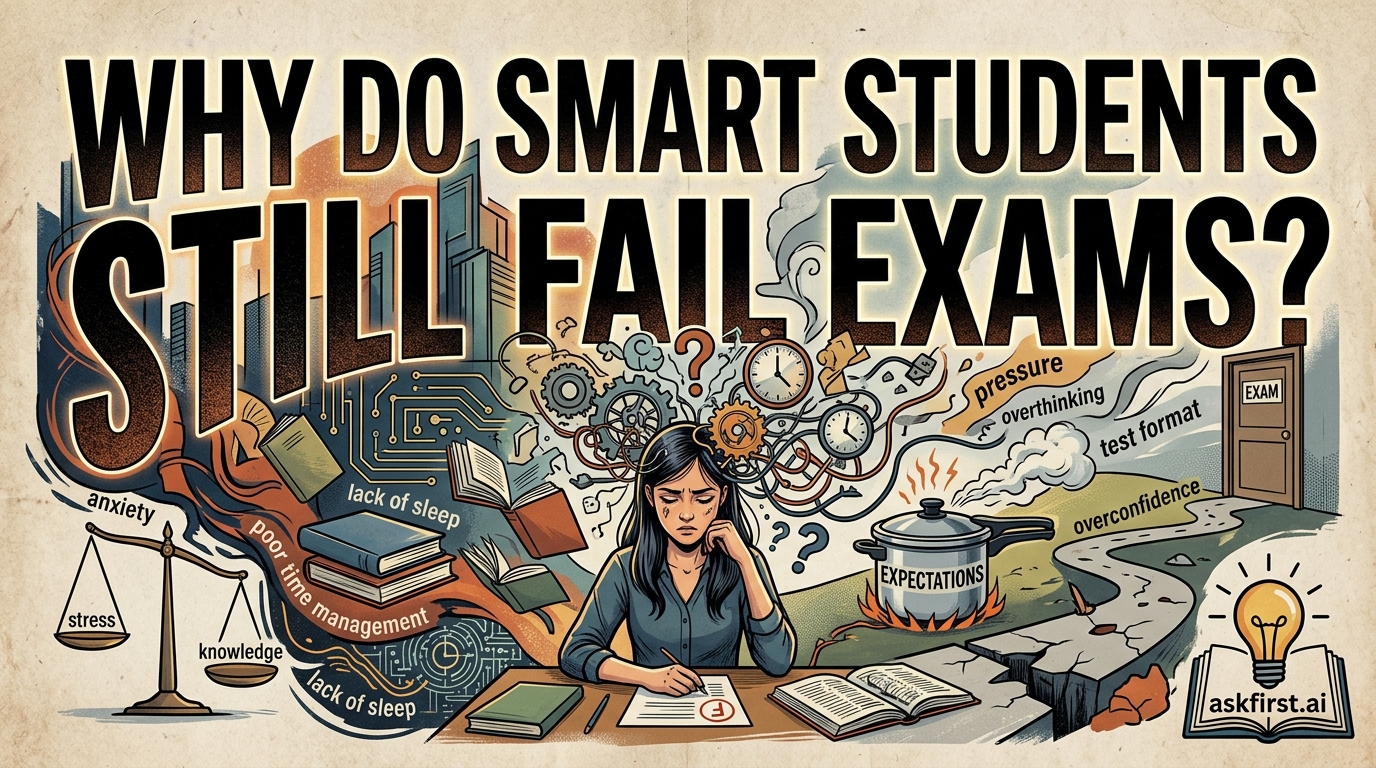
It is a common observation in educational psychology that raw intelligence—often measured by IQ or standardized testing—is a poor predictor of consistent academic success. We have all encountered the "gifted" student who breezes through homework but collapses under the pressure of a final examination. This phenomenon, often termed "academic underperformance," is not a reflection of a lack of cognitive capacity, but rather a complex interplay of psychological, behavioral, and structural factors. When a student possesses the intellectual horsepower to master complex concepts but fails to translate that knowledge into high exam scores, the breakdown usually occurs in the "executive function" layer of their cognitive toolkit.
The Pitfall of Fixed Mindset
One of the primary reasons smart students struggle is the psychological trap identified by Carol Dweck, a psychologist at Stanford University and author of the seminal work Mindset: The New Psychology of Success. Dweck’s research posits that many high-achieving students are praised early in life for being "smart" rather than for their effort or process. This creates a "fixed mindset." These students begin to view their intelligence as an immutable trait. When they encounter a difficult exam or a subject they cannot immediately grasp, they interpret this struggle as evidence that they are "not smart enough," leading to anxiety and avoidance. Unlike students with a "growth mindset," who view failure as a data point for improvement, smart students with a fixed mindset may self-sabotage to avoid the psychological pain of failing to live up to their own identity.
Deficits in Metacognition and Study Strategies
Intelligence is often conflated with "study efficiency," yet these are distinct skill sets. In their research on learning science, authors Peter C. Brown, Henry L. Roediger III, and Mark A. McDaniel, in their book Make It Stick: The Science of Successful Learning, argue that most students—even the brightest ones—rely on ineffective study habits. Many smart students reach university without ever having learned how to study because they could coast through secondary school on natural ability alone.
When they reach higher-level coursework, they continue to rely on "passive" techniques such as re-reading textbooks or highlighting notes. These methods create an "illusion of competence," where the student recognizes the material and assumes they have mastered it. However, they fail to engage in "active recall" or "spaced repetition." Because they have never had to struggle to retain information before, they lack the metacognitive awareness to recognize when their current study strategy is failing them until they are sitting in the exam hall.
Test Anxiety and Physiological Regulation
For some high-performing students, the pressure to maintain a "perfect" track record creates a debilitating physiological response. This is often documented in the work of Sian Beilock, a cognitive scientist and current president of Dartmouth College, particularly in her book Choke: What the Secrets of the Brain Reveal About Getting It Right When You Have To. Beilock explains that high-stakes environments can consume the "working memory" of a student.
Working memory is the mental scratchpad where we process information in real-time. When a smart student is overwhelmed by anxiety, their brain diverts cognitive resources toward processing their fear of failure rather than solving the problem at hand. This creates a "choking" effect. The student knows the answer, but the anxiety prevents them from accessing it. This is why even a student who understands every nuance of a physics equation might freeze during the exam; their cognitive load is entirely monopolized by the stress response.
Perfectionism and Procrastination
Perfectionism is perhaps the most insidious enemy of the smart student. It is often mistaken for diligence, but in practice, it is a form of risk aversion. Perfectionists set impossibly high standards for their preparation. If they feel they cannot master a topic perfectly, they may procrastinate until the last minute, creating a self-fulfilling prophecy. This behavior is analyzed extensively by Timothy Pychyl in Solving the Procrastination Puzzle. Pychyl suggests that procrastination is an emotional regulation problem, not a time management one. Smart students often procrastinate because the fear of failing to meet their own expectations is so high that they delay the task to protect their ego. By starting late, they provide themselves with an excuse: "I didn't fail because I wasn't smart; I failed because I didn't have enough time."
Conclusion: The Shift from Ability to Strategy
The failure of smart students is rarely about a lack of aptitude. It is almost always a failure to adapt to the specific demands of the assessment environment. To overcome these hurdles, students must move away from relying on their innate intelligence and toward building a robust framework of metacognition, emotional regulation, and evidence-based study techniques. As Make It Stick emphasizes, learning is an active process that requires effort; the very struggle that smart students often try to avoid is exactly what is required to cement knowledge for the long term. Recognizing that intelligence is a tool—and not a guarantee—is the first step toward bridging the gap between potential and performance.