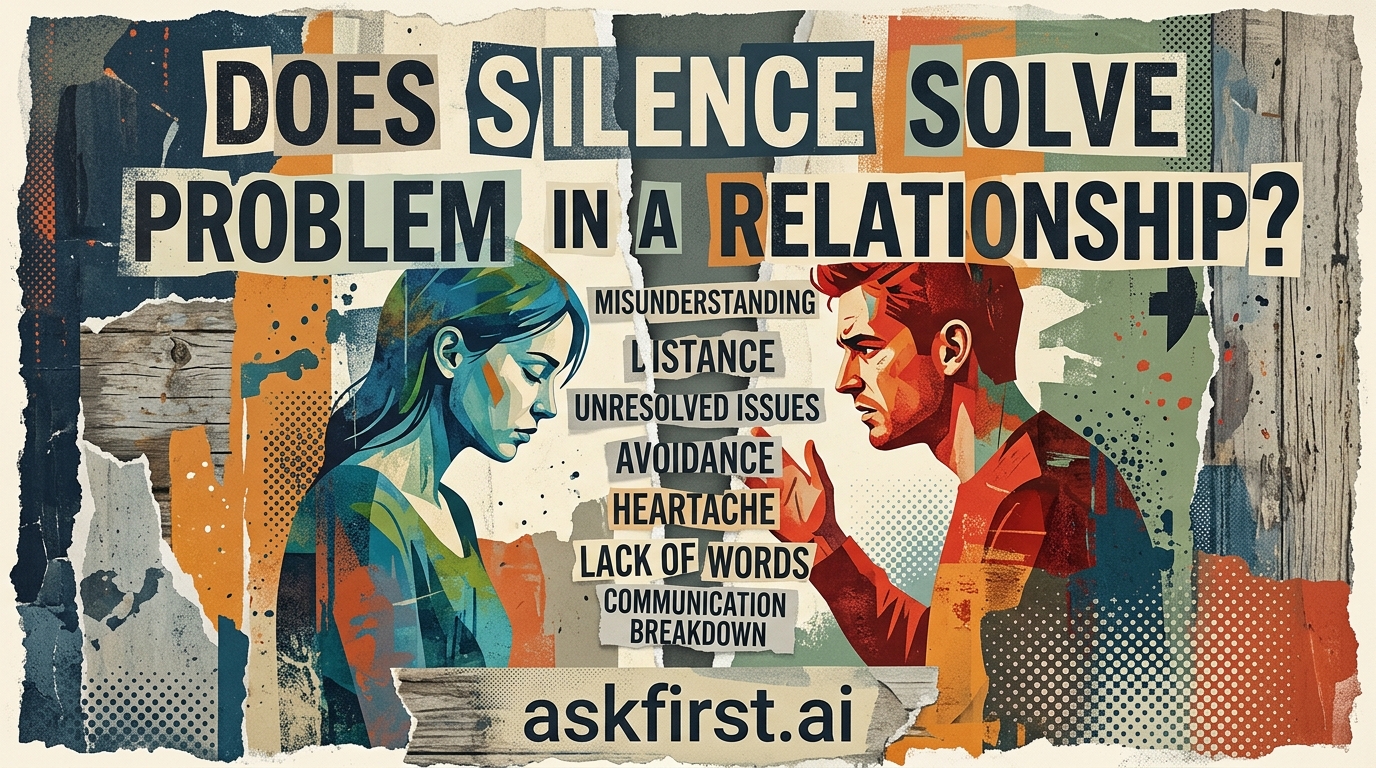
The Paradox of Silence: Strategic Tool or Relational Poison?
In the intricate landscape of human intimacy, silence is often misinterpreted. Many individuals view it as a void—a space that must be filled with words to "fix" a disagreement. However, in the realm of clinical psychology and interpersonal communication theory, silence is not merely the absence of sound; it is a profound, nuanced communicative act. Whether silence serves as a solution or a catalyst for further discord depends entirely on its intent, its duration, and the underlying emotional state of the parties involved.
The Constructive Use of Silence: Reflective Pausing
When silence is employed consciously, it can be one of the most effective tools for conflict resolution. In his seminal work, The Seven Principles for Making Marriage Work, Dr. John Gottman discusses the concept of "physiological flooding." During high-conflict moments, the heart rate spikes, and the brain’s amygdala triggers a fight-or-flight response. In this state, rational discourse is neurologically impossible.
A "strategic pause"—a form of silence—allows the nervous system to return to a baseline state of homeostasis. By stepping back, partners can move from a reactive posture to a reflective one. This is not about avoidance; it is about self-regulation. When one partner says, "I am feeling overwhelmed and need twenty minutes to process before we continue," they are using silence to preserve the relationship rather than destroy it. This form of silence is a gift of respect, ensuring that when communication resumes, it is grounded in clarity rather than emotional volatility.
The Destructive Use of Silence: The Stonewalling Phenomenon
Conversely, silence becomes a lethal weapon when it manifests as "stonewalling." In the context of Gottman’s research, stonewalling is identified as one of the "Four Horsemen of the Apocalypse" that predict divorce. Unlike a strategic pause, stonewalling is characterized by a withdrawal from the interaction, often accompanied by a cold, dismissive attitude or a refusal to acknowledge the other person’s presence.
When silence is used to punish, control, or induce anxiety in a partner, it ceases to be a problem-solving mechanism and becomes a form of psychological aggression. This "silent treatment" denies the other person their voice and invalidates their emotional reality. According to Dr. Harriet Lerner in her classic book, The Dance of Anger, silence in this context is often a defense mechanism used to protect a fragile ego or to maintain power in a power struggle. It does not solve the problem; it buries it, allowing resentment to fester in the dark, which inevitably leads to a more catastrophic explosion later.
Distinguishing Between Contemplation and Avoidance
To determine if silence is solving a problem, one must analyze the "aftermath" of the silence. Does the silence lead to greater empathy, or does it lead to increased isolation?
- Positive Indicators: After the silence, there is a willingness to re-engage, an increased ability to listen without interrupting, and a shift toward "I" statements (e.g., "I felt hurt when...") rather than accusatory "You" statements.
- Negative Indicators: The silence is used to "win" by waiting for the other person to apologize first. The silence is followed by a resumption of the argument with even greater intensity, or the silence persists for days, turning into a state of "emotional divorce" where the partners stop sharing their inner lives entirely.
The Role of Cultural and Individual Differences
It is also critical to recognize that our relationship with silence is shaped by our upbringing and cultural background. As noted by Dr. Deborah Tannen in That’s Not What I Meant!, people from high-involvement cultures may view silence during a disagreement as a sign of apathy or lack of caring. Conversely, people from cultures that value emotional restraint may view rapid-fire verbal debate as aggressive and chaotic.
Couples must establish a "meta-communication" protocol. This means discussing how to handle silence before the conflict arises. If both partners agree that silence is a tool for regulation rather than a tool for punishment, it becomes a bridge instead of a wall.
Conclusion: Silence as a Prelude to Connection
Silence, in and of itself, is neither a solution nor a problem. It is a container. If you fill that container with rumination, anger, and the desire to punish, the silence will poison the relationship. If you fill that container with self-reflection, deep breathing, and the desire to understand your partner’s perspective, the silence will act as a crucible for growth.
The goal of a healthy relationship is not to eliminate silence, but to ensure that when we are silent, we are doing so with the intent to return to our partner with a clearer heart and a calmer mind. Silence solves a problem only when it facilitates the transition from "me against you" to "us against the problem." When used with intention, silence allows us to listen to what is not being said, providing the space necessary for genuine healing to occur.