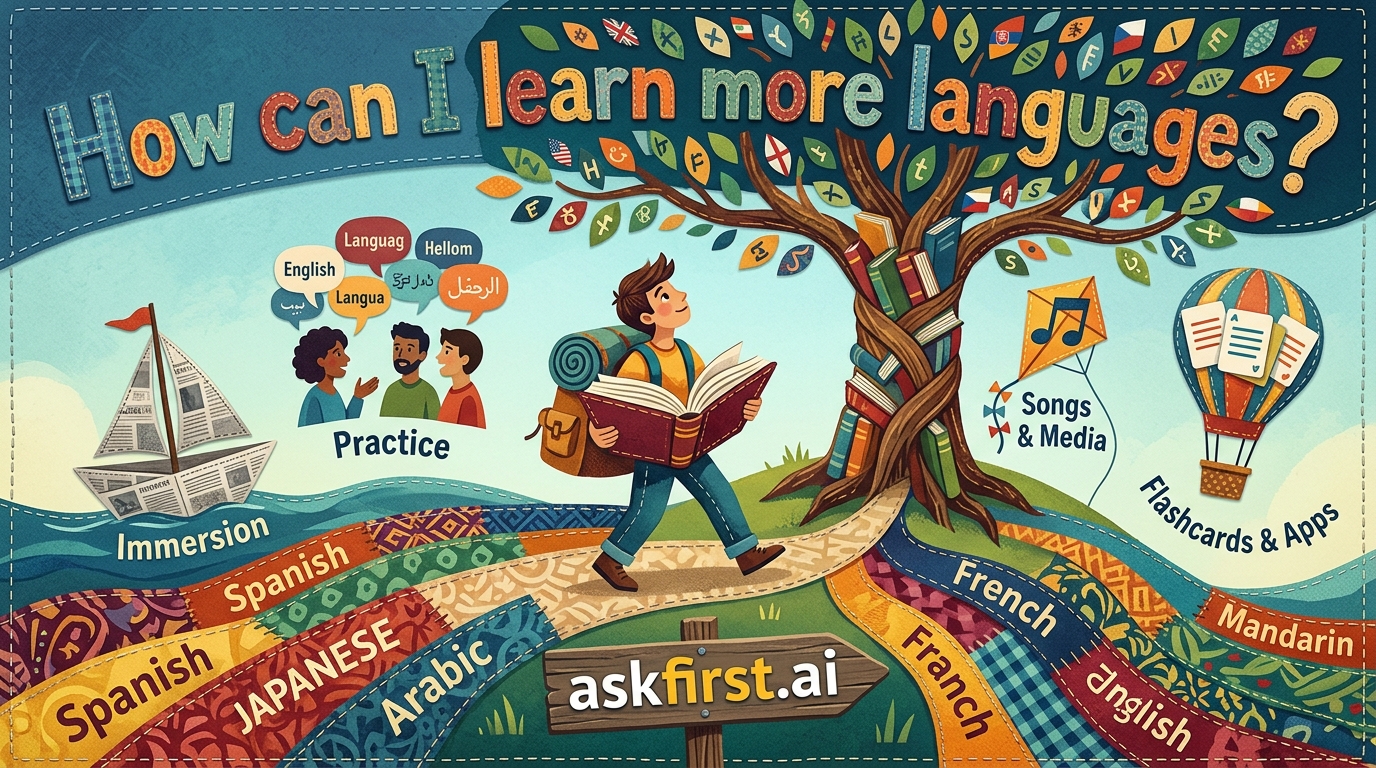
Learning a new language is a rewarding journey that requires consistency and the right strategy. Here is a roadmap to help you get started effectively:
1. Choose Your Method
- Language Learning Apps: Start with platforms like Duolingo, Babbel, or Memrise to build a basic vocabulary foundation and understand sentence structure.
- Immersive Courses: For a more academic approach, consider Pimsleur (audio-focused) or Rosetta Stone.
- Textbooks and Grammar Guides: Use structured resources like "Teach Yourself" or "Assimil" to understand the mechanics of the language.
2. Practice Active Immersion
- Consume Media: Watch movies, TV shows, and YouTube videos in your target language. Use subtitles in the target language rather than your native language to bridge the gap between reading and listening.
- Listen to Podcasts: Podcasts like "Coffee Break Languages" are excellent for beginners to get used to the natural rhythm and intonation of native speakers.
- Change Your Device Settings: Switch the language on your phone or computer. This forces you to learn functional vocabulary related to daily technology use.
3. Speak Early and Often
- Language Exchange: Use platforms like HelloTalk or Tandem to find native speakers who want to learn your language. You can help them, and they can help you in return.
- Italki or Preply: If you have a budget, hiring a professional tutor for 1-on-1 sessions is the fastest way to achieve fluency because it forces you to practice speaking in a safe environment.
- Talk to Yourself: Narrate your daily actions (e.g., "I am making coffee," "I am going to the store"). This builds confidence and helps identify gaps in your vocabulary.
4. Build Habits for Success
- Consistency over Intensity: It is much better to study for 15–20 minutes every single day than to study for three hours once a week.
- Spaced Repetition Systems (SRS): Use apps like Anki. These use algorithms to show you flashcards right before you are likely to forget them, which is the most efficient way to memorize vocabulary.
- Focus on High-Frequency Words: Don't try to learn the dictionary. Learn the 1,000 most common words first; these usually make up about 75–80% of daily conversation.
5. Set SMART Goals
- Specific: Don't just say "I want to learn Spanish." Say "I want to be able to order food and introduce myself in Spanish."
- Measurable: Track your progress using a journal or a language progress tracker.
- Time-bound: Give yourself a deadline, such as "I will hold a 5-minute conversation by the end of three months."
Remember: The biggest barrier to learning a language is the fear of making mistakes. Embrace them—they are the primary evidence that you are learning!