The Psychological Paradox: How Success Impacts Mental Health
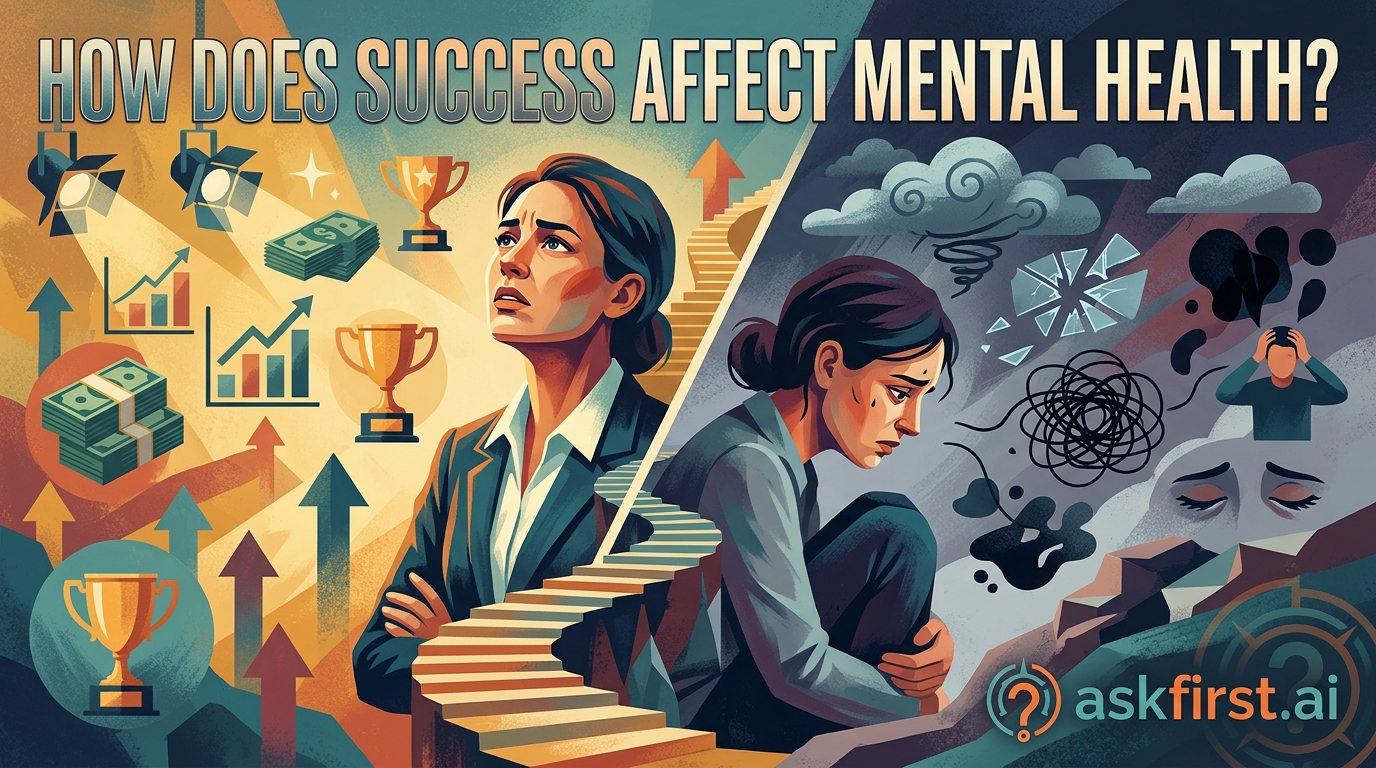
The relationship between success and mental health is a complex, bidirectional phenomenon. While society often equates professional or financial achievement with happiness, psychological research suggests that success can be a double-edged sword, capable of both bolstering well-being and triggering profound psychological distress.
The Positive Impact of Achievement
When success is aligned with intrinsic values—such as mastery, autonomy, and contribution—it acts as a powerful buffer for mental health.
- Self-Efficacy: Achieving goals reinforces one’s belief in their ability to overcome challenges, which reduces anxiety and builds resilience.
- Resource Access: Financial success provides the means to access quality healthcare, therapeutic support, and stress-reducing leisure activities.
- Purpose and Meaning: Reaching milestones often provides a sense of direction, which is a core component of existential well-being.
The "Success Trap" and Mental Health Risks
Conversely, high-achieving individuals frequently face unique psychological stressors that can lead to burnout, depression, and anxiety. This phenomenon is often termed the "Success Trap."
1. The Hedonic Treadmill
Psychologists describe the "hedonic treadmill" as the tendency of humans to quickly return to a relatively stable level of happiness despite major positive or negative events. Once a person achieves a goal, the dopamine spike fades, leading to a constant, exhausting pursuit of the "next big thing" to maintain the same sense of satisfaction.
2. Imposter Syndrome and Performance Anxiety
High achievers often suffer from the persistent fear that they are "frauds" who will eventually be exposed. This pressure to maintain a high performance level can lead to chronic cortisol elevation, sleep disturbances, and social withdrawal.
3. Isolation and Social Comparison
Success often necessitates long hours and high-stakes decision-making, which can erode interpersonal relationships. Furthermore, successful individuals often compare themselves only to others at their level, creating a "top-tier" echo chamber where they never feel "enough."
Practical Guide to Maintaining Balance
To navigate the intersection of success and mental health, consider the following strategies:
- Define Success Intrinsicially: Move away from external metrics (wealth, accolades) and focus on internal metrics (growth, impact, balance).
- Practice Radical Acceptance: Acknowledge that professional success does not automatically solve internal emotional struggles.
- Prioritize "Non-Productive" Time: Engage in activities that serve no professional purpose, such as hobbies or unstructured play, to decouple self-worth from output.
- Cultivate Vulnerability: Surround yourself with a support system where you are valued for your identity, not your resume.
Future Trends and Statistics
Recent data from the World Health Organization indicates that high-stress professions show a 20% higher incidence of burnout-related disorders compared to the general population. Future trends suggest a shift in corporate culture toward "sustainable high performance," where mental health metrics (such as employee well-being scores) are valued alongside financial KPIs. As the global conversation around mental health evolves, the definition of success is shifting from a singular focus on output to a holistic model that integrates emotional stability and personal fulfillment as the ultimate benchmarks of a well-lived life.