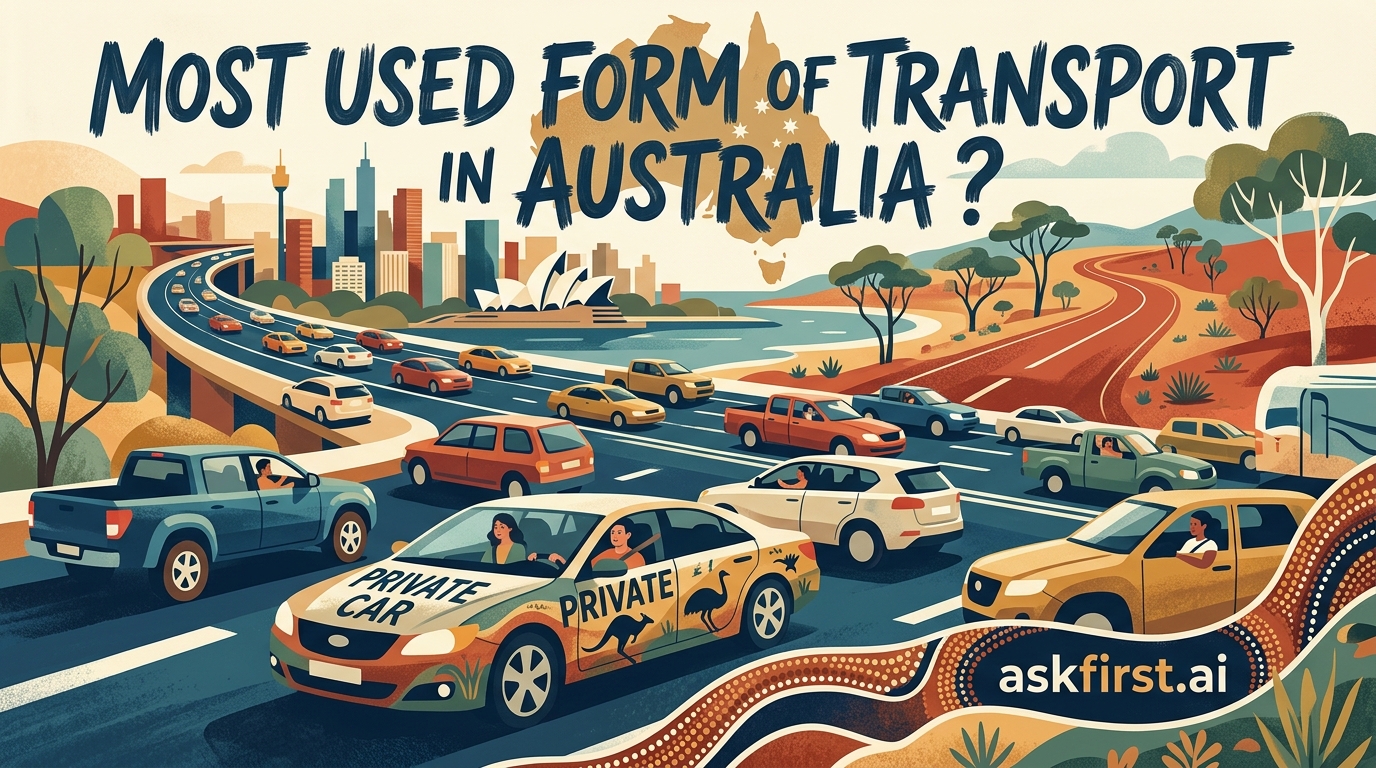
Australia’s Transport Landscape: Navigating the Dominance of the Private Vehicle
In Australia, the private motor vehicle stands as the undisputed king of transportation. Given the continent's vast geographical expanse, low population density outside of major metropolitan coastal hubs, and a cultural emphasis on suburban living, the reliance on the automobile is deeply ingrained in the nation's socio-economic fabric.
The Dominance of Private Vehicles
According to data from the Australian Bureau of Statistics (ABS), passenger vehicles account for the vast majority of personal travel. Over 75% of Australians utilize a private car as their primary means of commuting to work or education. This trend is driven by several factors:
- Urban Sprawl: Major cities like Sydney, Melbourne, and Brisbane are characterized by low-density residential zoning, making comprehensive public transport coverage difficult to achieve in outer suburbs.
- Geographical Scale: For regional and rural Australians, distances between towns often span hundreds of kilometers, rendering public transit systems like buses or trains economically unfeasible.
- Independence and Convenience: The "car culture" in Australia is tied to the concept of personal autonomy, facilitating flexible travel times that fixed-schedule public transport cannot match.
Public Transport: The Urban Backbone
While private vehicles dominate the national statistics, public transport is the lifeblood of the major capital cities. In dense inner-city areas, the modal share for public transport increases significantly.
Major Modes of Public Transport
- Trains: Sydney’s suburban rail network and Melbourne’s extensive metropolitan train lines move millions of passengers daily.
- Trams: Melbourne possesses the largest tram network in the world, serving as a critical transit artery for the inner suburbs and CBD.
- Buses: These provide the essential "last mile" connectivity in virtually every Australian city and town.
- Ferries: Cities with significant waterfronts, such as Sydney and Brisbane, utilize ferries as both a commuter necessity and a tourism staple.
The Rise of Active Transport and Future Trends
As of mid-2026, there is a measurable shift toward sustainable mobility. Urban planning initiatives, particularly in cities like Canberra and Adelaide, are prioritizing "active transport"—walking and cycling.
- Pros of Current Trends: Reduced traffic congestion, lower carbon emissions, and improved public health outcomes.
- Cons: Significant infrastructure costs required to retrofit older, car-centric cities and the ongoing challenge of the "last-mile" problem in suburban areas.
The Future: EVs and Autonomous Systems
Australia is currently undergoing a rapid transition toward Electric Vehicles (EVs). Government incentives and improved charging infrastructure are accelerating the adoption of EVs, which are expected to dominate the private transport sector by 2040. Furthermore, the integration of Mobility-as-a-Service (MaaS) platforms is beginning to bridge the gap between private vehicle ownership and public transport, allowing users to bundle ride-sharing, public transit, and micro-mobility (e-scooters) into a single digital interface.
Ultimately, while Australia remains a nation built for the car, the next decade promises a more diversified transport ecosystem, balancing the enduring necessity of private vehicles with a modernized, tech-enabled public transport network.