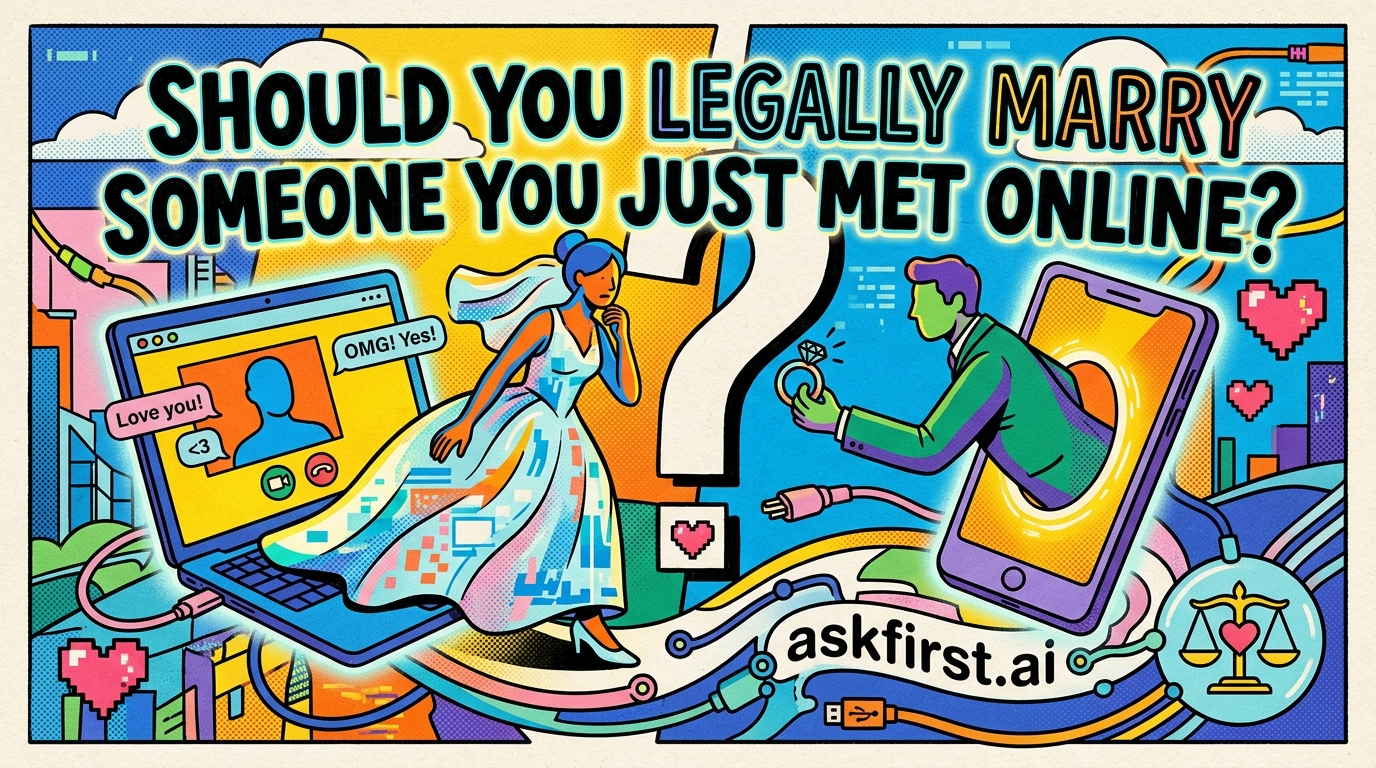
The Perils and Pitfalls of Impulsive Digital Unions
Marriage represents a foundational legal and personal contract that carries profound long-term implications. While digital connectivity has revolutionized human courtship, the phenomenon of marrying someone recently encountered online often bypasses essential psychological and legal vetting processes. Expert sociologists and legal scholars emphasize that deep compatibility requires observation across diverse real-world environments.
The Psychology of Rapid Attachment
Online interactions often thrive on "hyper-personal communication," a concept where individuals disclose intimate details faster than in face-to-face settings due to the perceived anonymity of the screen. This can create an intense illusion of intimacy—sometimes called the "Romeo and Juliet effect" or idealized projection—which blinds partners to potential red flags. Research from the University of Chicago suggests that relationship stability is significantly higher when couples have navigated "real-world" stressors, such as conflicts, financial disagreements, or social interactions with friends and family, prior to making a life-long commitment.
Legal and Financial Protections
From a legal perspective, marriage is a financial merger that alters property rights, tax statuses, and inheritance laws. Marrying someone without a thorough understanding of their financial habits, credit history, or legal background poses significant risks. Legal experts advise that:
- Financial Transparency: Marriage creates marital property that may be divided in the event of dissolution.
- Vetting: Many jurisdictions mandate waiting periods for a reason, allowing for a cooling-off phase.
- International Complexity: If the partner resides in a different country, visa fraud or citizenship-motivated marriages can lead to severe federal legal consequences for the unsuspecting party.
The Importance of the 'Offline' Test
Before entering into a legal contract, experts suggest the following stages of relationship development:
- The Extended Offline Phase: Spend consistent, non-romanticized time together in person to observe behavioral patterns.
- Conflict Resolution Testing: Observe how the potential spouse manages stress, anger, or disappointment in real-time.
- Social Integration: Observe how the individual interacts with their own community and yours. Radical shifts in personality when moving from digital to physical spaces often indicate a mismatch between the "online persona" and the true self.
Conclusion: Caution is a Virtue
While technology enables global connections, the speed of digital communication should not dictate the speed of life-altering decisions. The legal sanctity of marriage is intended to protect individuals as much as it is to unite them. Taking the time to bridge the gap between digital infatuation and authentic, long-term compatibility remains the most reliable strategy for building a sustainable, happy partnership. Patience in this context is not a lack of passion; it is a profound act of wisdom and self-preservation that ensures the foundation of the relationship is solid enough to weather the unpredictable storms of life.