The Psychology of Quiet Luxury: Why the Wealthy Embrace Minimalism
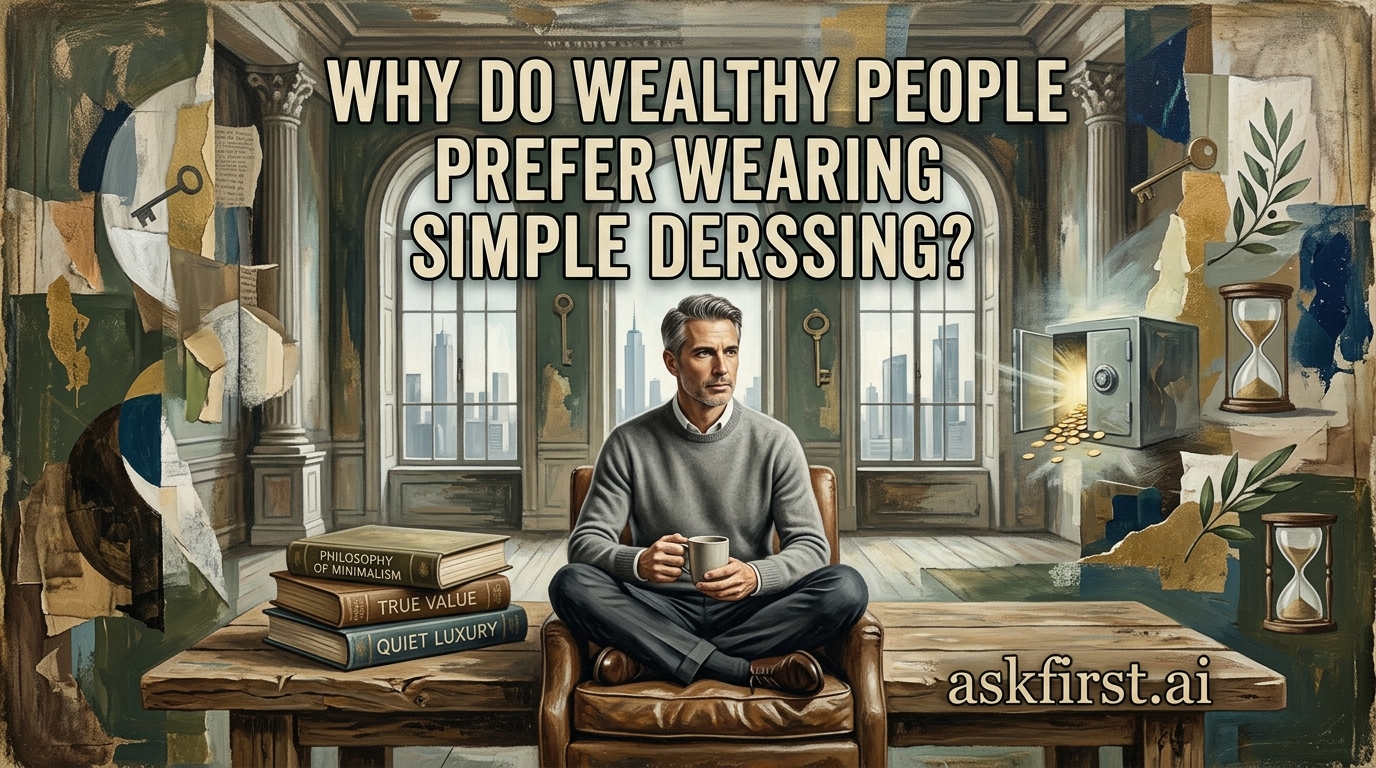
In an era defined by hyper-consumerism, the tendency of the ultra-wealthy to favor simple, understated clothing—a phenomenon often termed "Quiet Luxury" or "Stealth Wealth"—has become a subject of intense sociological and psychological study. While historical elites once used ostentatious displays of finery to signal status, the modern affluent class increasingly utilizes simplicity as the ultimate marker of social capital.
The Psychological Drivers of Minimalist Fashion
The preference for simplicity among the wealthy is rooted in several key psychological and practical pillars:
- Decision Fatigue Mitigation: Figures like Steve Jobs, Mark Zuckerberg, and Barack Obama have famously cited the reduction of "decision fatigue." By standardizing their wardrobe, high-achieving individuals eliminate the cognitive load of daily sartorial choices, reserving their mental energy for high-stakes decision-making.
- Signaling Sophistication: In high-society circles, shouting one’s wealth through logos is often perceived as "new money" or gauche. True status, according to social signaling theory, is demonstrated through the ability to identify quality without external validation. Wearing a $1,000 plain cashmere sweater that lacks a visible brand label acts as a "dog whistle" to others of the same socioeconomic bracket, signaling membership in an exclusive club of those who know the value of the garment.
- The "Uniform" Effect: Establishing a personal uniform creates a consistent brand identity. It reinforces a narrative of reliability, focus, and lack of vanity, which are traits often associated with leadership and professional competence.
Historical Context and Evolution
Historically, "conspicuous consumption"—a term coined by Thorstein Veblen in 1899—described how the wealthy used luxury goods to display their power. However, as luxury goods became more accessible through mass-market replication, the elite shifted their strategy. They moved toward "inconspicuous consumption." By adopting simple, high-quality basics, the wealthy distinguish themselves from the aspirational middle class who may prioritize brand visibility.
Practical Benefits of the Minimalist Wardrobe
- Longevity and Sustainability: Wealthy individuals often invest in "Buy It For Life" (BIFL) pieces. High-end fabrics like Grade-A cashmere, vicuña, or bespoke Italian wool last for decades, offering a better long-term return on investment than fast-fashion trends.
- Versatility: A simple, monochromatic wardrobe allows for seamless transitions between boardrooms, travel, and social engagements.
- Comfort as Luxury: For those who can afford anything, comfort is the ultimate luxury. High-quality natural fibers offer superior breathability and tactile pleasure compared to synthetic, logo-heavy apparel.
Pros and Cons of Simple Dressing
| Pros | Cons |
|---|---|
| Cognitive Efficiency: Less time spent shopping. | Risk of Underdressing: Potential to be perceived as underdressed in formal settings. |
| Timelessness: Styles do not go out of fashion. | High Entry Price: Quality basics require significant upfront capital. |
| Reduced Clutter: Minimalism fosters a more organized lifestyle. | Anonymity: May fail to express individual personality or creativity. |
Future Trends: The Digital Age
As we look toward the future, the trend of "Quiet Luxury" is being accelerated by the digital age. In a world of screen-based interactions, the tactile quality of clothing becomes more important than the visual impact of a logo. We expect this trend to persist, as the wealthy continue to prioritize "stealth" over "show" to maintain their social distinction in an increasingly crowded global market.