The Duality of Love: Biological Impulse vs. Conscious Construct
The question of whether love is a fleeting feeling or a deliberate belief system is one of the oldest debates in philosophy, psychology, and neuroscience. To understand love, one must examine it through the lenses of evolutionary biology, cognitive psychology, and cultural anthropology.
The Biological Foundation: Love as a Feeling
At its most primal level, love is a neurochemical phenomenon. Evolutionary biologists argue that love is an adaptive mechanism designed to ensure species survival. When we experience "falling in love," our brains undergo a complex cascade of chemical reactions:
- Dopamine: Creates the euphoric "high" associated with new attraction.
- Oxytocin and Vasopressin: Often called the "cuddle hormones," these facilitate long-term bonding and attachment.
- Serotonin: Levels fluctuate, often leading to the obsessive thoughts characteristic of early-stage infatuation.
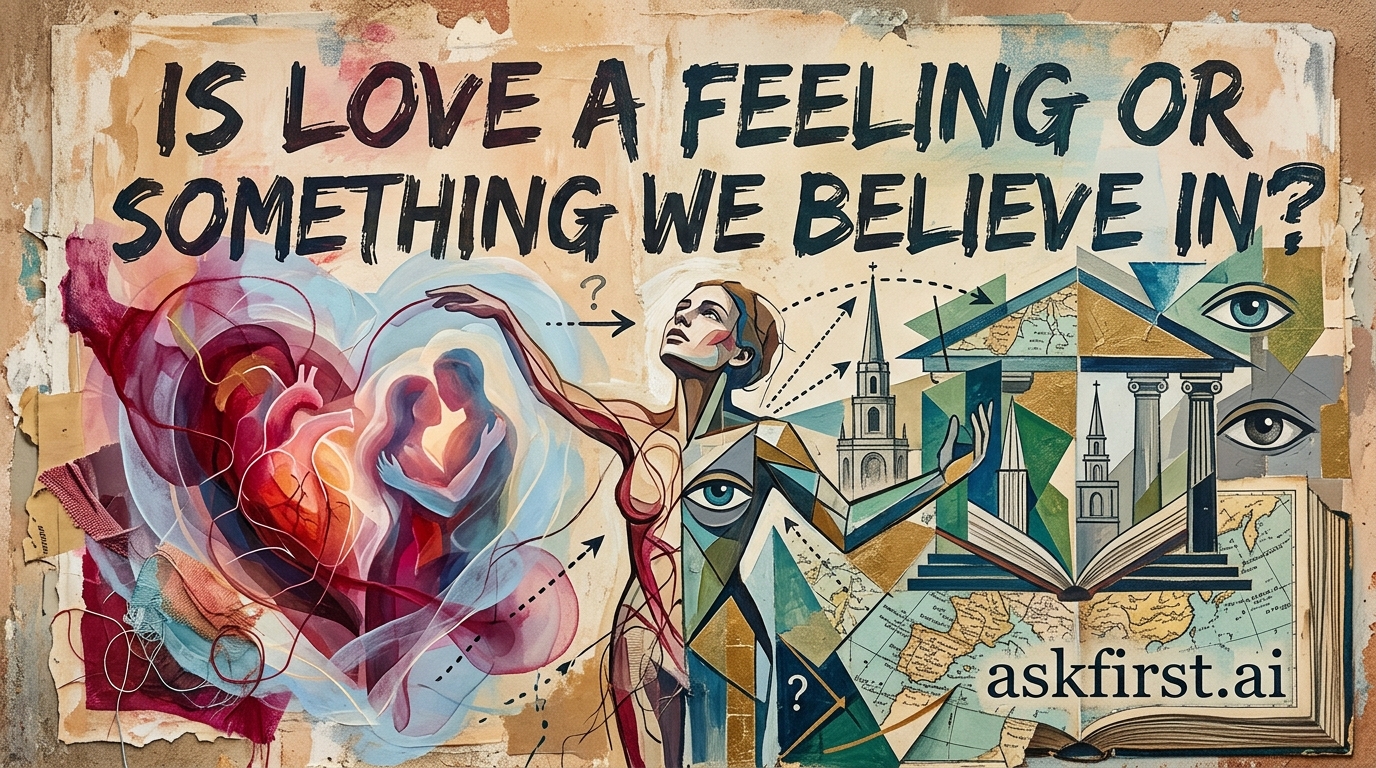
From this perspective, love is a feeling—an involuntary physiological response to stimuli. It is the body’s way of incentivizing reproduction and communal protection. This "feeling" is often transient, explaining why the intensity of initial attraction (limerence) inevitably fades as the brain habituates to the stimulus.
The Cognitive Framework: Love as a Belief
If love were merely a feeling, long-term relationships would be impossible once the initial neurochemical surge dissipated. This is where love transcends biology and becomes a belief system.
To believe in love is to treat it as a verb—a series of conscious choices and commitments. In this context, love is:
- A Moral Commitment: Deciding to prioritize another person’s well-being regardless of one's current emotional state.
- A Narrative Construct: We "believe" in love because we organize our lives around the stories we tell about our connections. We choose to interpret shared history and mutual support as a meaningful bond.
- A Value System: Many cultures view love as a duty or a spiritual practice, shifting the focus from "how I feel" to "how I act."
Pros and Cons of the Duality
The Feeling-First Approach
- Pros: Leads to spontaneous, passionate, and authentic human connections.
- Cons: Highly unstable; prone to ending when the "spark" dies, leading to serial monogamy.
The Belief-First Approach
- Pros: Provides stability, resilience during hard times, and deep, lifelong companionship.
- Cons: Can risk stagnation or emotional detachment if the underlying feelings are completely ignored.
The Synthesis: Love as an Integrated Practice
Modern psychological consensus suggests that love is neither just a feeling nor just a belief, but a dynamic integration of both. The feeling provides the initial motivation, while the belief provides the infrastructure for longevity.
Practical Guide to Sustaining Love
- Acknowledge the Cycle: Understand that feelings will fluctuate. Do not panic when the "in love" sensation wanes; this is a biological reset.
- Act Intentionally: When the feeling is absent, rely on the belief. Perform acts of service and maintain communication as a matter of principle.
- Cultivate Shared Meaning: Build a life, shared goals, and mutual values. This creates a "belief" in the relationship that exists independently of daily moods.
Ultimately, love is a bridge between our biological imperatives and our capacity for rational, moral agency. It is a feeling we experience, but a belief we sustain.