The Psychology of Trust: Analyzing Expert Guidance vs. Personal Bonds
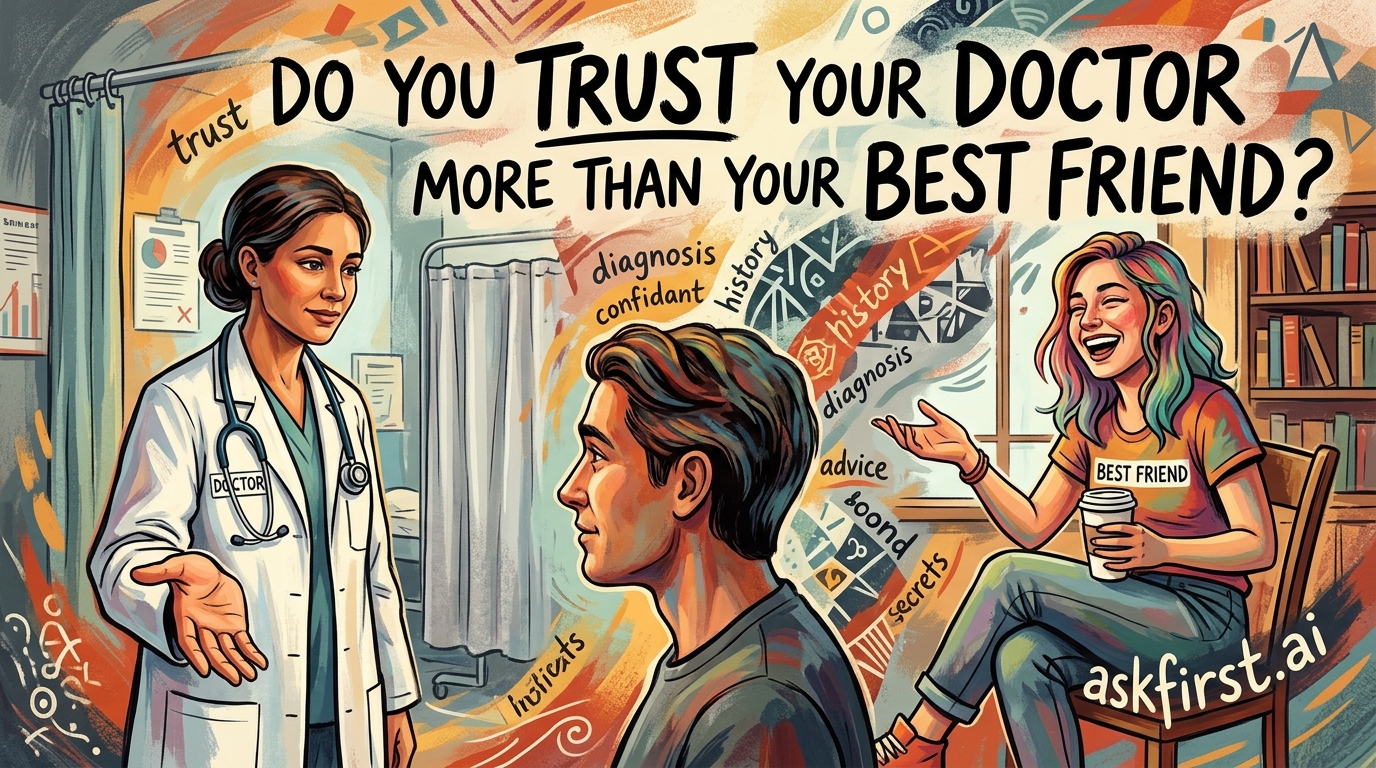
Trust represents a complex psychological construct that dictates how individuals navigate information and emotional support. Discerning the difference between institutional trust, such as that placed in medical professionals, and relational trust, found in deep personal friendships, remains a central theme in human sociology. Evaluating whom to trust requires an understanding of functional roles versus emotional depth.
Institutional Trust: The Role of Expertise
Trust in a doctor is fundamentally built upon professional competence, adherence to clinical standards, and the perceived ethical obligation of the Hippocratic Oath. This form of trust is transactional and evidence-based. It relies on:
- Academic Credentials: Verification that the individual has completed standardized rigorous training.
- Objective Diagnostic Ability: The expectation that the professional provides data-driven insights rather than biased personal advice.
- Safety Protocols: Reliance on the systems and oversight that govern medical practice to ensure patients remain protected.
When dealing with physiological or structural life challenges, the expert guidance of a medical professional acts as the gold standard. The benefit of this dynamic is its impartiality. A doctor is trained to view issues through a lens of scientific rigor, often stripping away the emotional noise that might cloud personal judgment.
Relational Trust: The Value of Unconditional Support
Conversely, a best friend offers a level of intimacy and history that no professional can replicate. Trusting a friend is based on reciprocal vulnerability and the assumption of shared values. This bond provides:
- Emotional Resilience: Friends provide psychological buffering that improves subjective well-being.
- Subjective Wisdom: Insights derived from years of shared experiences and a deep understanding of one’s unique life trajectory.
- Loyalty: While a doctor is an expert on a subject, a friend is an expert on the individual.
Research in social psychology, such as that highlighted in the Journal of Social and Personal Relationships, suggests that high-quality friendships serve as primary buffers against stress. A friend may not hold a medical license, but their ability to influence one's decision-making through empathetic alignment is often more powerful than the rational, yet clinical, advice provided in a sterile office.
Synergizing the Two Pillars
Comparing these forms of trust is often a category error because they serve distinct human needs. Relying on a doctor for biological or specialized knowledge while turning to a best friend for emotional grounding and wisdom creates a balanced ecosystem of trust. Relying solely on one party for all guidance ignores the fundamental human necessity for both objective logic and subjective empathy. Therefore, the most successful individuals treat their medical team as high-level consultants for data and their friends as the primary stakeholders in their overall life satisfaction and happiness, ensuring that both resources are used to their maximal benefit.