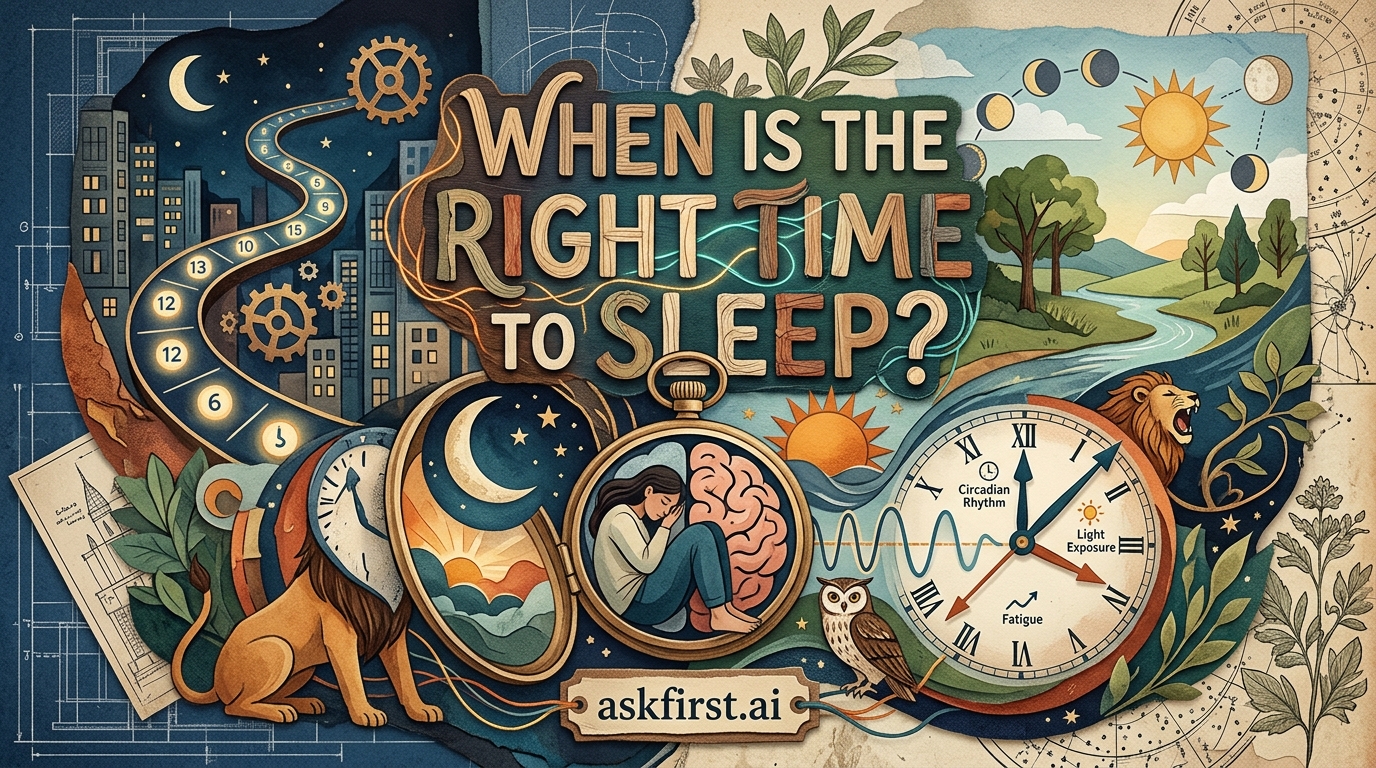
The Science of Sleep Timing: Optimizing Your Circadian Rhythm for Peak Performance
Determining the "right" time to sleep is not a universal constant but a biological negotiation between your internal circadian clock and external environmental cues. While individual needs vary, sleep science emphasizes consistency and alignment with natural light cycles.
1. The Biological Foundation: Circadian Rhythms
The human body operates on a 24-hour internal cycle known as the circadian rhythm, regulated primarily by the suprachiasmatic nucleus (SCN) in the brain’s hypothalamus. This master clock responds to light exposure, which triggers the pineal gland to modulate melatonin production.
- The Melatonin Window: Typically, melatonin levels begin to rise around 9:00 PM to 10:00 PM, signaling the body to prepare for rest.
- The "Golden Window": Most sleep experts suggest falling asleep between 10:00 PM and 11:00 PM. This timing aligns with the body’s natural temperature drop and hormonal shifts, ensuring you capture the most restorative deep sleep (Slow-Wave Sleep) that occurs during the first half of the night.
2. Chronotypes: Are You a Lark or an Owl?
Not everyone functions optimally on the same schedule. Dr. Michael Breus categorizes humans into four "chronotypes" that dictate ideal sleep-wake times:
- Lions: Early risers, naturally productive in the morning. Best sleep time: 9:30 PM.
- Bears: Follow the solar cycle. Best sleep time: 10:30 PM – 11:00 PM.
- Wolves: Night owls who struggle with early mornings. Best sleep time: Midnight or later.
- Dolphins: Light sleepers prone to insomnia. Often require a structured, slightly later sleep onset to avoid anxiety.
3. Practical Guidelines for Determining Your Time
To find your optimal sleep time, follow this step-by-step approach:
- Calculate Backwards: Determine your necessary wake-up time. Adults generally require 7 to 9 hours of sleep. If you must wake at 6:00 AM, count back 7.5 hours (five 90-minute sleep cycles), placing your bedtime at 10:30 PM.
- The Consistency Rule: The most vital aspect of sleep hygiene is not the specific hour, but the regularity. Going to bed at the same time every night—even on weekends—stabilizes your circadian rhythm, making it easier to fall asleep and wake up refreshed.
- Monitor Sleep Latency: If it takes you more than 20 minutes to fall asleep, your bedtime is likely too early for your current biological state. If you are exhausted throughout the day, your bedtime is likely too late.
4. Pros and Cons of Early vs. Late Sleep
- Early Sleep (Before 10:00 PM):
- Pros: Better alignment with solar cues; increased likelihood of completing all REM cycles.
- Cons: Can lead to early morning awakening; potential social isolation.
- Late Sleep (After Midnight):
- Pros: Suits night-shift workers or "Wolves."
- Cons: Associated with higher risks of metabolic issues and mood disorders due to blue light exposure and misalignment with natural daylight.
5. Future Trends in Sleep Science
Advancements in wearable technology (Oura, Whoop, Apple Watch) are allowing individuals to track their Heart Rate Variability (HRV) and sleep stages in real-time. Future trends suggest "adaptive sleep scheduling," where AI-driven platforms will suggest bedtime adjustments based on daily stress levels, physical activity, and light exposure, effectively personalizing the "right time" to sleep for every individual.