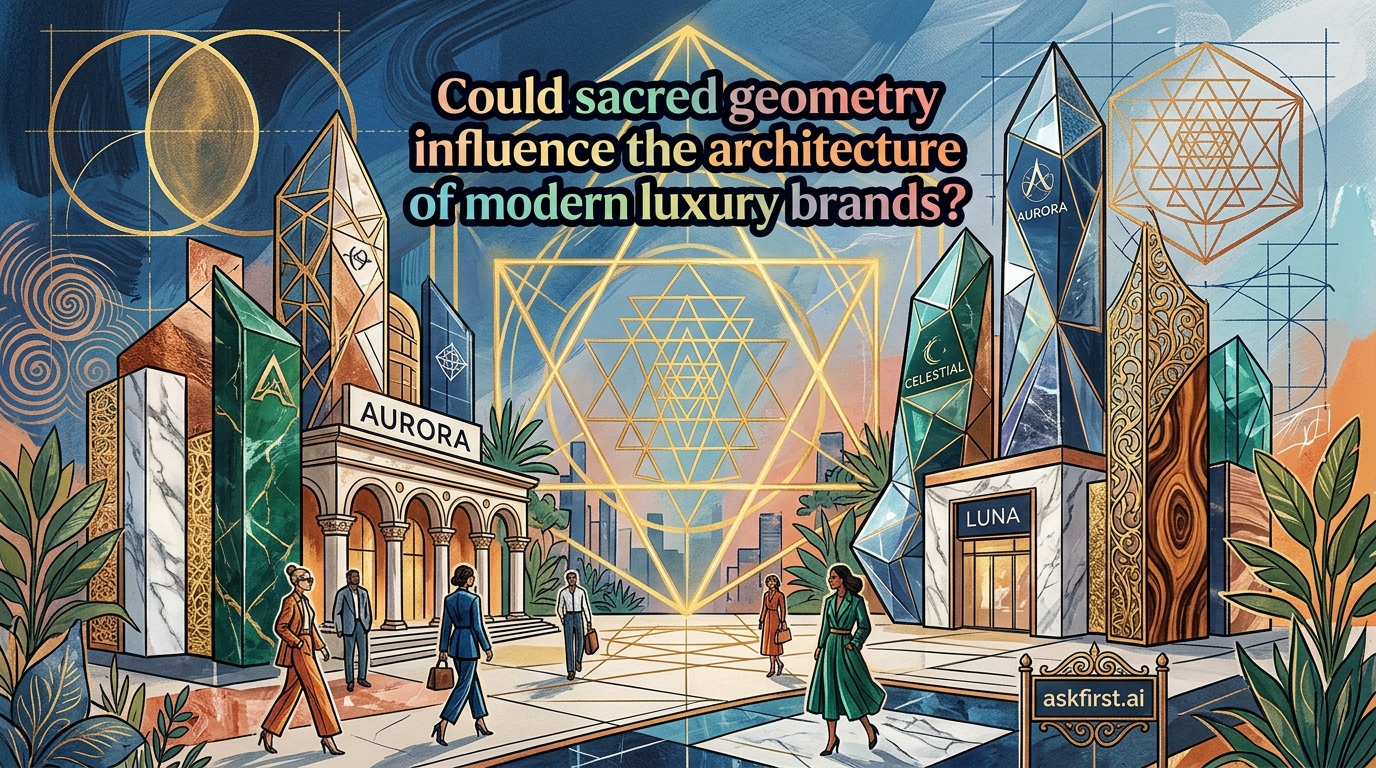
The Secret Blueprint of Luxury: Sacred Geometry in Architecture
In the world of high-end design, the physical structure of a flagship store or corporate headquarters serves as a silent ambassador for the brand. Beyond mere aesthetic appeal, many modern luxury houses employ the principles of sacred geometry—the belief that specific mathematical ratios and shapes hold intrinsic beauty and symbolic power. By integrating these ancient patterns into contemporary architecture, brands create environments that subconsciously influence human perception, fostering a sense of harmony, permanence, and exclusivity.
The Mathematical DNA of Elegance
At the core of this phenomenon lies the Golden Ratio (phi, approximately 1.618). This mathematical constant, often referred to as the Divine Proportion, is prevalent in the structure of flower petals, nautilus shells, and the human anatomy. Architects designing for luxury brands utilize this ratio to create facades and interiors that feel naturally balanced. When a human eye perceives a space designed with these ratios, the brain processes the information as "harmonious," which correlates directly with the consumer’s desire for quality and timelessness.
Key geometric elements frequently integrated into luxury spaces include:
- The Fibonacci Spiral: Used to guide foot traffic in retail boutiques, leading customers through a narrative journey that feels intuitive rather than forced.
- Vesica Piscis: Often applied to arched windows and portals, symbolizing intersection and the union of contrasting elements—a popular motif for high-fashion brands representing the marriage of tradition and innovation.
- Mandala-inspired Floor Plans: By centering layouts around a single, focal point, brands create a sense of order and serenity that contrasts sharply with the chaotic external urban environment.
Why Brands Embrace These Principles
Luxury retail is ultimately about selling a feeling of transcendence. By grounding their physical spaces in geometries that humans have associated with sacred or perfectionist ideals for millennia, brands foster deep psychological loyalty. An architecture that feels "divinely" inspired suggests that the products housed within share the same level of integrity.
Consider the minimalist yet monumental glass-and-steel storefronts found in global fashion capitals. These are rarely random configurations. They are intentional deployments of grid systems that mirror the proportions of classical Greek architecture, effectively communicating that the brand is part of a historical lineage of greatness. This subliminal message reinforces premium pricing models; if the architecture itself feels "perfect" and balanced, the consumer justifies the expense as an investment in a higher-order lifestyle.
The Architecture of Tomorrow
As luxury retail evolves into an experiential industry, the application of these ancient geometric principles will likely deepen. Future designs may incorporate biomimicry and complex fractal patterns that further engage the subconscious, ensuring that the physical environment is not just a stage, but a core component of the brand identity itself. Sacred geometry provides a timeless framework for excellence, ensuring that luxury architecture remains as relevant in the future as it was in the era of the cathedrals.