Managing Stressful Situations: A Comprehensive Guide
Stress is a physiological and psychological response to perceived threats or challenges. While acute stress can enhance performance, chronic stress leads to burnout, cognitive decline, and physical illness. Managing these situations effectively requires a multidimensional approach involving cognitive restructuring, physiological regulation, and proactive lifestyle adjustments.
1. Physiological Regulation Techniques
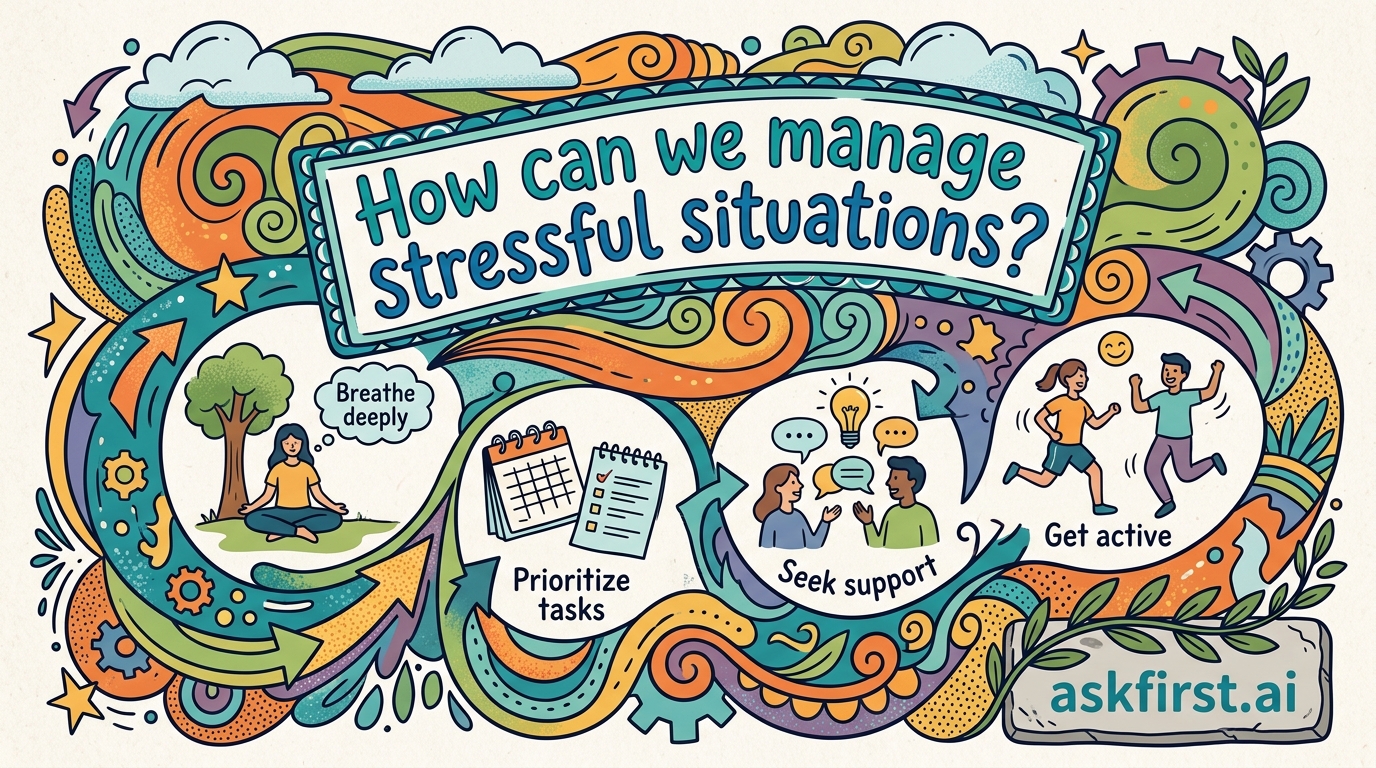
When the nervous system detects stress, it triggers the "fight-or-flight" response. To manage this, one must consciously activate the parasympathetic nervous system.
- Box Breathing: Inhale for 4 seconds, hold for 4 seconds, exhale for 4 seconds, and hold for 4 seconds. This rhythm signals safety to the brain.
- Progressive Muscle Relaxation (PMR): Tense and then release specific muscle groups to reduce somatic tension.
- Cold Exposure: Splashing cold water on the face triggers the "mammalian dive reflex," which immediately slows the heart rate.
2. Cognitive Reframing
Stress is often exacerbated by how we interpret external events. Cognitive Behavioral Therapy (CBT) principles suggest that we can alter our emotional outcomes by changing our thought patterns.
- Identify Cognitive Distortions: Recognize "catastrophizing" (assuming the worst) or "black-and-white thinking."
- Challenge the Narrative: Ask, "Is this situation truly dangerous, or is it merely uncomfortable?"
- The 10-10-10 Rule: Evaluate the situation by asking: Will this matter in 10 minutes? 10 months? 10 years? This provides essential perspective.
3. Practical Behavioral Strategies
In the heat of a stressful moment, structured action is the best antidote to anxiety.
- The "Chunking" Method: Break a large, overwhelming problem into micro-tasks. Completing a small task releases dopamine, which boosts motivation and reduces the feeling of being overwhelmed.
- Prioritization (Eisenhower Matrix): Distinguish between tasks that are urgent versus those that are important. Focus energy only on the high-impact items.
- Strategic Disengagement: If a situation is beyond control, practice radical acceptance. Acknowledge the reality of the situation without adding the "secondary suffering" of judgment.
4. Long-Term Resilience Building
Managing stress is not just about crisis response; it is about building a buffer against future triggers.
- Physical Foundations: Sleep deprivation, poor nutrition, and lack of movement significantly lower the threshold for stress tolerance. Consistent exercise acts as a "stress inoculator" by training the body to recover from elevated cortisol.
- Mindfulness and Meditation: Regular practice increases the thickness of the prefrontal cortex, which is responsible for executive control and emotional regulation.
- Social Support: Humans are social creatures. Sharing burdens with trusted peers triggers the release of oxytocin, which acts as a natural stress buffer.
5. Conclusion and Future Trends
The future of stress management is increasingly data-driven. Wearable technology now allows individuals to monitor Heart Rate Variability (HRV) in real-time, providing an objective metric of internal stress levels before the conscious mind even perceives it. By combining these technological insights with age-old psychological practices, individuals can transition from a reactive state of "coping" to a proactive state of "resilient flourishing." Mastery over stress is not about eliminating pressure, but about increasing one's capacity to navigate it effectively.