The Architecture of Ambition: How Office Design Shapes Your Career
Environment acts as the silent architect of human behavior. Research in environmental psychology suggests that the physical parameters of an office space—lighting, spatial layout, and even color palettes—exert a profound influence on cognitive processing, mood, and long-term professional decision-making. These design elements subtly nudge employees toward specific behaviors, which over time, can crystallize into a definitive career trajectory.
The Psychology of Open-Plan Versus Private Spaces
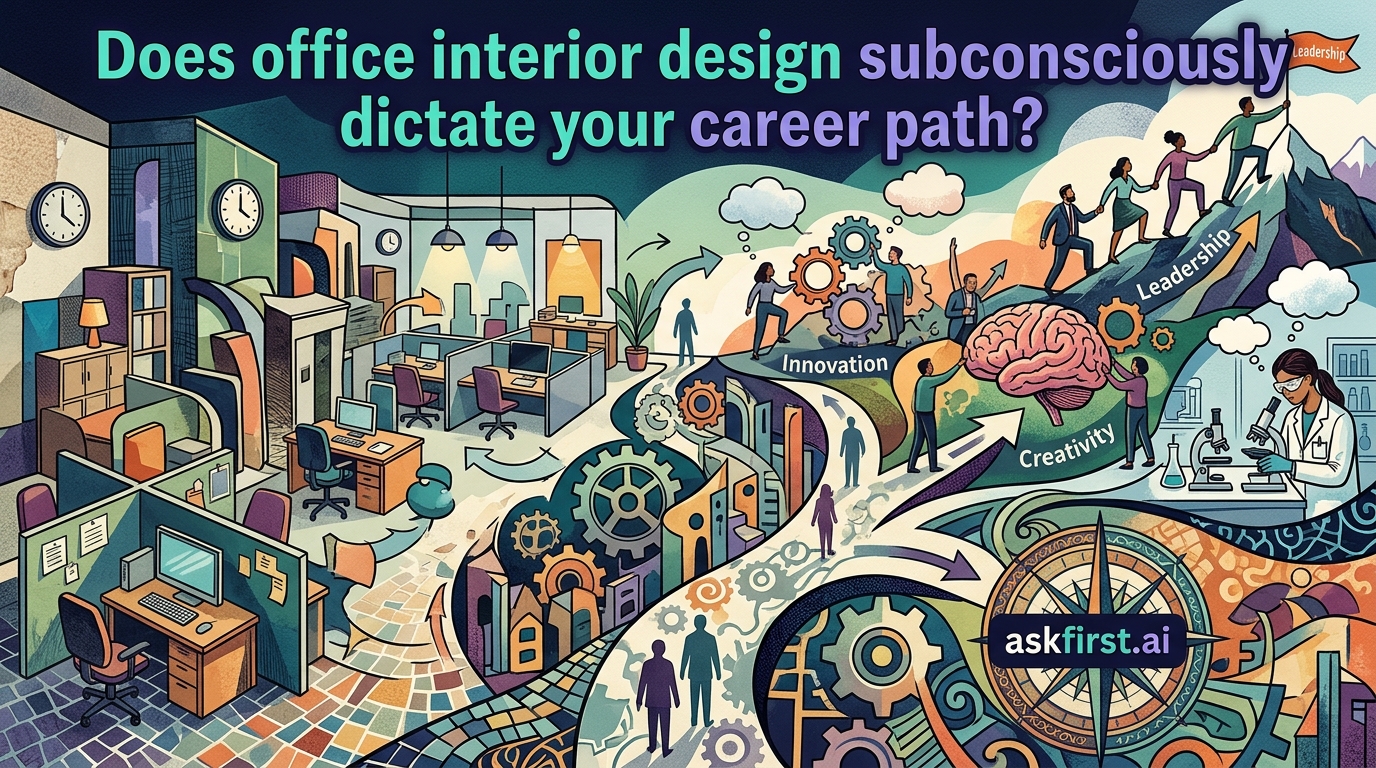
The choice between open-plan layouts and enclosed private offices is perhaps the most significant design factor impacting professional growth. Open-plan environments encourage continuous collaboration and spontaneous social interaction. Professionals residing in these spaces often develop a stronger "network-centric" career approach. Because they are constantly exposed to peer workflows, they are more likely to pursue roles in project management, team leadership, or cross-departmental operations.
Conversely, enclosed private offices facilitate deep, focused work, known as "Flow State." Employees in these environments often gravitate toward specialized, expert-based career paths—such as legal counsel, data analysis, or architecture—where intense cognitive concentration is prioritized over constant communication. By spending thousands of hours in a quiet, isolated space, the professional reinforces a preference for solo-execution, subconsciously steering their career toward roles requiring high intellectual autonomy.
Lighting and Spatial Dynamics as Catalysts
Circadian lighting systems are more than just an energy-saving innovation; they are productivity controllers. Exposure to high-intensity, cool-toned light has been linked to heightened alertness and task-oriented behavior. Offices that prioritize this dynamic lighting naturally foster a high-pressure, performance-driven culture. An employee spending years in such a "high-energy" visual environment is significantly more likely to subconsciously seek out high-octane careers, such as high-frequency trading or executive emergency response.
On the other hand, spaces with soft, ambient lighting and ergonomic lounge seating encourage "incubation periods," where creative brainstorming thrives. Professionals embedded in these design schemes often find themselves naturally gravitating toward design-thinking, innovation consulting, or entrepreneurial ventures. The environment creates a comfort zone that aligns the individual's psychological state with specific professional outputs.
The Long-Term Impact of Spatial Cues
Environmental determinism in the workplace serves as a feedback loop. When a workspace is designed to reflect prestige—using premium materials like mahogany, marble, or high-end ergonomic furniture—it triggers a psychological phenomenon known as "enclothed cognition" applied to spaces. Employees feel a greater sense of authority and value. This subconscious confidence boost often leads individuals to negotiate more aggressively, seek promotions, and exhibit leadership traits earlier in their careers.
Ultimately, the office interior is not merely a background for work; it is an active participant in your career evolution. While talent and education remain primary drivers, the physical constraints and affordances of your workspace dictate the subtle habitual responses that define the trajectory of your professional success.