The Psychology of Adolescent Deception: An Analytical Overview
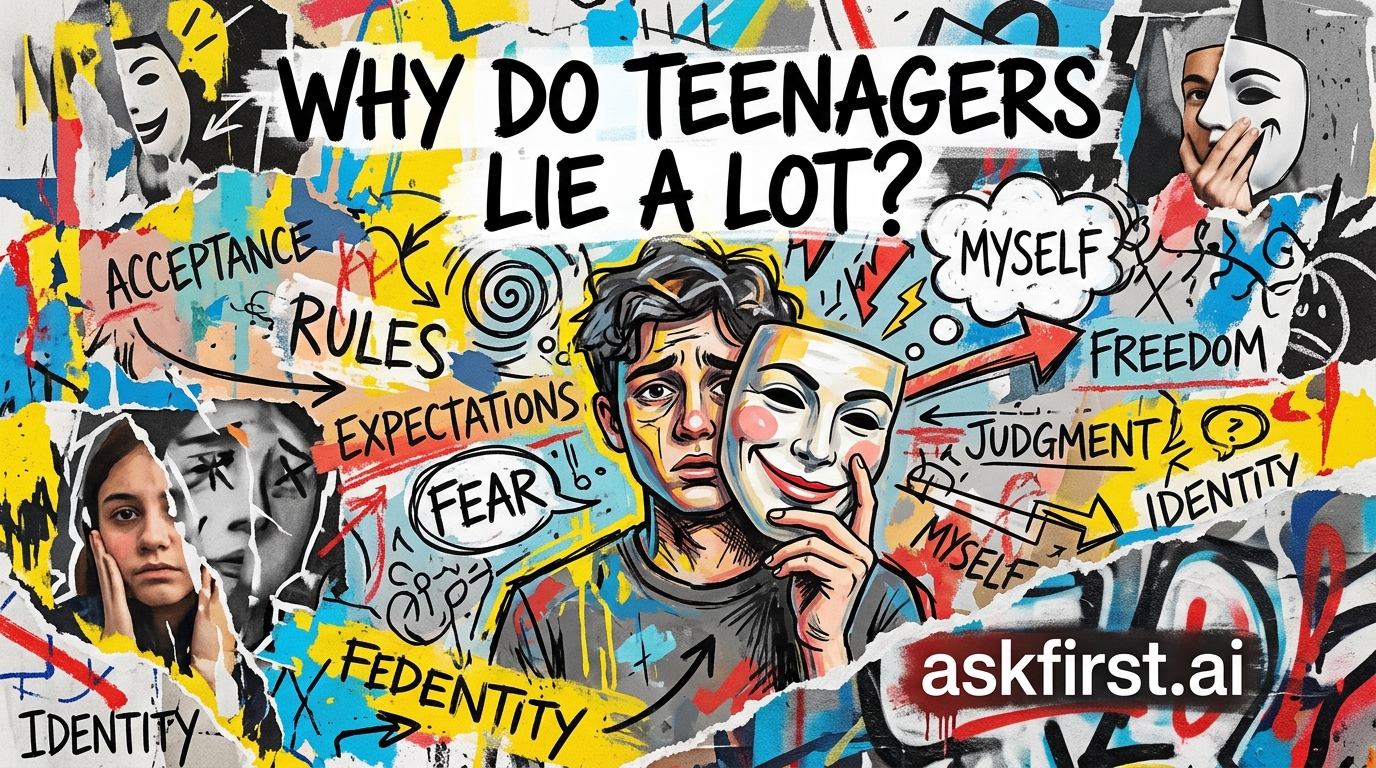
The propensity for teenagers to engage in frequent deception is a well-documented phenomenon in developmental psychology. While often perceived by parents as a moral failing or a sign of rebellion, lying during adolescence is frequently a complex, adaptive strategy rooted in cognitive maturation, the pursuit of autonomy, and the navigation of social hierarchies.
1. The Developmental Rationale
Adolescence is characterized by significant neurological changes, particularly in the prefrontal cortex—the area responsible for executive function, impulse control, and long-term planning. As teenagers seek to differentiate themselves from their parents, they undergo a "push-pull" dynamic.
- Autonomy and Privacy: Adolescents increasingly view their thoughts and actions as private domains. Lying often serves as a "boundary-setting" mechanism to claim independence from parental surveillance.
- Cognitive Sophistication: As cognitive abilities expand, teenagers become more adept at "Theory of Mind"—the capacity to understand that others have different perspectives. This allows them to construct more complex, plausible narratives to avoid conflict or social scrutiny.
2. Primary Motivations for Dishonesty
Research suggests that teenage lies generally fall into three distinct categories:
- Prosocial Lies: These are intended to protect others' feelings or maintain social harmony. An example is telling a friend they look good when they do not, to avoid hurt feelings.
- Self-Protective Lies: The most common form, these are used to avoid punishment, criticism, or the loss of privileges. This is a survival mechanism against perceived over-regulation.
- Self-Enhancement Lies: These are used to boost social standing, gain popularity, or fit into a specific peer group. In the digital age, this is often manifested through social media curation.
3. The Impact of Peer Pressure
During the teenage years, the brain’s sensitivity to social rewards peaks. The desire for peer acceptance often outweighs the desire for parental approval. If a peer group normalizes certain behaviors (such as drinking, skipping school, or unconventional fashion), a teenager may lie to parents to conceal participation in these activities, viewing the lie as a necessary cost for social integration.
4. Practical Strategies for Parents
Managing adolescent deception requires a shift from punitive measures to relational ones:
- Foster Open Communication: Create a "low-stakes" environment where the teenager feels safe admitting mistakes without immediate, harsh consequences.
- Focus on the "Why": Instead of focusing solely on the lie, ask why they felt they needed to hide the truth. Is the rule too strict? Is the fear of disappointment too high?
- Model Honesty: Parents who demonstrate transparency in their own lives—admitting their own mistakes—set a powerful precedent.
- Pick Your Battles: Not every minor obfuscation warrants a confrontation. Differentiate between "safety-critical" lies (e.g., drug use, dangerous activities) and "privacy-seeking" lies (e.g., who they were texting).
5. Future Trends and Digital Implications
The digital landscape has fundamentally altered the nature of teenage deception. Platforms like Snapchat, TikTok, and encrypted messaging apps provide "hidden" spaces where teenagers can experiment with their identities away from adult supervision. Future trends suggest that as AI-driven content and digital anonymity increase, the traditional concept of "the lie" may evolve into a broader spectrum of "digital persona management."
Conclusion
Lying is rarely a sign of a character flaw in teenagers; rather, it is a developmental milestone. By understanding the underlying psychological pressures—social, neurological, and emotional—parents and educators can move from a place of frustration to a place of guidance, helping adolescents navigate the path toward authentic adulthood.