The Imperative of Due Diligence: Why You Should Never Sign Without Reading
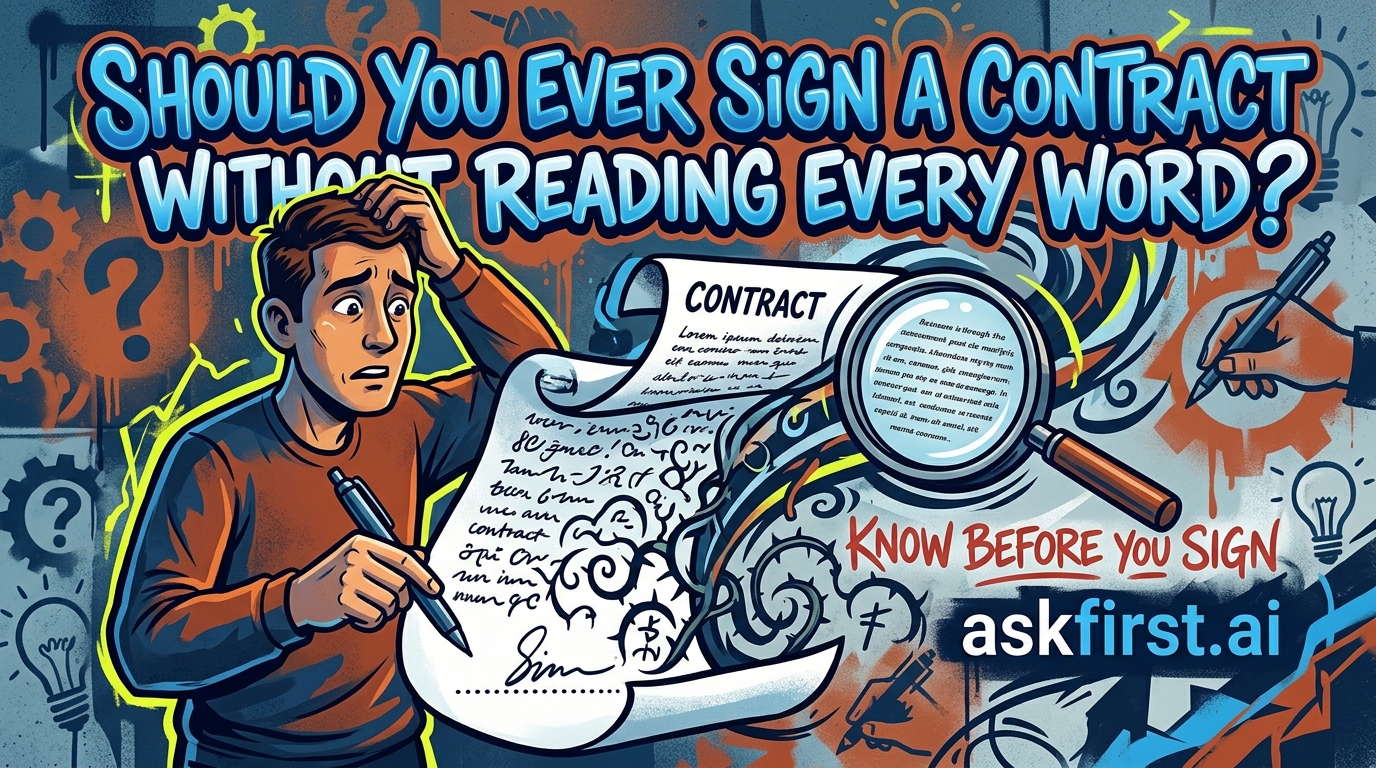
In the realm of legal, financial, and personal agreements, the act of signing a document is a formal expression of "meeting of the minds." Legally, a signature serves as an acknowledgment that you have read, understood, and agreed to the terms contained within. Under no circumstances should you ever sign a contract without reading every single word. To do so is to voluntarily relinquish your agency and expose yourself to significant, often irreversible, liability.
The Legal Doctrine of "Duty to Read"
The cornerstone of contract law in most jurisdictions is the Duty to Read. Courts consistently uphold the principle that an individual is bound by the contents of a document they sign, regardless of whether they actually read it. Ignorance of a clause is not a valid legal defense. If you sign a document containing hidden fees, predatory arbitration clauses, or restrictive non-compete agreements, the court will presume you accepted those terms. By signing without reading, you are essentially providing a "blank check" to the other party.
Risks of Signing Unread Documents
- Hidden Financial Obligations: Contracts often contain "fine print" that includes automatic renewal clauses, early termination fees, or variable interest rates that can escalate over time.
- Arbitration and Jurisdiction: Many modern contracts include mandatory arbitration clauses that strip you of your right to sue in a court of law, forcing you into private, often biased, dispute resolution.
- Liability Shifts: You may inadvertently agree to indemnify the other party for damages, effectively assuming responsibility for risks that should rightly be borne by the service provider or employer.
- Intellectual Property Loss: In employment or freelance contracts, you might sign away ownership of your creative work without realizing it.
A Practical Guide to Contract Review
When presented with a contract, follow this systematic approach to ensure you are fully protected:
- Allocate Dedicated Time: Never review a contract under pressure. If a representative pressures you to "just sign here," treat it as a red flag.
- Identify the "Big Three": Focus your initial review on Payment Terms (how much and when), Termination Clauses (how to exit the contract), and Liability Limitations (what happens if things go wrong).
- Define the Scope: Ensure that any verbal promises made by a salesperson or recruiter are explicitly written into the document. If it isn't in the contract, it effectively does not exist.
- Use Plain Language Tools: If legal jargon is overwhelming, utilize AI-assisted tools or online glossaries to translate "legalese" into understandable terms.
- Seek Professional Counsel: For high-stakes agreements—such as mortgages, business acquisitions, or employment contracts—always consult a qualified attorney. The cost of a consultation is negligible compared to the potential cost of a bad contract.
Future Trends: Digital Contracts and AI
As we move further into the digital age, "click-wrap" agreements (those accepted by clicking a button) have become ubiquitous. While these are often lengthy, the rise of AI-driven contract analysis software is helping consumers summarize complex documents in seconds. However, technology should augment, not replace, your personal scrutiny. Always remember: your signature is your most powerful tool in business and life. Treat it with the gravity it deserves by ensuring you are fully informed before you commit.