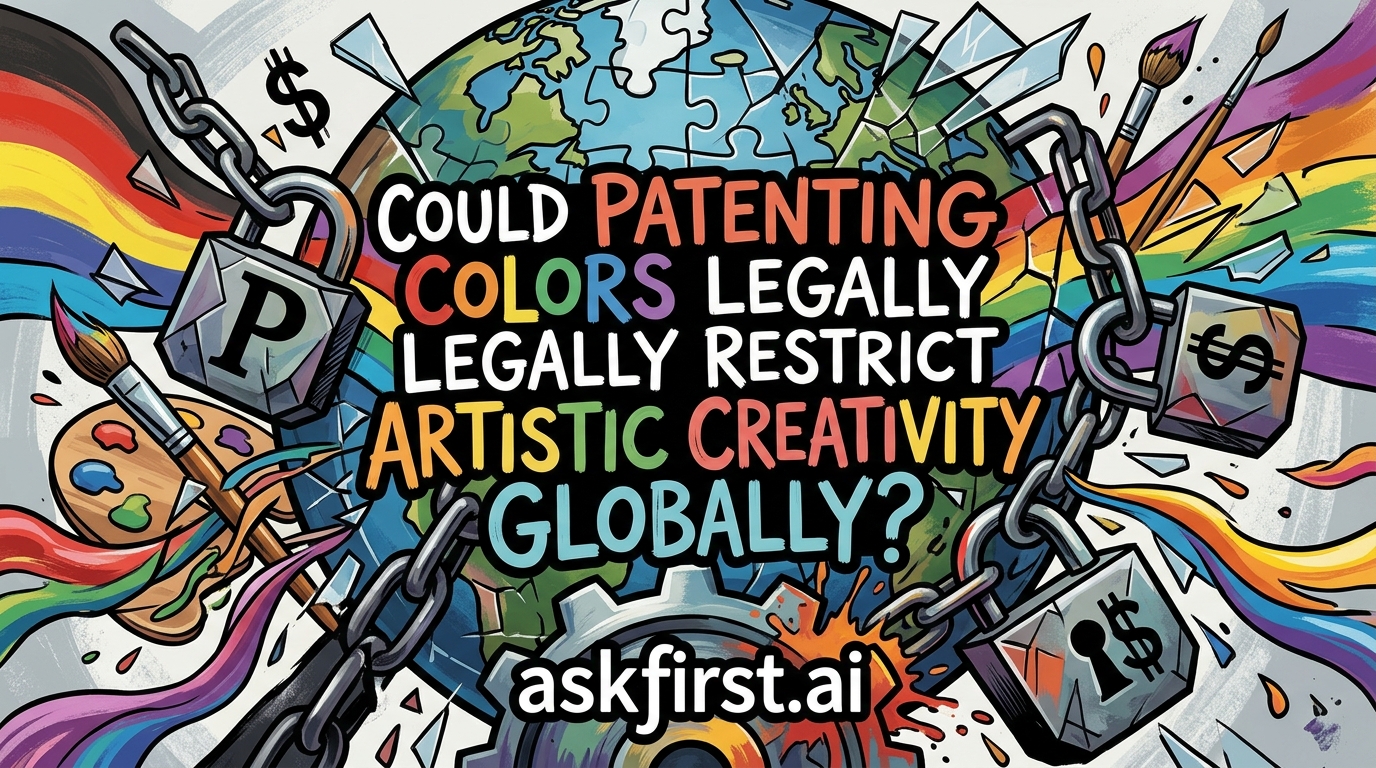
The Legal Battle for Color: Can You Really Own a Hue?
The prospect of owning a color—a fundamental building block of human expression—seems counterintuitive. While traditional intellectual property laws focus on inventions and creative works, the intersection of color and trademark law creates a fascinating, albeit controversial, landscape for artists and businesses alike.
The Legal Framework: Trademarks vs. Patents
It is essential to clarify a common misconception: you cannot "patent" a color in the traditional sense, as patents are reserved for new processes or mechanical inventions. However, you can register a color as a trademark if it serves as a source identifier for a product. Under international legal standards, such as those governed by the Madrid Protocol, a company can claim exclusive rights to a specific hue, provided that the color has acquired "secondary meaning" within the marketplace.
- Secondary Meaning: The public must associate that specific shade exclusively with a single company's brand, rather than the product itself.
- Functionality Doctrine: A color cannot be trademarked if it is essential to the function of the product. For instance, you could not trademark the color yellow for high-visibility safety vests because that color serves a critical utility.
Real-World Case Studies
Perhaps the most famous example is Tiffany Blue (Pantone 1837). Tiffany & Co. successfully trademarked this specific shade, preventing other jewelry companies from using it on their packaging. This is generally seen as a non-restrictive practice because it protects brand equity rather than artistic medium.
However, problems arise when exclusivity enters the fine arts. A prominent example is the exclusive rights granted to artist Anish Kapoor regarding Vantablack, a material so dark it absorbs 99.96% of light. While not technically a "color," the controversy sparked a global debate about whether one person should possess the rights to a specific aesthetic tool. The art community viewed this as an exclusionary practice that stifled creative freedom, leading to retaliatory "art wars" where other artists created alternative super-pigments to spite the exclusivity.
Implications for Artistic Creativity
Does this restrict global creativity? In the commercial sector, it creates high barriers to entry for startups that must avoid established palettes. If a major corporation dominates a specific shade of blue, competitors must pivot, potentially altering their design language to avoid litigation.
In the fine arts, the threat remains largely ethical rather than legal. Courts are generally hesitant to grant monopolies over colors that are vital to creative expression. The legal system balances private commercial interests against the public's right to utilize the visible spectrum. Consequently, while the legal framework allows for narrow trademarking, it provides significant guardrails against the wholesale privatization of light and color, ensuring that artists remain free to explore the full rainbow without fearing a lawsuit for using a primary shade.