The Digital Footprint in Matrimonial Law
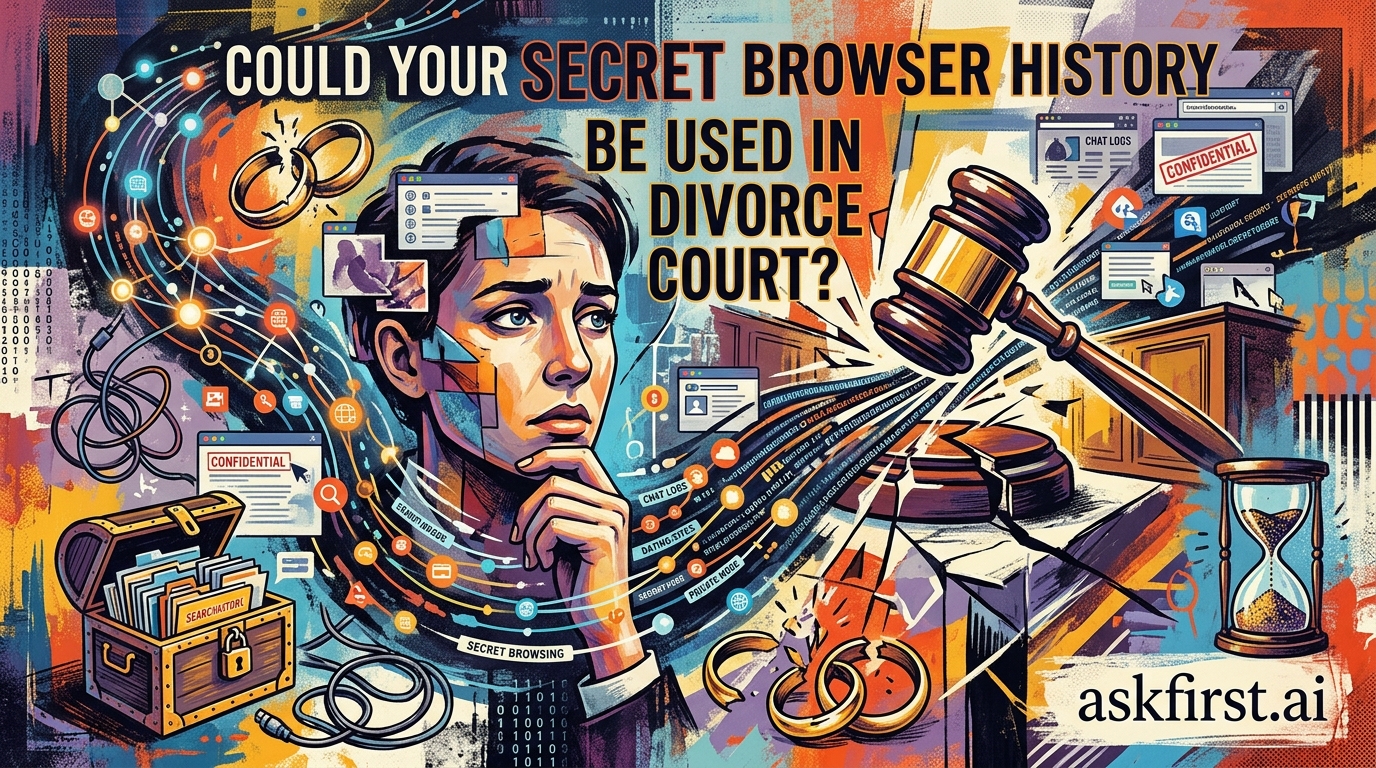
In the modern digital era, the boundaries between private online behavior and legal evidence have blurred significantly. When a marriage dissolves, the intersection of digital privacy and courtroom discovery becomes a battlefield. Browser history, search queries, and social media footprints are no longer just personal data points; they frequently become admissible evidence in divorce proceedings. Understanding how this information transitions from a hidden cache to a exhibit in court is vital for any individual navigating the complexities of modern legal disputes.
The Admissibility of Electronic Evidence
Under the rules of civil procedure in most jurisdictions, parties to a lawsuit have the right to 'discovery.' This legal process allows each side to obtain information from the other that is relevant to the case. Digital evidence, including web history, falls squarely within this category. Courts generally prioritize the pursuit of truth over absolute privacy when that privacy serves to hide facts relevant to assets, alimony, or child custody.
- Financial Discretion: If a spouse is suspected of hiding assets, spending marital funds on illicit activities, or gambling, browser history showing visits to brokerage sites, crypto-exchange platforms, or gambling portals is often subpoenaed.
- Infidelity and Fault: In jurisdictions where 'fault' remains a factor in divorce outcomes, proving extramarital relationships or inappropriate conduct through search histories—such as dating apps, hotel booking sites, or communication platforms—serves as critical evidence.
- Parental Fitness: If a dispute over child custody arises, search history concerning substance use, harmful activities, or inappropriate content consumption can directly impact a judge’s assessment of a parent’s suitability.
The Forensic Trail: Beyond the Browser Cache
Many individuals mistakenly believe that 'clearing the cache' or using 'Incognito Mode' renders their digital history non-existent. This is a significant misconception. Forensic experts explain that data exists in multiple layers:
- ISP Logs: Internet Service Providers maintain logs of domain names visited. While they may not see every sub-page, they can provide a history of websites accessed over extended periods.
- Cloud Syncing: Most modern browsers sync data across devices. If a user deletes history on a laptop but has an account logged into a tablet or smartphone, the data often persists in the cloud account, accessible via legal discovery.
- Metadata and Device Logs: Operating systems keep records of application usage and file timestamps. Even if the browser history is wiped, the 'system' knows which applications were opened and at what time.
Myths and Legal Realities
- Myth: 'Incognito mode makes me invisible.' Reality: Incognito mode only prevents the browser from saving history locally on the device. It does not mask activity from the router, the ISP, or the server being visited.
- Myth: 'My spouse cannot access my personal computer.' Reality: If a device is considered marital property, the legal barriers to accessing that device are significantly lower than for a strictly individual, non-marital asset.
- Myth: 'Deleted history is gone forever.' Reality: Digital forensics tools are highly efficient at recovering 'deleted' data from hard drives and cloud backups unless the storage media has been professionally wiped or physically destroyed.
Protecting Privacy vs. Legal Obligations
While curiosity is a human trait, legal counsel often warns clients about the dangers of digital habits during divorce. When litigation is pending, the 'duty to preserve' evidence is paramount. Intentionally deleting browser history after a legal hold or discovery request is issued can be classified as 'spoliation of evidence.' This can lead to severe sanctions, including adverse inference—where the court assumes the destroyed evidence was harmful to the party who deleted it.
Best Practices for Digital Hygiene
To avoid complications, parties undergoing divorce are encouraged to maintain transparency in financial and parental matters. Relying on the secrecy of browser history is a precarious strategy, as digital forensic recovery is common and effective in modern litigation. Instead, individuals should prioritize:
- Separating Personal and Marital Devices: Minimize the mixing of data on shared devices.
- Understanding Privacy Settings: Recognize that software-based privacy is not a substitute for legal confidentiality.
- Consulting Counsel: If concerns about digital exposure arise, discussing these with an attorney before taking any action to alter digital records is essential to avoid potential legal pitfalls.
Ultimately, the digital trail is long-lasting. In a legal context, information that seems irrelevant or deeply private today can become the centerpiece of a courtroom argument tomorrow. Respecting the reality of how digital data is stored and retrieved is the most effective approach to managing privacy during the often turbulent process of marriage dissolution.