The Legal Status of Extraterrestrial Property
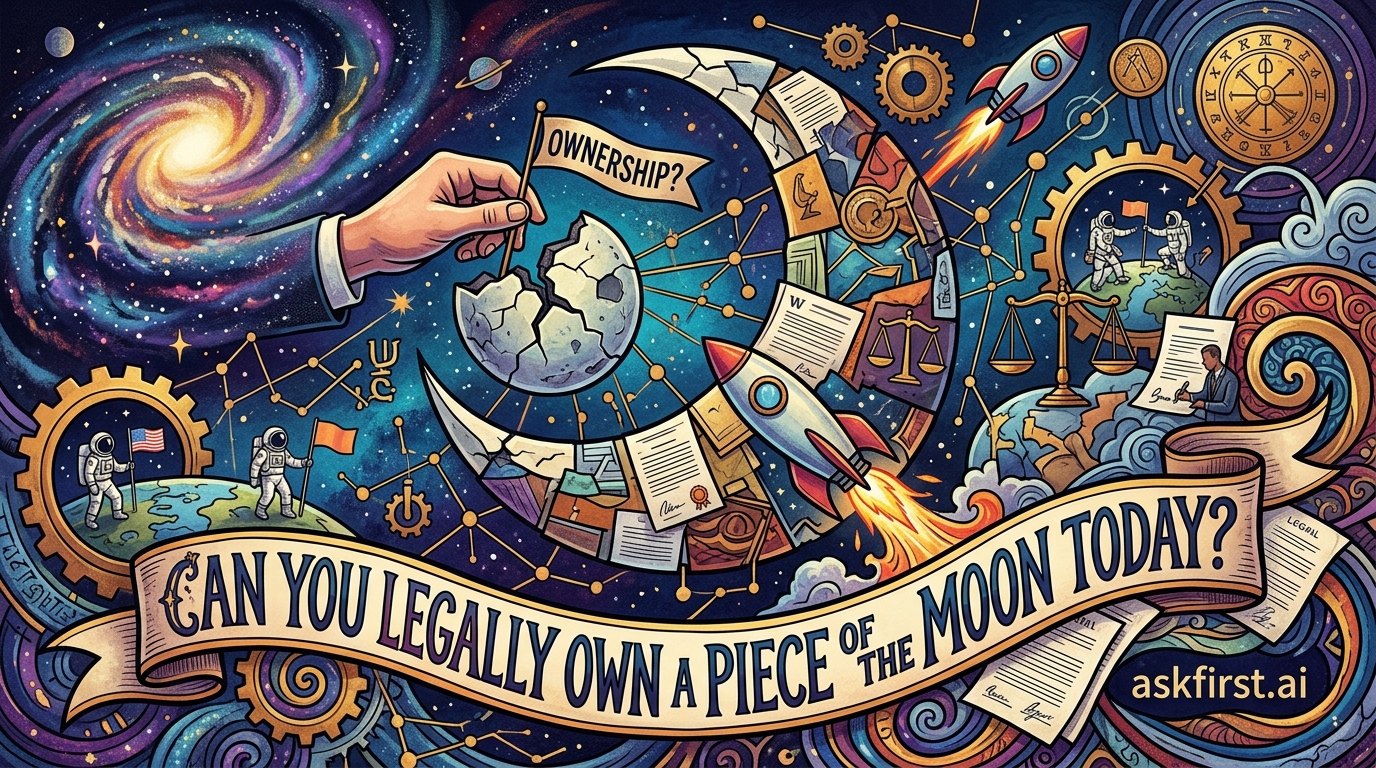
The allure of owning a slice of the celestial heavens has captivated humanity for decades. From novelty deeds sold in gift shops to serious discussions about lunar mining rights, the concept of lunar property ownership occupies a strange intersection between science fiction, commercial ambition, and international law. To answer whether one can legally own a piece of the moon, one must look at the foundational documents governing space law.
The Outer Space Treaty of 1967
The cornerstone of space law is the Treaty on Principles Governing the Activities of States in the Exploration and Use of Outer Space, including the Moon and Other Celestial Bodies, commonly known as the Outer Space Treaty (OST). Signed in 1967, this treaty is the bedrock of international space governance. Article II of the OST contains a critical clause: 'Outer space, including the moon and other celestial bodies, is not subject to national appropriation by claim of sovereignty, by means of use or occupation, or by any other means.'
This means that no nation can claim the moon as its territory. Because individual property rights are typically derived from state sovereignty, the inability of a nation to own the moon inherently prevents that nation from granting valid property deeds to its citizens. Therefore, any document claiming to grant ownership of a crater or a mare is considered legally null and void in any terrestrial court.
The Moon Agreement of 1979
While the 1967 treaty established the baseline, the Agreement Governing the Activities of States on the Moon and Other Celestial Bodies, or the 'Moon Agreement,' attempted to further refine these concepts. It reiterated that the moon and its natural resources are the 'common heritage of mankind.' However, this agreement saw significantly fewer ratifications by major space-faring nations compared to the OST. It essentially suggests that resources extracted from the moon should be managed through an international regime, which complicates the idea of private or corporate ownership of lunar materials.
Can Companies Extract and Own Resources?
While sovereignty is prohibited, the legal landscape regarding the extraction of resources is evolving. In 2015, the United States passed the SPACE Act, which allows US citizens to possess, own, transport, use, and sell 'asteroid resources and space resources' obtained in accordance with international obligations. This legislation highlights a crucial distinction: owning the land (sovereignty) versus owning the extracted materials (commerce). Under this interpretation, a company might not own the lunar soil, but if it successfully extracts water ice or helium-3, it may hold legal claim to those specific commodities.
Why Do Novelty Deeds Exist?
If the law is so clear, why can one purchase a lunar deed online? These documents are classified as novelty items rather than legal property transfers. They carry no weight under international property law, similar to buying a certificate of 'naming a star.' These sellers are essentially engaging in creative marketing, as they lack the authority to transfer property that belongs to nobody and, simultaneously, to everyone. No government recognizes these deeds, and they cannot be used to exert control over lunar land.
The Future of Lunar Governance
As the Artemis program and other international lunar exploration initiatives progress, the legal status of the moon will face new tests. Discussions are shifting from 'who owns the moon' to 'how can we conduct sustainable activities.'
- Multi-lateral cooperation: Frameworks like the Artemis Accords, while not treaties, attempt to set norms for peaceful space exploration.
- Safety Zones: Debates currently exist regarding the creation of 'safety zones' where mining operations occur to prevent interference.
- Liability: The 1972 Liability Convention dictates that launching states remain liable for damage caused by their space objects, regardless of who owns the territory where the object rests.
Summary of Ownership Reality
To summarize the legal landscape:
- Private Individuals: Cannot own lunar land; any 'deed' is purely a novelty item.
- Sovereign States: Cannot annex or claim sovereignty over the moon under the OST.
- Commercial Entities: May potentially claim ownership of specific extracted resources depending on the regulatory frameworks established by their home nations, though this remains a point of intense international legal debate.
Ultimately, the moon remains a protected, common space for all humanity. While you cannot put a fence around a crater and call it your private estate, the future of lunar development will likely redefine how humanity interacts with the lunar surface and its abundant resources.