In the modern digital landscape, data privacy has become the cornerstone of corporate governance and regulatory compliance. As organizations navigate the complexities of data protection laws—such as the General Data Protection Regulation (GDPR) in the European Union or the California Consumer Privacy Act (CCPA) in the United States—it is critical to distinguish between standard Personally Identifiable Information (PII) and Sensitive Personally Identifiable Information (SPII). While both categories involve data that can be linked to an individual, the distinction lies in the level of risk and the severity of harm that could befall the data subject in the event of a breach.
Understanding Personally Identifiable Information (PII)
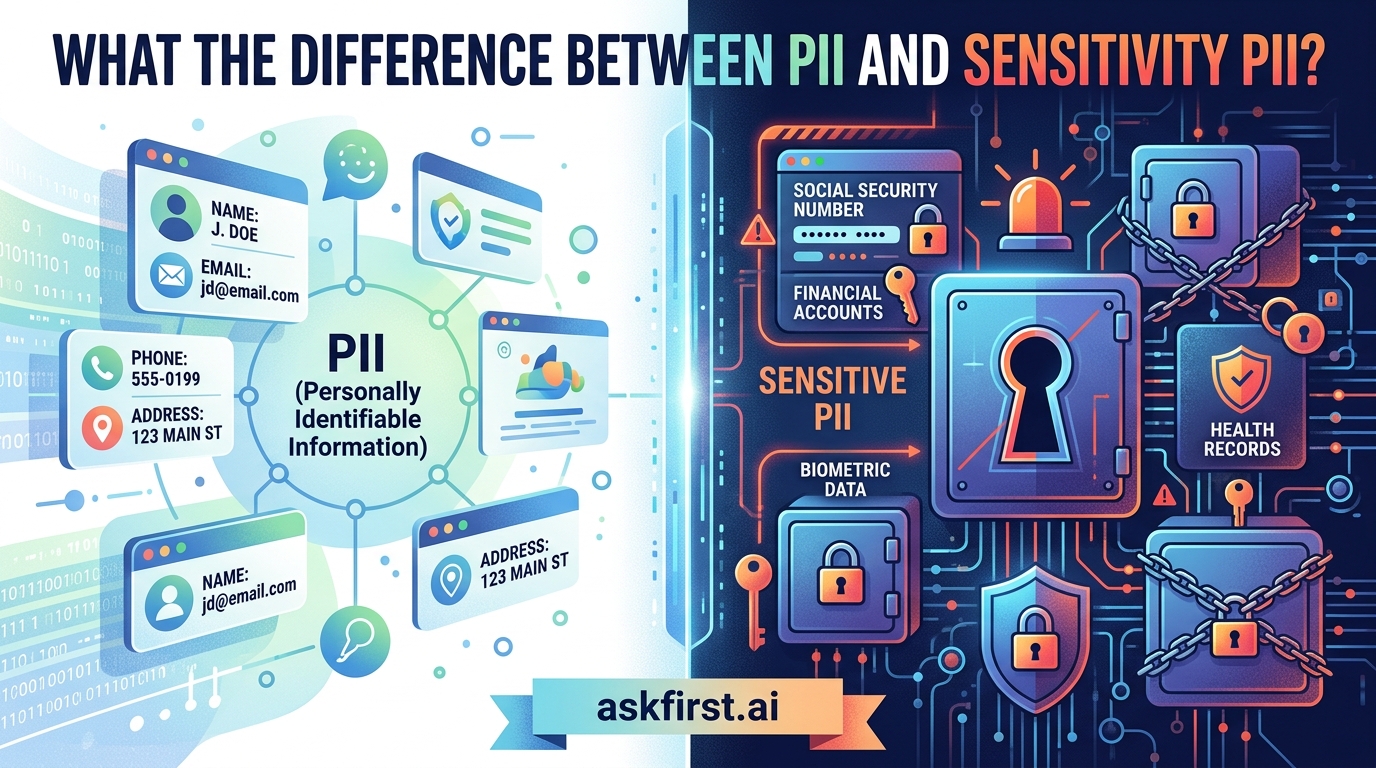
Personally Identifiable Information, or PII, is any data that, when used alone or in conjunction with other relevant information, can be used to distinguish or trace an individual’s identity. According to the National Institute of Standards and Technology (NIST) Special Publication 800-122, PII is broadly categorized into two types: "linked" information and "linkable" information.
- Linked Information: This is data that directly identifies a person, such as a full legal name, a passport number, or a driver’s license number. If someone possesses this data, they have an immediate connection to a specific individual.
- Linkable Information: This is data that, while not inherently identifying on its own, can be combined with other data points to identify someone. Examples include a date of birth, a zip code, or a generic job title. For instance, a list of people in a small town with a specific birth date and occupation is often enough to triangulate an individual's identity.
In professional environments, PII is common. It includes business email addresses, office phone numbers, and employee ID numbers. Organizations must protect this data to prevent unauthorized access, but the harm caused by a leak of, for example, a business email address, is generally considered lower than the exposure of a social security number.
Defining Sensitive PII (SPII)
Sensitive PII, often referred to as "Restricted" or "High-Impact" PII, represents a subset of information that, if exposed, could result in significant harm, identity theft, financial fraud, or reputational damage to the individual. Because of the potential for severe consequences, regulatory bodies impose much stricter security requirements on the storage and processing of SPII.
As outlined by Dr. Ann Cavoukian, the creator of "Privacy by Design," and in various governmental security frameworks (such as those maintained by the U.S. Office of Management and Budget in M-07-16), SPII typically includes data that is both specific and highly confidential. Common examples include:
- Government-Issued Identification Numbers: Social Security Numbers (SSN), tax identification numbers, or military service numbers.
- Biometric Data: Fingerprints, retina scans, facial recognition templates, or DNA profiles.
- Financial Information: Credit card numbers, bank account numbers, or investment account details.
- Medical and Health Records: Information protected under the Health Insurance Portability and Accountability Act (HIPAA), such as diagnosis codes, treatment plans, or mental health records.
- Protected Characteristics: Data concerning race, ethnicity, religious beliefs, sexual orientation, or political affiliations.
Key Differences: Risk and Regulatory Burden
The fundamental difference between PII and SPII is the risk multiplier. If a database containing names and office phone numbers is compromised, the primary risk is unsolicited marketing or minor social engineering. However, if a database containing SPII—such as SSNs and medical records—is compromised, the individual faces the risk of "life-altering" consequences, such as tax fraud, medical identity theft, or the permanent compromise of biometric identifiers that cannot be changed like a password.
From an administrative standpoint, the difference manifests in Data Classification Policies. Organizations typically apply "Defense in Depth" strategies to SPII:
- Encryption at Rest and in Transit: While general PII might be secured with standard protocols, SPII is often required to be encrypted using high-grade standards (like AES-256) regardless of where it resides.
- Access Control: SPII is subject to "Least Privilege" access, where only a handful of vetted personnel can view the data, whereas standard PII might be accessible to broader departments like Human Resources or Sales.
- Breach Notification Laws: Under laws like the GDPR (Article 33), a breach of SPII triggers mandatory reporting to supervisory authorities within 72 hours, whereas minor PII breaches may have different or less stringent reporting thresholds.
Conclusion
In summary, while all Sensitive PII is technically PII, not all PII is sensitive. PII serves as the identifier that allows organizations to function and communicate, while Sensitive PII constitutes the core of an individual's private life and financial security. Understanding this distinction is not merely an academic exercise; it is a legal and ethical imperative. By categorizing data correctly, organizations can allocate their security resources effectively, ensuring that the most dangerous information is protected with the highest level of rigor, thereby safeguarding the individuals they serve from the devastating impacts of identity theft and data exploitation. As data privacy evolves, the burden of proof for protecting SPII will only increase, making these definitions the bedrock of any robust information security program.