The Legal Landscape of Digital Credential Sharing
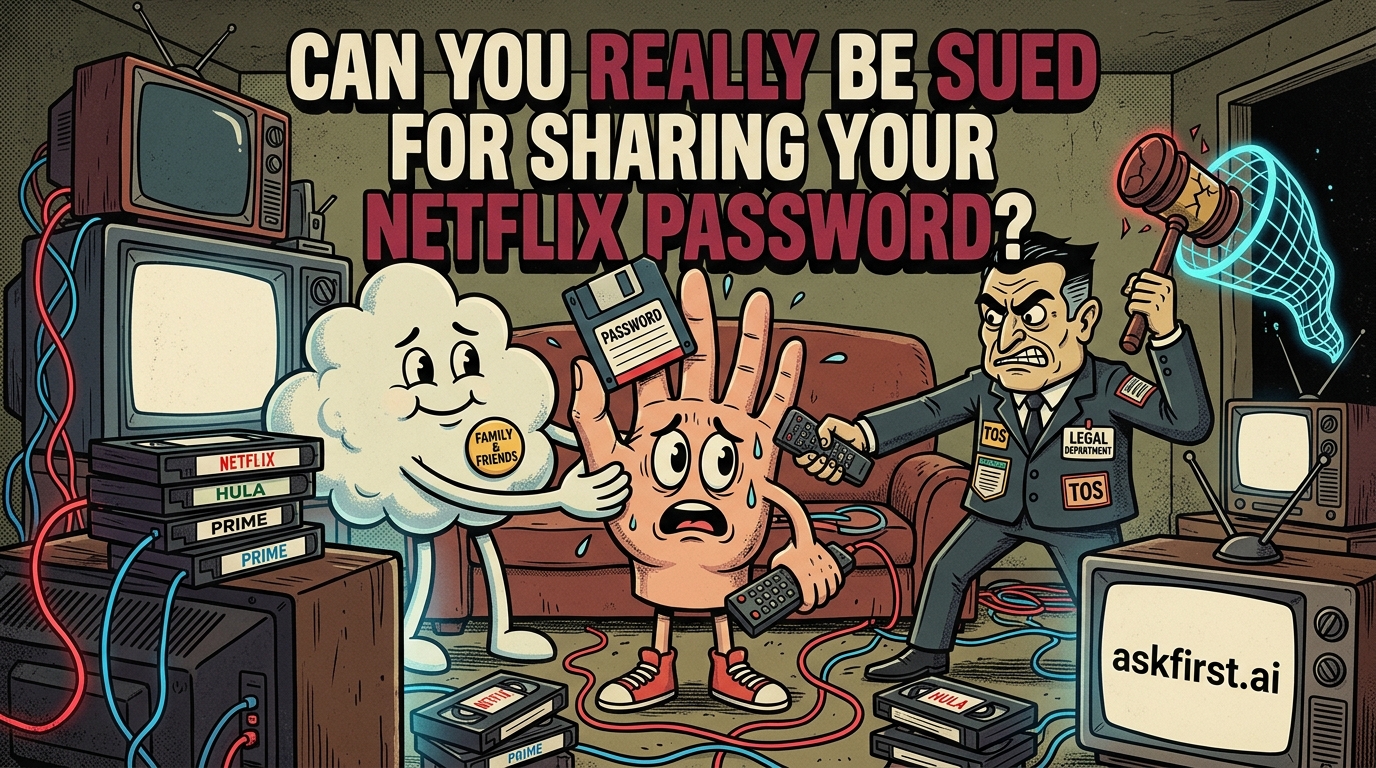
The question of whether sharing a Netflix password constitutes a legal infraction is a subject that balances contractual law, federal legislation, and the shifting dynamics of intellectual property rights. While the phenomenon of account sharing is ubiquitous, the intersection of Terms of Service (ToS) and state or federal statutes creates a nuanced legal gray area. To understand the risks involved, one must distinguish between a civil contractual breach and a criminal violation.
The Contractual Reality: Terms of Service
At the core of the issue are the Terms of Use provided by streaming platforms. When a user creates an account, they enter into a legally binding contract. Most major streaming services include clauses restricting the use of the account to the individual subscriber and their household. By sharing passwords with people outside the immediate household, a subscriber is technically in breach of contract. However, a breach of contract is typically a civil matter, not a criminal one. In most instances, the remedy for such a breach is not a lawsuit for damages, but rather the termination of the account or the revocation of access rights.
The Computer Fraud and Abuse Act (CFAA)
In the United States, the primary federal law concerning unauthorized access to computer systems is the Computer Fraud and Abuse Act (CFAA). Historically, some legal theorists suggested that if a user accesses a service in a way that violates the platform's ToS, they could theoretically be committing unauthorized access under the CFAA. However, recent legal precedents, such as the Supreme Court ruling in Van Buren v. United States (2021), have significantly narrowed the scope of the CFAA. The Court clarified that the act applies to individuals who access data they are not authorized to reach at all, rather than individuals who use authorized data for prohibited purposes. Consequently, simple password sharing among friends or family is unlikely to meet the stringent threshold required for federal criminal charges.
Civil Liability and Potential Litigation
While criminal prosecution is highly improbable for the average consumer, the realm of civil litigation is theoretically broader. Corporations rarely sue individual users for password sharing because the costs of litigation far outweigh the potential recovery. Furthermore, mass litigation against a company's own customer base is widely viewed as a public relations catastrophe. Instead of courtroom battles, companies have shifted their strategy toward technological enforcement, such as IP address tracking, device verification codes, and geo-fencing, which effectively "lock" accounts to a primary location.
Intellectual Property and Fraud Statutes
There is a critical distinction between private, non-commercial sharing and the unauthorized sale or redistribution of access. Selling Netflix passwords on third-party forums or the dark web is a direct violation of copyright and fraud statutes. In these instances, the commercial nature of the act transforms the behavior from a minor convenience into a lucrative business model built on theft. Courts have shown no sympathy for individuals who monetize unauthorized account access. Such activities can lead to cease-and-desist orders, heavy fines, and potential criminal charges related to wire fraud or the unauthorized interference with computer systems.
The Global Context of Digital Rights
International laws vary significantly. In jurisdictions with stringent intellectual property enforcement, the unauthorized sharing of subscription content can carry more weight in civil courts. For example, in the United Kingdom or parts of the European Union, the unauthorized redistribution of digital services can be viewed as an infringement on intellectual property rights. Nevertheless, global enforcement efforts continue to focus on entities facilitating large-scale piracy rather than individual users sharing credentials within small, private social circles.
Best Practices for Digital Security
Beyond the legalities, password sharing represents a significant security risk. By sharing a password, a user effectively loses control over the digital identity associated with that account. This includes personal payment information, viewing history, and profile customization settings. Experts consistently recommend the following practices to maintain digital hygiene:
- Avoid Public Sharing: Never share passwords on public forums, social media, or with acquaintances who are not trusted members of your inner circle.
- Use Unique Passwords: Ensure the password for your streaming service is unique and not reused across financial or email accounts.
- Enable Multi-Factor Authentication (MFA): Where available, enable two-factor authentication to ensure you retain control even if a password is leaked.
- Regular Audits: Periodically check the 'active devices' list in your account settings to see who is currently logged in and terminate sessions that are unrecognized.
Conclusion
While the prospect of being sued for sharing a Netflix password with a close friend or family member remains statistically near zero, the behavior exists in a legal limbo defined by the evolution of digital property rights. It is not currently a path to criminal prosecution, but it is fundamentally a violation of the service agreement between the subscriber and the provider. As technology continues to close the gap on unauthorized access, the risks of being 'de-platformed' or losing access entirely are far more immediate than the threat of a lawsuit.