The Origins of Legal Attire: Fact vs. Myth
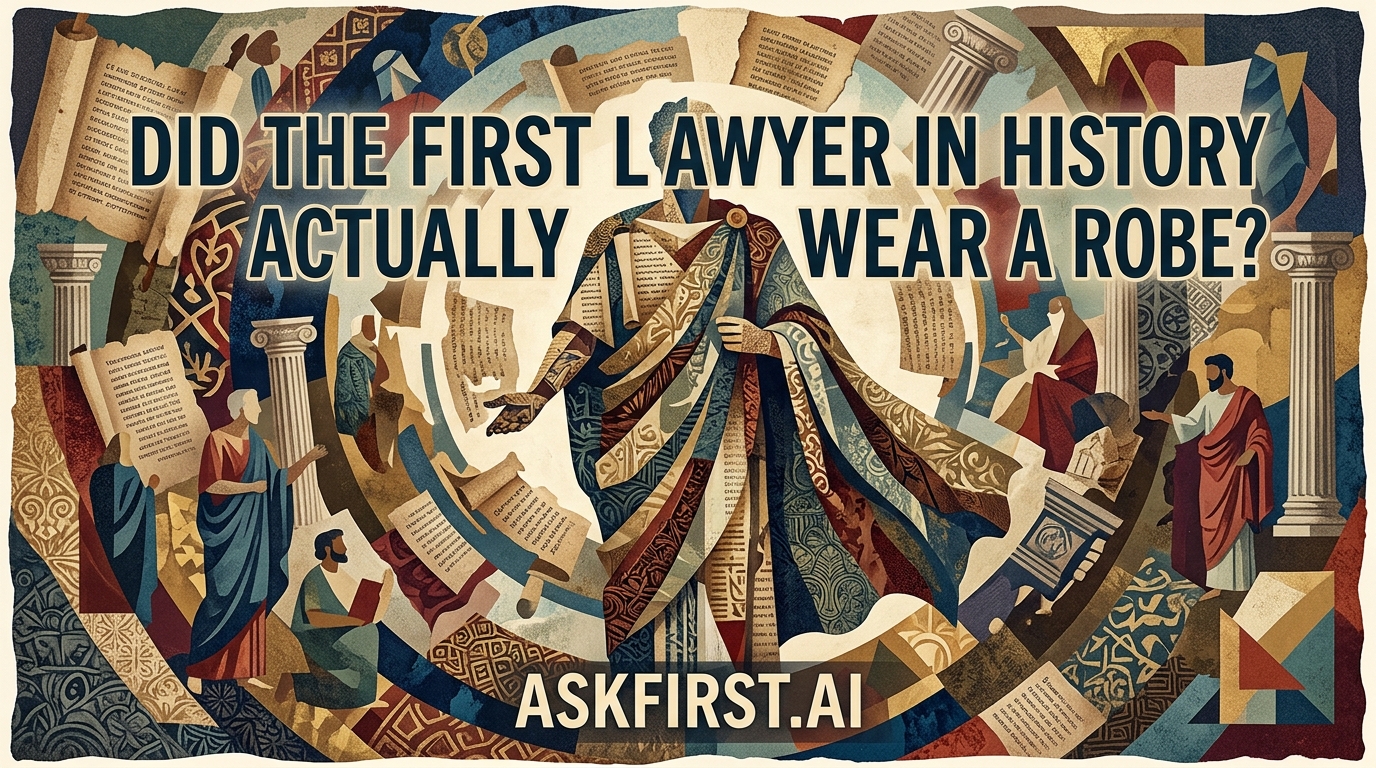
The image of a lawyer is inextricably linked to the flowing black robe. This visual shorthand for authority and impartiality has permeated popular culture, from courtroom dramas to historical reenactments. However, when examining the historical origin of the legal profession, a fascinating discrepancy emerges between modern expectations and ancient reality.
The Ancient Foundations: Orators Without Robes
The term 'lawyer' is a modern construct. In Ancient Athens or Rome, the closest professional counterparts were the 'orators' or 'advocates.' In the Athenian judicial system, particularly during the 5th century BCE, there was no formal legal profession as recognized today. Litigants were expected to represent themselves. The wealthy might hire a 'logographos'—a speechwriter—who would compose a persuasive argument, but these writers did not stand in court to present the case. Consequently, there was no uniform dress code, let alone a robe. Orators wore the standard chiton or himation—the everyday garments of a Greek citizen. The focus was on rhetoric, logic, and public standing, not professional branding through vestments.
Rome and the Toga: Symbolism over Statutes
Moving to the Roman Republic, the advocate (advocatus) occupied a slightly more formalized space. Roman culture was obsessed with status and public appearance. The toga was the defining garment of the Roman citizen. It was heavy, cumbersome, and distinctively Roman. Advocates would certainly wear their finest togas when pleading before the praetor or the senate, but this was a requirement of their status as free men and citizens, not a regulation designating them as lawyers. There is no historical evidence suggesting a specialized 'legal robe' existed in the classical period. The robe as a professional tool of the law is a product of much later developments in the medieval era.
The Medieval Evolution: Where did the robe come from?
If the first lawyers did not wear robes, when did the practice begin? The answer lies in the 12th and 13th centuries, concurrent with the revival of Roman law at universities like Bologna. As the legal profession began to standardize, lawyers looked to two influential institutions for inspiration: the Church and the Academy.
- The Ecclesiastical Influence: Medieval lawyers were frequently clerics. Because the Church exerted immense influence over legal systems, the attire of the clergy became the default professional dress for those acting in legal capacities. The long, loose-fitting robes worn by monks and university scholars offered a sense of solemnity, modesty, and distance from the secular, often colorful and extravagant, fashions of the aristocracy.
- The Academic Connection: The robe served to distinguish the 'learned' lawyer from the uneducated masses. By adopting the gown of the academic scholar, lawyers were asserting their authority based on mastery of texts and complex legal statutes.
The Birth of the Court Dress
By the 17th and 18th centuries in England and continental Europe, the robes became formalized court dress. This transition was partly practical—providing a sense of anonymity and equality among barristers—and partly performative, designed to command respect within the courtroom. The heavy, dark colors were intended to convey gravity, impartiality, and an unwavering commitment to the rule of law. It created a 'theatre of justice' where the person representing the client disappeared behind the costume of the office.
Myth-Busting: Why the misconception exists
Why do we often assume the first lawyer wore a robe? The human brain relies on anchoring bias, where we apply modern symbols to historical contexts. We see robes in modern courts, so we subconsciously project that image backward. Furthermore, history books and television dramatizations often depict ancient figures in 'robes' simply to differentiate them from modern clothing. This artistic shorthand creates a historical myth that obscures the fact that early advocates were simply people in tunics or togas using the power of their voices.
Summary of Findings
- Ancient Period: No specialized robes; lawyers wore standard daily attire.
- Medieval Transition: Robes were adopted as a mark of academic and ecclesiastical status.
- Modern Era: The robe became a functional tool for courtroom protocol and professional identity.
In conclusion, the first lawyer in history was a man of words, not of robes. The iconic garment that we associate with the law today was an invention born of the Middle Ages, meant to professionalize and standardize a practice that began, centuries prior, in the simple, dusty forums of the ancient world.