The Fundamental Pillar of Democracy: Understanding the Importance of Voting
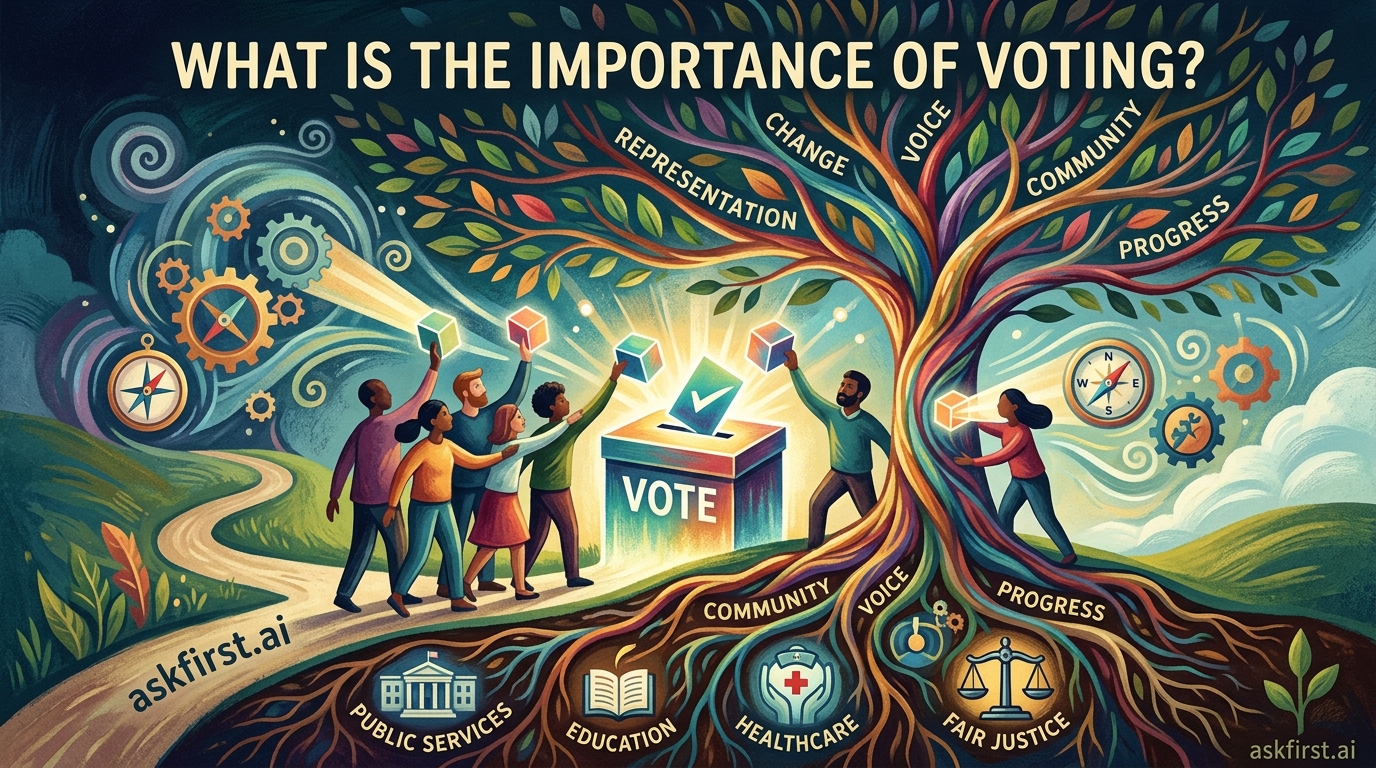
Voting is far more than a simple act of marking a ballot; it is the lifeblood of a representative democracy and the primary mechanism through which citizens exert control over the direction of their society. In a system governed by the consent of the governed, voting serves as the bridge between individual opinion and collective policy. When we examine the historical, sociological, and practical dimensions of the franchise, it becomes clear that voting is the most powerful tool available to the common citizen to ensure accountability, drive social change, and protect the foundational rights of a free people.
The Instrument of Accountability and Governance
At its core, voting is an instrument of political accountability. As political scientist Robert Dahl argued in his seminal work, On Democracy (Yale University Press, 1998), the ability of citizens to remove their leaders through peaceful elections is what distinguishes a democracy from an autocracy. When officials know that their continued employment depends on the satisfaction of their constituents, they are incentivized to remain responsive to public needs.
Consider the concrete example of local school board elections. While national politics often dominate the news cycle, it is at the local level where voting has the most immediate impact. When citizens turn out to vote for school board members, they are directly influencing curriculum standards, property tax allocations, and safety protocols for their children. If a community is dissatisfied with the trajectory of their schools, the vote is the specific lever that forces a change in leadership. Without this, the governing body becomes insulated and unresponsive, leading to stagnation.
A Catalyst for Social and Economic Change
Voting is the primary vehicle for social reform. Historically, marginalized groups have recognized that the ballot box is the most effective tool to dismantle systemic inequality. The Suffragette movement in the United States and the United Kingdom, detailed extensively by Martha Rampton in The Third Wave of Feminism, demonstrated that legal equality could only be achieved once women secured the right to vote. By casting ballots, activists were able to elect representatives who would eventually codify the Nineteenth Amendment into law.
Similarly, the Civil Rights Movement in the mid-20th century, led by figures like Dr. Martin Luther King Jr. and John Lewis, centered on the struggle for voting rights. In his memoir Walking with the Wind, John Lewis recounts how the act of registering to vote in the Jim Crow South was a revolutionary, life-threatening endeavor. The movement understood that until Black citizens could vote, they had no seat at the table where laws regarding housing, employment, and justice were written. Voting, therefore, is not just a civic duty; it is the essential prerequisite for justice.
Protecting Personal Freedoms and Interests
Every aspect of modern life—from the interest rates on a mortgage to the environmental regulations governing the air we breathe—is influenced by the outcomes of elections. When individuals abstain from voting, they are effectively delegating their power to those who do participate. This is often referred to as the "rational voter paradox," but in practice, it leads to a skewed representation where the interests of the most active, often wealthier, demographic groups are prioritized over the needs of the general population.
Take, for instance, the regulation of the pharmaceutical industry or the management of public lands. These are complex policy areas where legislative decisions have massive consequences. If a segment of the population ignores these elections, they lose the ability to influence the regulatory environment that dictates the price of their medication or the preservation of their local parks. As the philosopher John Stuart Mill noted in Considerations on Representative Government (1861), the participation of all citizens is essential to ensure that the "interests of the many" are not sacrificed for the "interests of the few."
The Symbolic Value and Civic Health
Beyond the functional outcomes, the act of voting carries profound symbolic weight. A high voter turnout indicates a healthy, engaged, and vigilant citizenry. It reinforces the legitimacy of the government. When a large percentage of the population participates, the resulting government is perceived as having a stronger mandate, which in turn fosters stability and respect for the rule of law. Conversely, low voter turnout can lead to political polarization, as parties cater to the extreme ends of the spectrum rather than the moderate majority, further eroding public trust.
Conclusion: The Responsibility of the Citizen
The importance of voting cannot be overstated. It is the mechanism that transforms individual desires into public policy, holds the powerful to account, and provides the necessary pressure for social progress. As we look at the trajectory of history, we see that every right we enjoy today was won through the persistent effort of people who understood that their vote was their voice.
To ignore the ballot box is to surrender your influence over the future. Voting is not merely a right; it is a profound responsibility that safeguards the freedoms we currently enjoy. Whether in a local municipal contest or a national general election, the act of voting remains the most critical contribution a citizen can make to the maintenance and improvement of a free society. By participating, we not only shape the world we live in but also ensure that the democratic experiment continues for the generations that follow.