The Psychology of Financial Clarity in Marriage
Marriage is often romanticized as a union of hearts, yet history and legal evolution reveal it is simultaneously a profound financial contract. The debate surrounding prenuptial agreements (prenups) frequently centers on the cynical assumption that planning for a split implies a lack of faith in the partnership. However, psychological research suggests the opposite: the process of drafting a prenup can actually foster deeper emotional intimacy and relationship longevity by eliminating the "unknowns" that often cause marital friction.
The Myth of the "Anti-Romance" Document
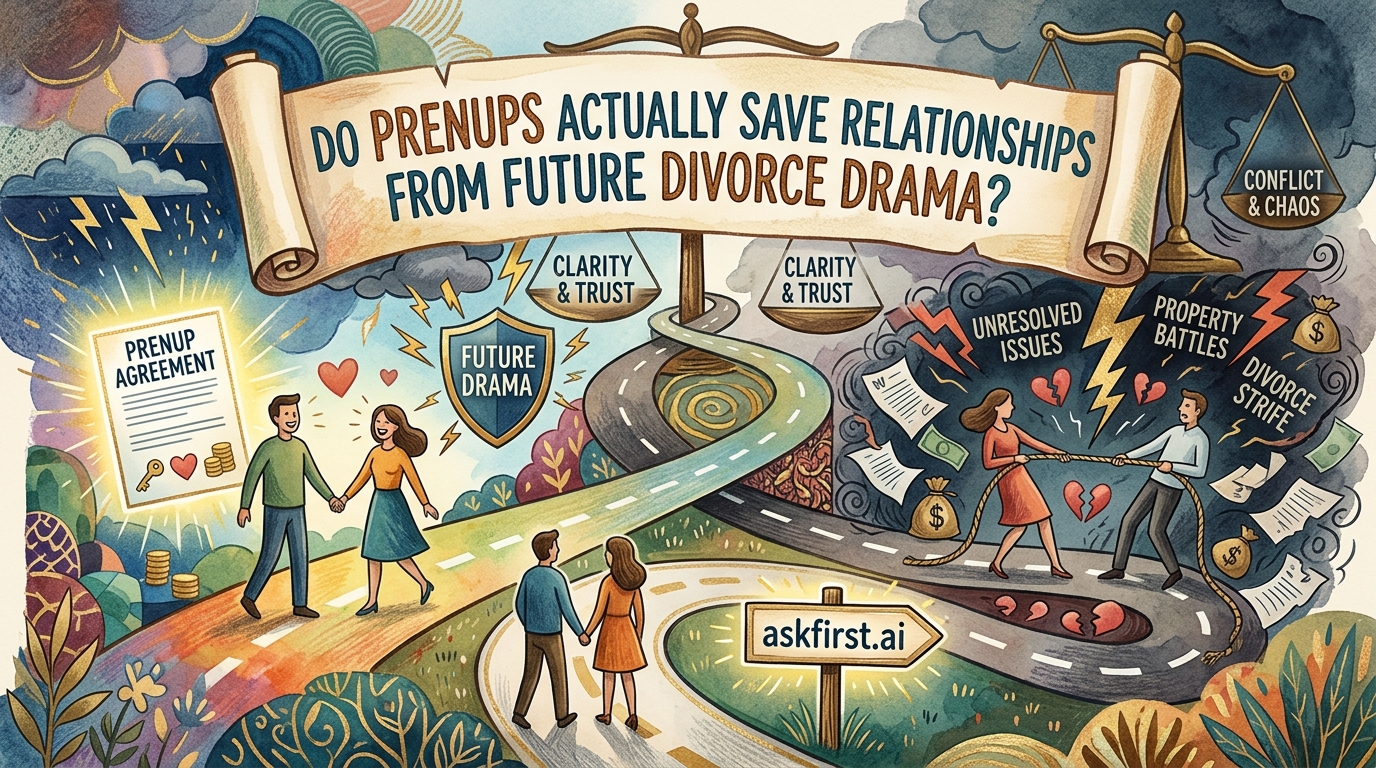
A common myth suggests that discussing prenuptial agreements casts a shadow over a wedding. In reality, modern relationship experts view these documents as a mechanism for conflict resolution. When couples enter a marriage without clear expectations regarding their assets, they leave themselves vulnerable to "financial infidelity" or misunderstandings. By clearly defining roles, expectations, and safety nets, couples replace ambiguous anxiety with transparent structure. According to family law experts, the act of discussing finances—no matter how uncomfortable—forces a level of communication that many couples avoid until it is too late. The "drama" of divorce usually stems from the adversarial nature of litigation; a prenup serves to bypass this by pre-negotiating terms when both parties are in an amicable state of mind.
Psychological Benefits: Why Clarity Reduces Future Conflict
The Removal of Defensive Mechanisms: When assets are protected or distributed according to a predetermined plan, the fear of "being taken" is significantly reduced. This fosters a environment of security where individuals can focus on building their collective life rather than guarding their individual property.
Aligning Financial Values: The negotiation process provides a rare opportunity to discuss long-term financial philosophies. Are there specific goals for real estate, business ventures, or legacy planning? Reaching an agreement on these topics early on helps prevent clashes of values that often manifest as petty arguments years later.
Defining "Yours, Mine, and Ours": Financial arguments are among the top predictors of divorce. A prenup creates a roadmap. By separating individual pre-marital property from communal assets, couples create a clear boundary, which actually helps preserve individual identities within the partnership.
Practical Framework for Harmony
To ensure that a prenup acts as a tool for stabilization rather than division, consider these core pillars:
Transparency is Non-negotiable: Full financial disclosure is the bedrock of a valid and effective agreement. Hiding assets defeats the purpose and introduces the very seeds of distrust that prenups are meant to prevent.
Collaboration Over Litigation: Avoid using "heavy-handed" legal tactics. The document should feel like a co-authored manifesto of support, not a battle strategy written by separate lawyers aiming to maximize individual gain.
Regular Re-evaluation: Life changes. Clauses that seemed pertinent during the first year of marriage may need adjustment after a decade. Treating the agreement as a living document encourages ongoing dialogue.
Addressing the "Drama" Component
Divorce drama is rarely about the money itself; it is about the perceived injustice of the division of assets. A well-crafted prenup provides a neutral arbiter for the future. When a couple decides to part ways, they are often operating in a state of high emotional volatility. The prenup serves as an emotional "anchor" that prevents the legal proceedings from spiraling into a performative, vindictive, or destructive process. By having terms already established, couples can exit the legal phase of their relationship faster, cheaper, and with less vitriol, allowing for a healthier transition for all parties involved, including children.
Conclusion: The Evergreen Strategy for Success
Is a prenup a magic bullet for a happy marriage? No. However, it is an architectural safeguard for the modern partnership. In a world where financial literacy is becoming a core component of relational intelligence, viewing the prenup as an instrument of foresight rather than a sign of skepticism is a paradigm shift. By proactively managing the risks associated with financial volatility, couples can cultivate a more stable emotional environment. Ultimately, the stability provided by an agreement allows the couple to focus on the things that actually sustain a long-term marriage: shared goals, mutual respect, and the daily nurturing of their bond. Rather than inviting trouble, a prenup clears the air, allowing the relationship to thrive under the security of mutual understanding.