The Validity of Oral Agreements: Understanding the Basics
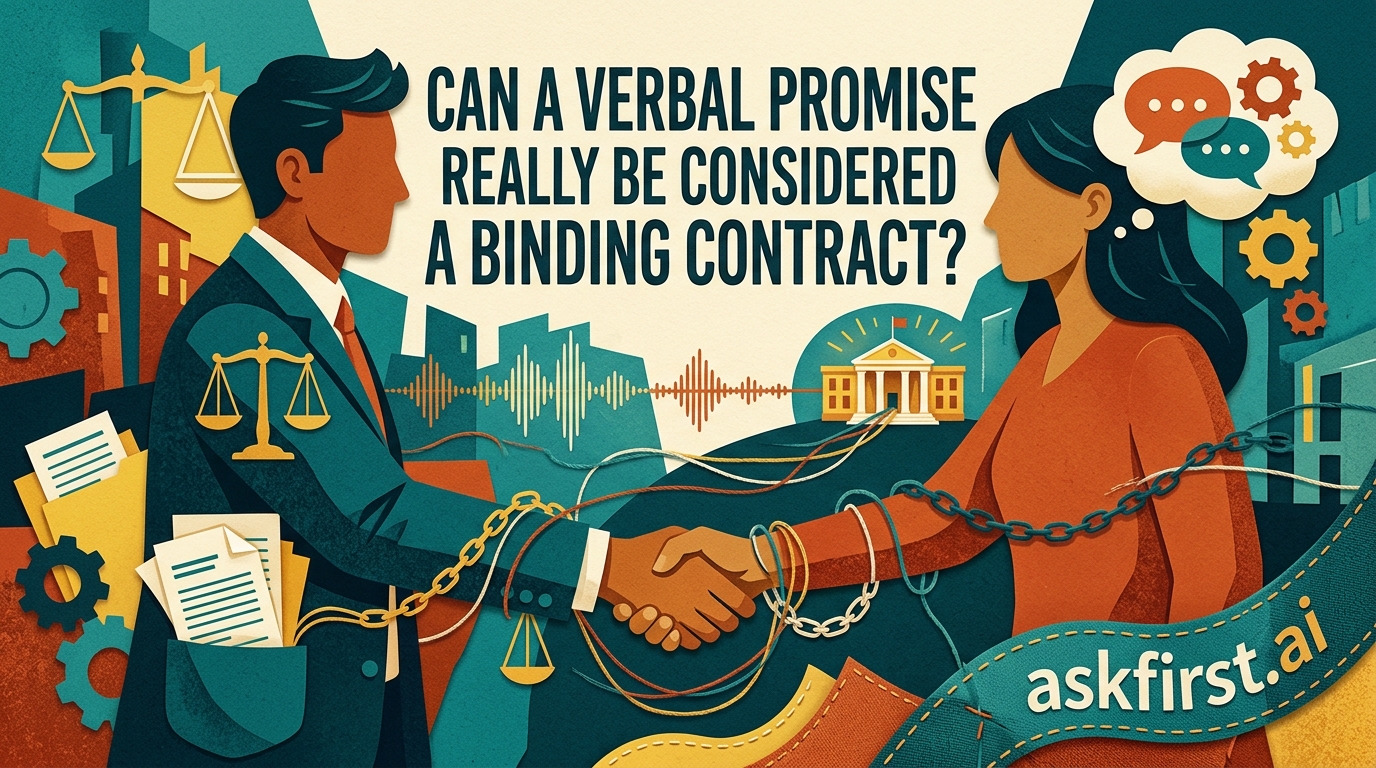
A common misconception circulating in modern society is the belief that a contract is only valid if it is printed on thick, embossed paper and signed with a fountain pen. In reality, the legal system acknowledges the validity of verbal promises under specific conditions. An oral contract is an agreement made through spoken words rather than a written document, and in many jurisdictions, it carries the same legal weight as a written one.
Core Elements of a Binding Contract
Regardless of whether a contract is written or spoken, it must possess several essential elements to be enforceable in a court of law. Without these foundational pillars, an agreement remains merely a promise or an informal understanding:
- Offer: One party must clearly state the terms and conditions of the deal.
- Acceptance: The other party must unequivocally agree to the terms proposed.
- Consideration: This is the 'bargain' element. Something of value must be exchanged between parties—such as money, services, or a promise to perform an action.
- Intention: Both parties must intend to create a legally binding relationship.
- Capacity: All individuals involved must be of sound mind and legal age to enter into the agreement.
The 'Statute of Frauds' Hurdle
While oral contracts are generally enforceable, the Statute of Frauds serves as a vital legal exception. This doctrine dictates that certain types of agreements must be in writing to be legally recognized. Failure to formalize these specific agreements in writing typically renders them unenforceable. Common examples include:
- Real Estate Transactions: Any contract involving the sale of land or interests in land.
- Long-term Agreements: Contracts that cannot, by their terms, be performed within one year from the date of agreement.
- Suretyship: Promises to pay the debt of another person.
- Marriage: Agreements made in consideration of marriage, such as prenuptial agreements.
- Goods Over a Certain Value: Contracts for the sale of goods exceeding a specific monetary threshold (often set by the Uniform Commercial Code in the United States).
The Evidentiary Challenge
The primary obstacle with verbal contracts is not legality, but provability. If a dispute arises, the court must rely on witness testimony, electronic communications, performance logs, or partial payments to determine the intent and terms of the agreement. This is why legal experts often use the phrase: 'A verbal contract isn't worth the paper it's written on.'
This adage highlights the danger of relying on memory in a litigation scenario. If one party denies the existence of the deal, the burden of proof falls on the claimant. To mitigate this risk, parties should always strive to create a 'paper trail,' even for informal arrangements, through follow-up emails, text messages, or a brief summary document signed by both sides.
Strategies for Protection
Because verbal contracts are notoriously difficult to litigate, documentation is the highest form of protection. Consider these practical steps when entering into any agreement:
- Confirm via Email: After a verbal conversation, send a message stating: 'Per our conversation, I understand we agreed to X, Y, and Z. Please confirm if this is correct.'
- Witnesses: Having a third-party witness present during the formation of an agreement can provide crucial testimony if a dispute occurs later.
- Performance Evidence: Keeping receipts, bank transfer records, or logs of work completed serves as 'partial performance,' which courts often view as strong evidence of a pre-existing contract.
- Partial Payments: Providing a small deposit or partial payment is a highly effective way to solidify the existence of a deal.
Conclusion
Yes, a verbal promise can indeed be a binding contract, but its enforcement is fraught with practical difficulty. While the law recognizes the sincerity of a handshake, the complexity of memory and human fallibility suggests that clarity is better achieved through written records. Always approach agreements with the mindset of a professional—ensure the terms are understood, documented, and solidified to avoid the costly pitfalls of proving an oral promise in the heat of a legal dispute. By following these principles, individuals and businesses can navigate the world of informal contracting with far greater security and confidence.