The Fundamental Rights of Citizens During the Electoral Process
The act of voting is the bedrock of any democratic society. It serves as the primary mechanism through which citizens exercise their sovereignty, holding those in power accountable and determining the future direction of their nation. However, the right to vote is merely the most visible component of a complex web of rights that protect citizens throughout the electoral cycle. To ensure an election is free, fair, and legitimate, citizens must possess a suite of interconnected rights that go beyond the simple act of casting a ballot.
1. The Right to Universal and Equal Suffrage
The cornerstone of electoral participation is the right to universal suffrage. As enshrined in Article 21 of the Universal Declaration of Human Rights, every person has the right to take part in the government of their country. This implies that eligibility requirements must be inclusive rather than exclusionary.
In practice, this means that every citizen, regardless of race, gender, religion, or socioeconomic status, must have an equal opportunity to cast a vote. This is often referred to as the principle of "one person, one vote." In his seminal work, On Liberty, John Stuart Mill argued that the participation of all citizens is essential for the health of a political system, as it ensures that the government reflects the collective will rather than the interests of a privileged few.
2. The Right to Access Reliable Information
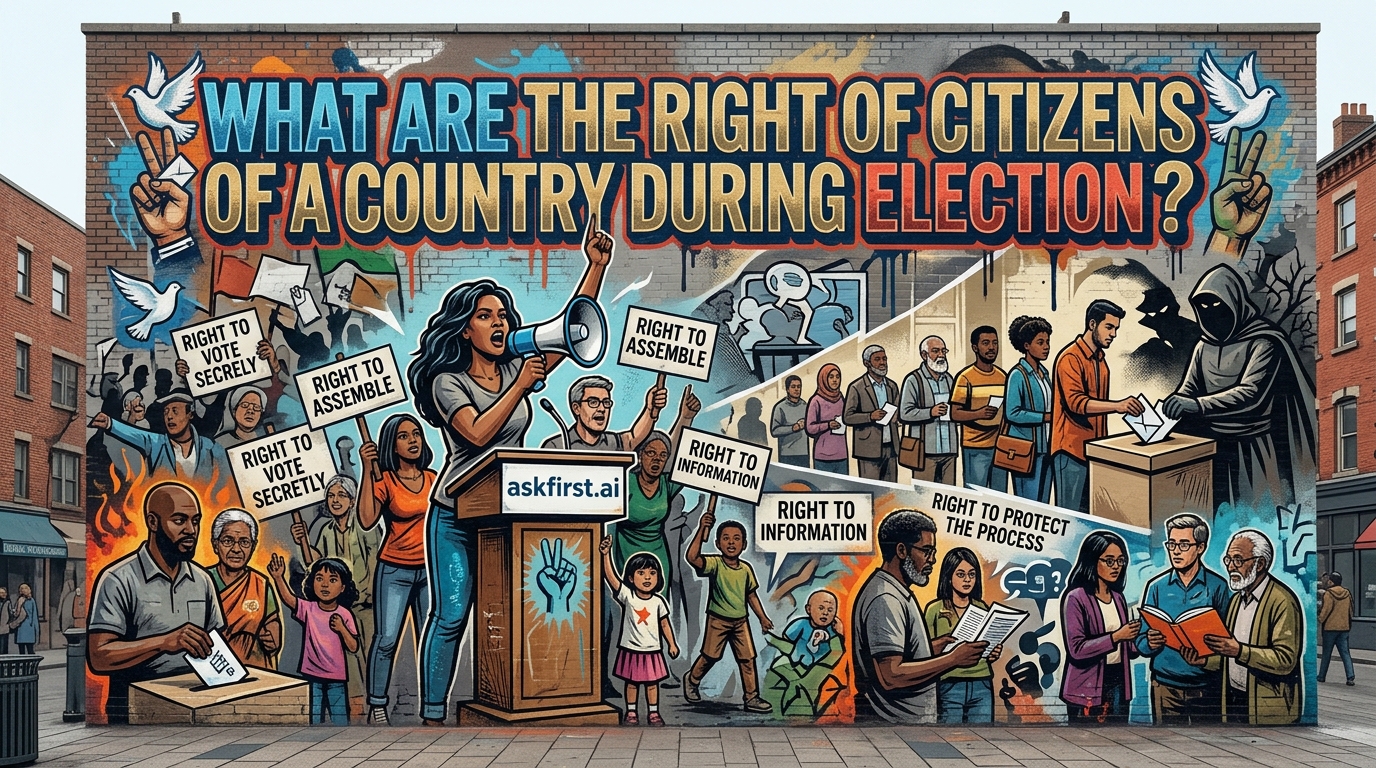
A citizen cannot make an informed choice in a vacuum. Therefore, the right to freedom of expression and access to information is vital during an election period. Citizens have the right to receive unbiased information about candidates, political parties, and their respective platforms.
This right necessitates the existence of a free press. When media outlets operate without state censorship, they serve as the "watchdogs" of democracy. For example, in the United States, the First Amendment to the Constitution provides the legal framework that protects the right of the media to report on political campaigns, allowing citizens to scrutinize the character and policies of those seeking office. Without access to diverse viewpoints and accurate reporting, the electoral process becomes vulnerable to manipulation and disinformation.
3. The Right to Freedom of Association and Assembly
Elections are not just about voting; they are about organization. Citizens have the fundamental right to associate with political parties, join advocacy groups, and participate in peaceful protests or rallies to support their chosen candidates. This is essential for the formation of political consensus.
This right is protected under international law, specifically within the International Covenant on Civil and Political Rights (ICCPR). By forming or joining political parties, citizens can amplify their voices and influence policy agendas. Whether it is attending a town hall meeting or volunteering for a local campaign, these activities allow the electorate to engage in the democratic discourse that precedes the actual polling day.
4. The Right to a Secret Ballot and Electoral Integrity
The integrity of the vote is protected by the right to a secret ballot. This is a critical safeguard against intimidation, coercion, and vote-buying. When a citizen enters the voting booth, they must be guaranteed that their choice remains private.
Furthermore, citizens have the right to an electoral process that is transparent and administered by an independent, impartial body. In many countries, this involves the presence of independent election observers—both domestic and international—who monitor the process to ensure that ballot boxes are secure and that the counting process is accurate. Robert Dahl, in his influential book Polyarchy: Participation and Opposition, identifies the existence of "fair and free elections" as one of the essential criteria for a functioning democracy. This includes the right to challenge the results through legal channels if there is evidence of fraud or systemic error.
5. The Right to Protection from Discrimination and Intimidation
Finally, citizens possess the right to participate in the electoral process without fear of violence or intimidation. This includes protection from voter suppression tactics, such as discriminatory identification requirements or harassment at polling stations.
Governments have an affirmative duty to ensure the safety of the electorate. This involves deploying security forces that remain neutral and ensuring that the law is applied equally to all parties. If a citizen is prevented from voting through violence or illegal obstruction, the very legitimacy of the elected government is undermined.
Conclusion
The rights of citizens during an election extend far beyond the ballot box. They encompass the freedom to gather information, the liberty to organize, the security of a secret vote, and the protection from state-sponsored or private intimidation. These rights are not merely suggestions; they are the structural supports that hold up the edifice of democratic governance. When these rights are upheld, the result is a government that draws its power from the informed consent of the governed. As history has shown, when these rights are eroded, the democratic process itself begins to wither, highlighting the importance of constant vigilance by the citizenry to protect their fundamental electoral liberties.