The Legal Reality of Private Big Cat Ownership
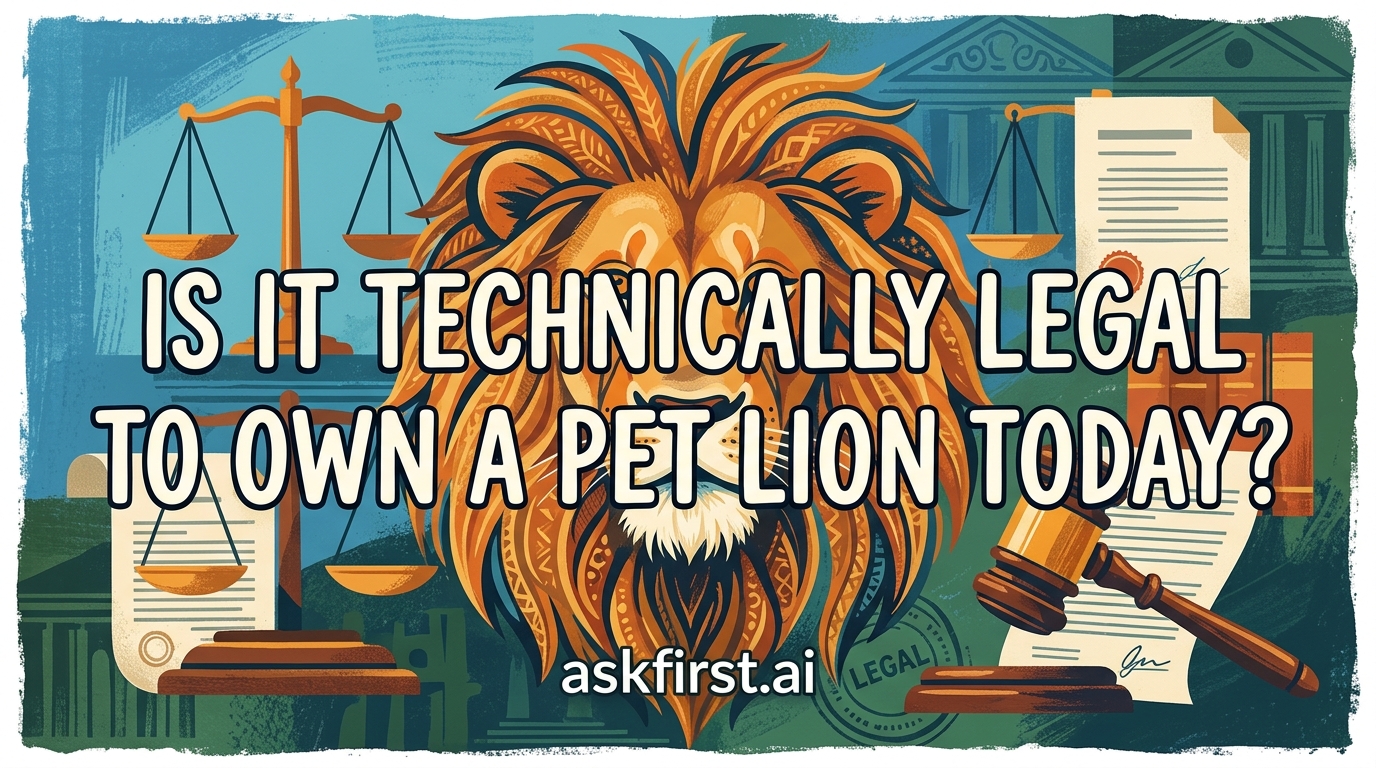
Owning an apex predator like a lion is a concept that often occupies the realm of cinematic fantasy or the eccentric lives of social media personalities. However, the legal reality is far more complex and restrictive. The question of whether it is 'technically' legal to own a pet lion is not a simple yes or no; it is a layered landscape of federal, state, and local mandates that prioritize public safety and animal welfare above individual desire.
Federal Restrictions: The Big Cat Public Safety Act
In the United States, the legal framework regarding big cats changed significantly with the passage of the Big Cat Public Safety Act. This federal legislation effectively prohibits the private possession of lions, tigers, leopards, jaguars, and hybrids. Under this law, it is illegal for private individuals to keep these animals as 'pets.' The statute is designed to curb the unregulated trade and exploitation of big cats, which often leads to poor welfare standards and dangerous public interactions. While there are narrow exemptions for accredited zoos, research facilities, and verified sanctuaries, the average person cannot simply walk into a legal market and purchase a lion cub.
State Laws: The Patchwork of Prohibition
Even before federal intervention, individual states maintained their own varying levels of control. Some states have long-standing 'absolute bans,' where the private possession of any exotic animal considered dangerous is strictly prohibited. In these jurisdictions, there is no permit process for private individuals to house a lion, regardless of the size of the enclosure or the amount of property owned. In contrast, a handful of states historically allowed exotic pet ownership with rigorous permitting requirements, such as documented proof of proper enclosures, insurance coverage, and veterinary care plans. However, these permits are rarely issued for apex predators today, as the liability risk is considered far too great for local governments.
The Myth of Ownership vs. Guardianship
It is essential to distinguish between 'owning' an animal and acting as a custodian for a professional facility. Many enthusiasts mistakenly believe that if they possess sufficient capital to construct a state-of-the-art enclosure, they are granted legal permission to house a lion. This is rarely the case. Municipal ordinances often override broader state laws; even if a state technically allowed it, a city or county can pass zoning laws that define lions as prohibited species within residential districts. Zoning enforcement is perhaps the most common way private ownership dreams are dismantled long before an animal ever arrives on site.
Why Private Ownership is Inherently Problematic
Beyond the legality, the biological and behavioral requirements of a lion make private 'pet' ownership nearly impossible to execute ethically.
- Nutritional Demands: A healthy adult lion requires significant amounts of high-quality raw meat daily, along with specific calcium and mineral supplementation.
- Spatial Requirements: Lions are nomadic, wide-ranging predators. A backyard cage, no matter how large, can never simulate the environmental complexity or social structure of a pride in the wild.
- Dangerous Behavioral Instincts: Even if hand-raised from birth, a lion retains predatory instincts that are not 'trained away.' Maturity brings hormonal shifts that make the animal unpredictable and potentially deadly to handlers.
Liability and Insurance Hazards
From a purely financial perspective, the cost of insuring a property where an apex predator is kept is astronomical, assuming a carrier would even provide a policy. Under strict liability statutes, owners are often responsible for any damage or injury caused by their animal, regardless of whether the owner was negligent. The threat of lawsuits and criminal prosecution for reckless endangerment serves as a massive deterrent against even the most determined exotic animal enthusiasts.
Conclusion: The Future of Big Cats
While the allure of having a lion as a companion is deeply rooted in our curiosity about the natural world, the global trend is moving decisively toward prohibition. Modern legal systems are shifting away from private ownership, viewing big cats as beings that deserve specialized care provided by professionals, rather than personal status symbols. Consequently, while historical loopholes once existed in some jurisdictions, 'technically' owning a pet lion today is virtually impossible for the average citizen in a legal, ethical, and safe capacity. Future legislation is expected to further tighten these restrictions, ensuring that the king of the jungle remains in environments tailored to his biological and psychological needs.