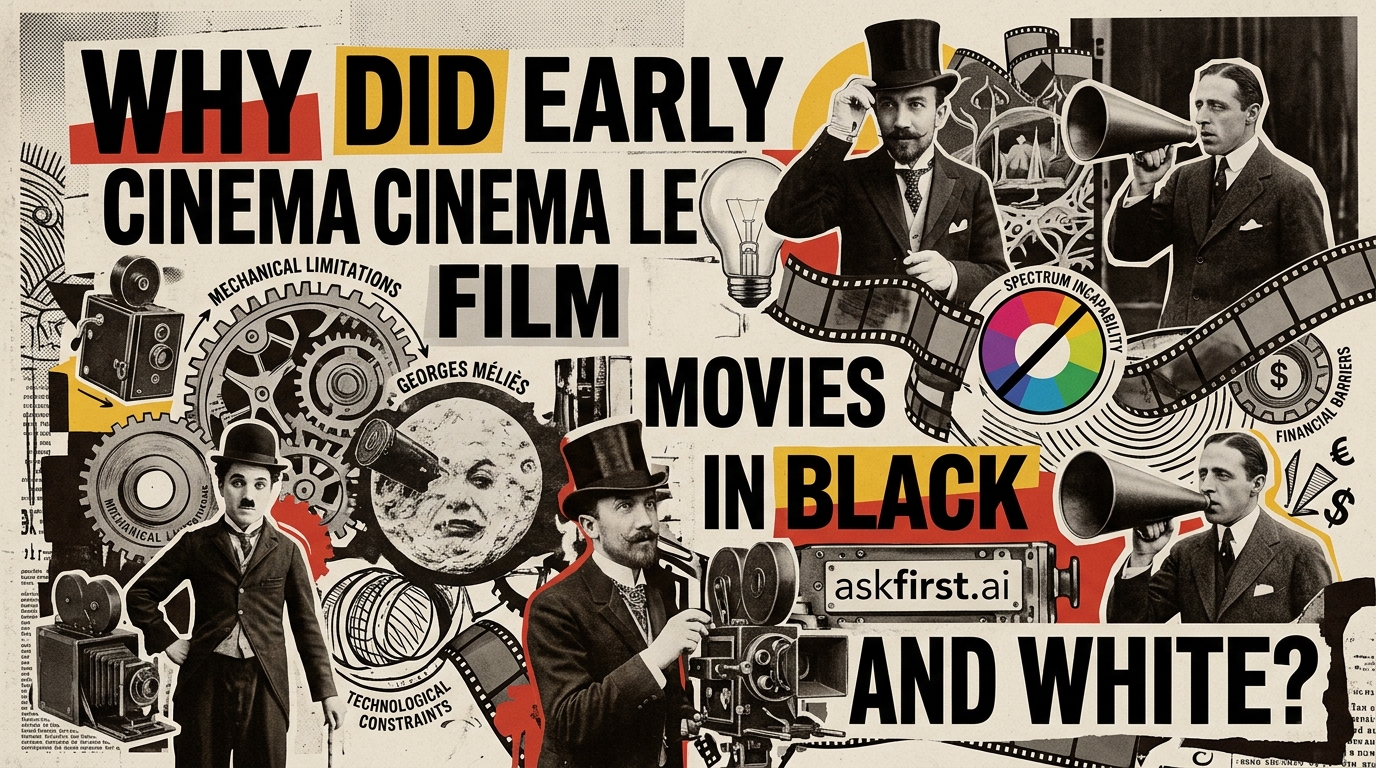
Beyond the Grayscale: Why Early Cinema Stayed Monochrome
Many assume that early filmmakers chose black and white simply because color film did not exist, but the reality is a fascinating intersection of technological limitations, artistic intentionality, and economic pragmatism. In the dawn of the 20th century, capturing the world in motion was a feat of mechanical genius, and adding color was far more complex than modern audiences might imagine.
The Technical Barrier: Emulsion and Exposure
The fundamental reason for the prevalence of monochrome was the chemistry of film stock. Early black-and-white celluloid was orthochromatic, meaning it was sensitive to blue and ultraviolet light but largely blind to red. This limitation forced cinematographers to use specific lighting techniques and set designs to ensure images looked clear rather than muddied. Developing a stable color film process required long-exposure times and complex triple-exposure systems that were impractical for the frantic, experimental pace of early studio production.
Artistic and Aesthetic Intent
While technology was a major constraint, black and white offered a unique aesthetic language. Filmmakers like Charlie Chaplin and Fritz Lang utilized the stark contrast of light and shadow—a style known as chiaroscuro—to emphasize mood and character psychology. By stripping away color, directors could direct the viewer’s eye toward specific shapes, textures, and silhouettes. This minimalism forced a greater reliance on visual composition and performance, creating a high-contrast style that became the signature look of the Golden Age of cinema.
Economic Reality and Distribution
Color cinematography, specifically the Kinemacolor process introduced in 1908 and later the legendary Technicolor three-strip process in the 1930s, was prohibitively expensive. The triple-strip cameras required immense amounts of light, leading to sweltering, uncomfortable sets, and the printing process involved specialized labs that added significant costs to every reel. For the independent studios of the era, black and white remained the most reliable, cost-effective way to produce feature-length films that could be replicated easily for global distribution.
The Lingering Legacy of Monochrome
Even after color became affordable, many directors chose to stay with black and white to maintain a sense of realism or historical grit. Films like Schindler’s List and The Artist demonstrate that monochrome is not a "primitive" state but an artistic choice that evokes emotional depth and timelessness. The lack of color does not signal a lack of quality; instead, it serves as a testament to the pioneers who mastered the medium of light before the complexity of the full color spectrum became the industry standard. By mastering shadows, early legends created a visual language that remains as powerful and evocative today as it was over a century ago.