The Temporal Pulse: Decoding the Urgency in Movie Trailers
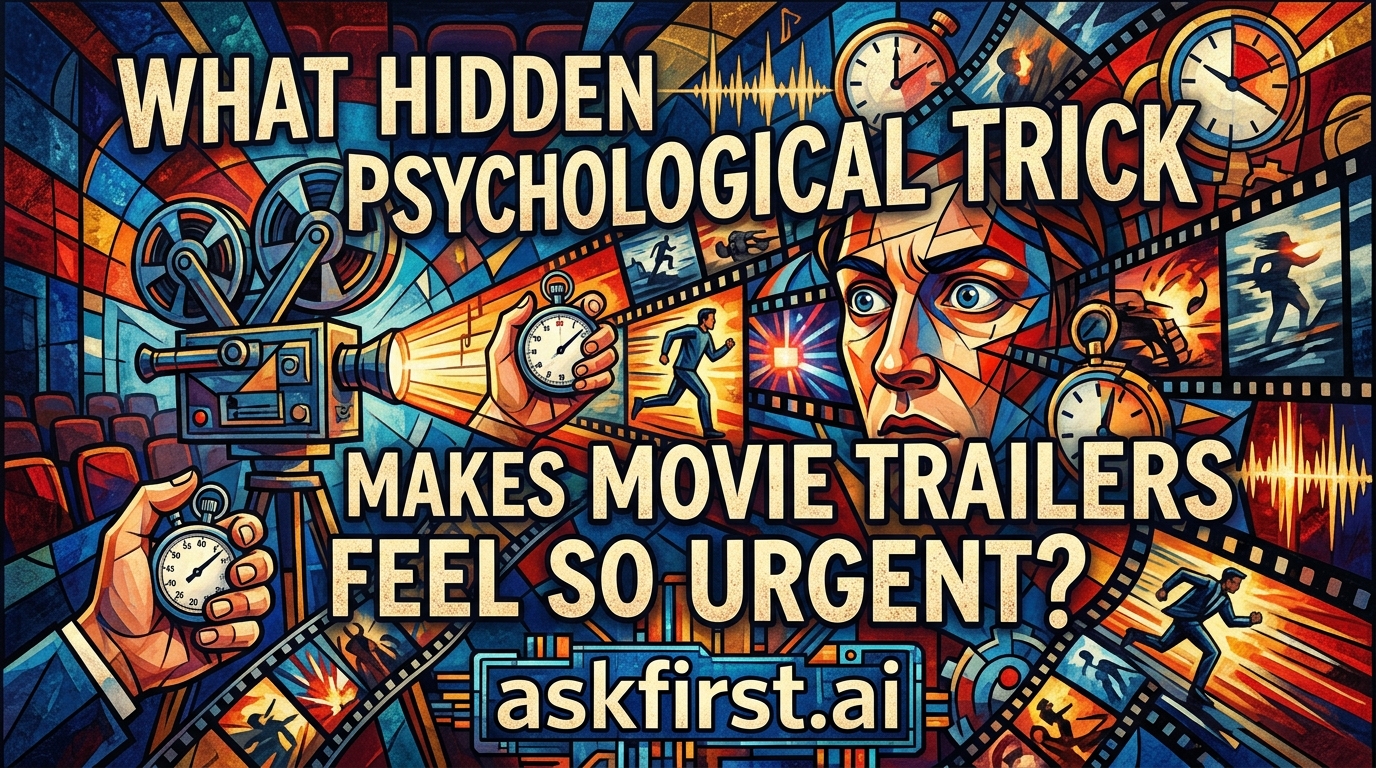
Movie trailers are not merely compilations of scenes; they are precision-engineered psychological triggers designed to induce a state of heightened arousal. The primary mechanism behind the feeling of urgent anticipation is known as the Cuts-per-Minute (CPM) Acceleration Pattern. By utilizing rapid-fire editing that matches the rhythm of a physiological stress response, trailers force the brain into a state of "pre-attentive processing," where the mind cannot afford to look away.
The Architecture of Anticipation
The secret lies in the juxtaposition of sensory input overload and cognitive closure gaps. When a trailer increases its edit frequency toward the end, it mimics the onset of a heart attack or a chase sequence. This is biologically interpreted by the amygdala as an immediate environmental shift requiring full alertness. Key techniques include:
- The Rhythmic Pulse: Audio tracks are often layered with deep, resonant bass "braams" that sync with visual cuts, creating an involuntary physiological entrainment where the viewer's pulse begins to synchronize with the trailer's tempo.
- The Incomplete Narrative: By showing a problem but withholding the resolution, trailers exploit the Zeigarnik Effect—the tendency to remember uncompleted tasks or unresolved stories better than completed ones. This creates a psychological tension that demands relief, which the viewer believes can only be found in the actual film.
- The Expectation Violation: Trailers frequently pair slow-motion imagery with sudden, loud, dissonant sound effects. This sensory mismatch signals the brain to disregard previous boredom and focus intensely on the unexpected stimulus.
Evolutionary Psychology and the Attention Trap
Humans have evolved to prioritize information that suggests movement, speed, and potential threat. Trailers weaponize these evolutionary instincts. The "urgency" is a byproduct of the brain treating the trailer as a "significant life event." Even though the rational mind knows it is just a commercial, the subconscious perceives the fast-paced, high-contrast environment as a signal that something vital is occurring.
Research in neuro-cinematics suggests that when sound design increases in amplitude and frequency during a trailer's final act, brain activity spikes in the regions associated with survival instincts. The viewer effectively experiences a "micro-stressor." Once the trailer concludes, the brain seeks to resolve that stress by seeking out the "answer"—which is the purchase of a ticket.
Conclusion: The Final Cut
Ultimately, the urgency is a manufactured state of agitation. By blending rhythmic audio cues, rapid visual shifts, and narrative incompleteness, editors trap the audience in a feedback loop of curiosity and biological arousal. It is a masterclass in behavioral psychology that persists because it fundamentally aligns with how the human brain processes environmental stimuli, ensuring that the urge to watch is not just a choice, but a reflexive response to well-timed sensory manipulation.