The Sonic Reality of Early Cinema
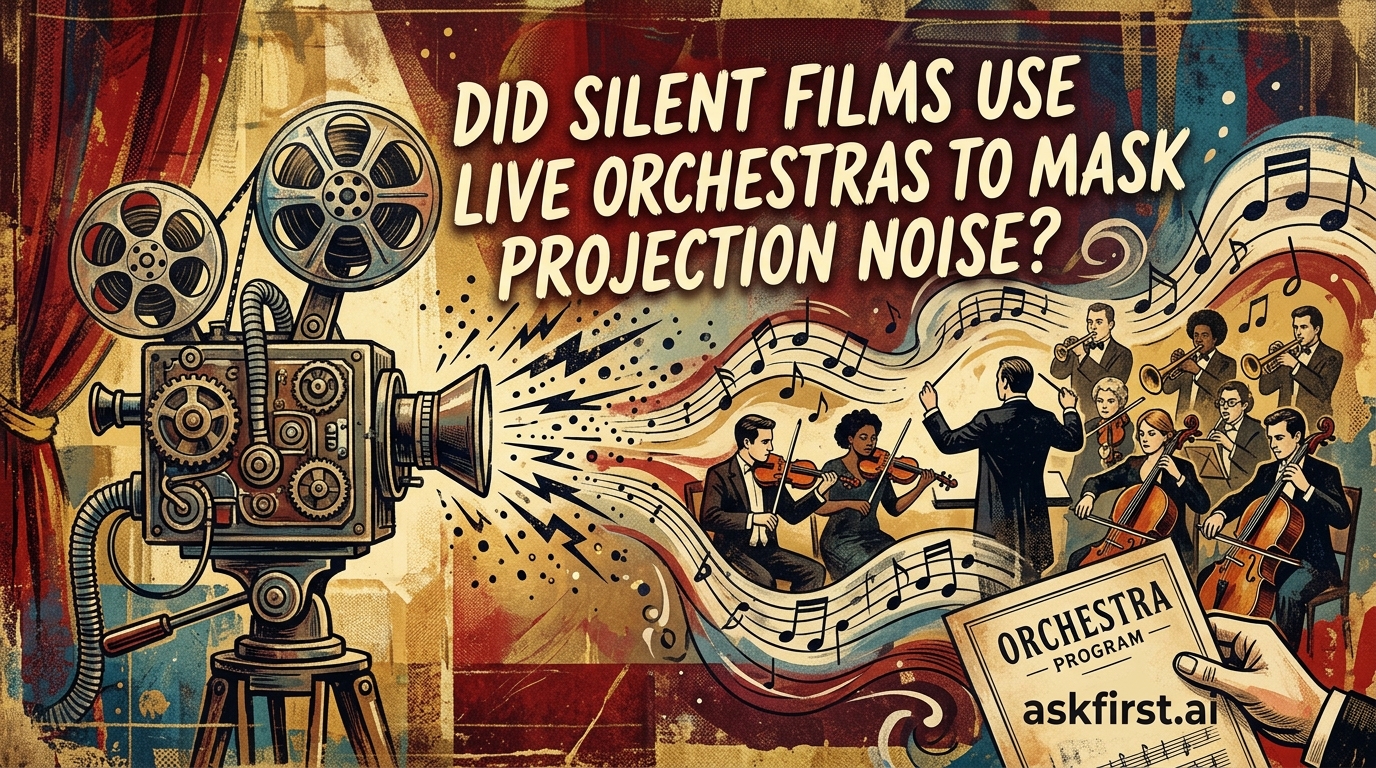
It is a persistent and compelling myth that the primary purpose of live music in silent cinema was solely to cover the mechanical clatter of early film projectors. While it is true that early projectors were exceptionally loud, the relationship between live accompaniment and the silent film experience was far more nuanced, artistic, and psychologically significant than mere noise suppression.
The Technical Reality
Early film projectors, particularly those developed in the 1890s and early 1900s, were indeed noisy contraptions. The intermittent movement mechanism, which pulled film frames into the aperture, created a rhythmic, percussive ticking that could certainly distract an audience. However, theaters were rarely focused on simply drowning out these machines. By the 1910s, projection booths were increasingly soundproofed, moved to separate rooms, or placed behind glass ports to mitigate noise. If silencing the machine were the only goal, simple soundproofing would have sufficed. Instead, exhibitors invested heavily in pianists, organists, and full orchestras because they understood the profound power of music to shape human emotion.
Why Music Was Essential
Music served three fundamental roles that moved beyond utilitarian noise cancellation:
- Emotional Anchoring: Without dialogue, audience members often felt detached from the narrative. Music bridged this gap by providing melodic cues that translated silent movements into relatable emotions—fear, joy, love, or suspense.
- Cultural Legitimacy: Early cinema was often viewed as a low-brow "fairground attraction." Adding high-quality musical accompaniment elevated the prestige of the theater, helping the medium gain acceptance among the middle and upper classes.
- Pacing and Continuity: In an era where editing techniques were still evolving, music provided a sense of flow. It linked disparate shots, helped define character identities through leitmotifs, and signaled changes in location or time.
The Legacy of the Score
By the mid-1920s, major film studios began distributing 'cue sheets' or complete orchestral scores alongside their films. Composers like Joseph Carl Breil for The Birth of a Nation (1915) demonstrated that a carefully curated soundtrack could turn a film into a grand artistic event. The music was not a backdrop to hide noise; it was an active storytelling participant. Even the most sophisticated theater organs, such as the Wurlitzer "Mighty Wurlitzer," were designed to mimic sounds like bird chirps, doorbells, or even explosions to synchronize with the visuals. This transformation proved that silent film was never truly 'silent.' It was always a multimedia experience, relying on the live sonic landscape to breathe life into the flickering images on the silver screen.