Who Recorded the First Song in History
The Origins of Recorded Music: Identifying the First Song
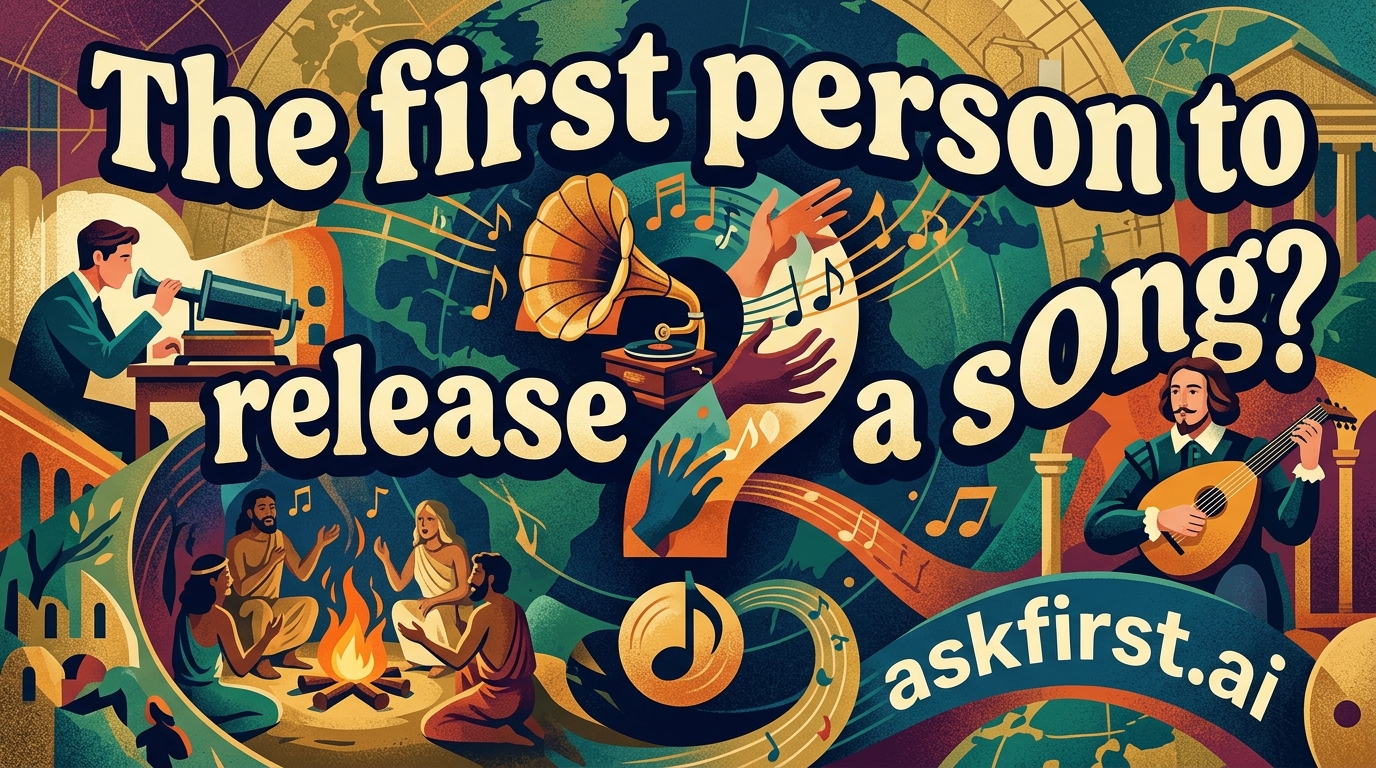
The question of who was the "first person to release a song" is complex, as it requires distinguishing between the invention of sound recording technology and the commercialization of music. To understand this history, one must look at the transition from acoustic experiments to the birth of the phonograph industry.
1. The Earliest Recordings: Édouard-Léon Scott de Martinville
Before the concept of "releasing" a song existed, there was the act of capturing sound. In 1860, French inventor Édouard-Léon Scott de Martinville created the phonautograph. He famously recorded himself singing a snippet of the French folk song "Au Clair de la Lune."
- Status: This is widely considered the oldest known recording of a human voice.
- Context: Scott de Martinville did not intend for these to be "released" as music; his machine was designed to visualize sound waves, not reproduce them. It was not until 2008 that digital technology allowed researchers to play back these phonautograms.
2. Thomas Edison and the Birth of Commercial Phonography
The first person to truly "release" or distribute a song in a recognizable commercial format was Thomas Edison following his invention of the phonograph in 1877.
- The Medium: The earliest "releases" were on tinfoil cylinders, which were fragile and difficult to mass-produce.
- The Practical Guide to Early Distribution:
- Performance: Artists would perform into a large horn, which vibrated a diaphragm connected to a stylus.
- Etching: The stylus etched grooves into a rotating wax cylinder.
- Duplication: In the late 1880s, pantographic machines allowed for the mechanical duplication of cylinders, marking the first time music could be "released" to a wider public.
3. The First "Hit" Records: The 1890s
By the 1890s, the industry shifted toward the wax cylinder and eventually the flat disc (gramophone). Performers like George W. Johnson—an African American singer—became the first true recording stars. His 1891 recording of "The Laughing Song" is often cited as the first massive commercial success in the recording industry, selling thousands of copies.
4. Pros and Cons of Early Recording Technology
- Pros:
- Preservation: For the first time, musical performances could be archived rather than lost to time.
- Standardization: Allowed for the development of musical genres and universal repertoires.
- Cons:
- Fidelity: Early acoustic recordings lacked bass and high-frequency detail, often sounding tinny or distorted.
- Exclusivity: Recording equipment was expensive, limiting early "releases" to elite performers or those with access to major cities.
5. Future Trends and Legacy
Today, the legacy of these early pioneers is preserved through digital restoration. We are currently in an era where the "release" of music is instantaneous and global, a massive evolution from the mechanical etching of 1860. The future of music distribution is increasingly decentralized, moving away from physical media toward AI-curated streaming and immersive spatial audio, yet the fundamental goal remains unchanged: the immortalization of the human voice.
In summary, while Scott de Martinville captured the first song, George W. Johnson and the early phonograph companies were the first to "release" music as a commodity for the public.