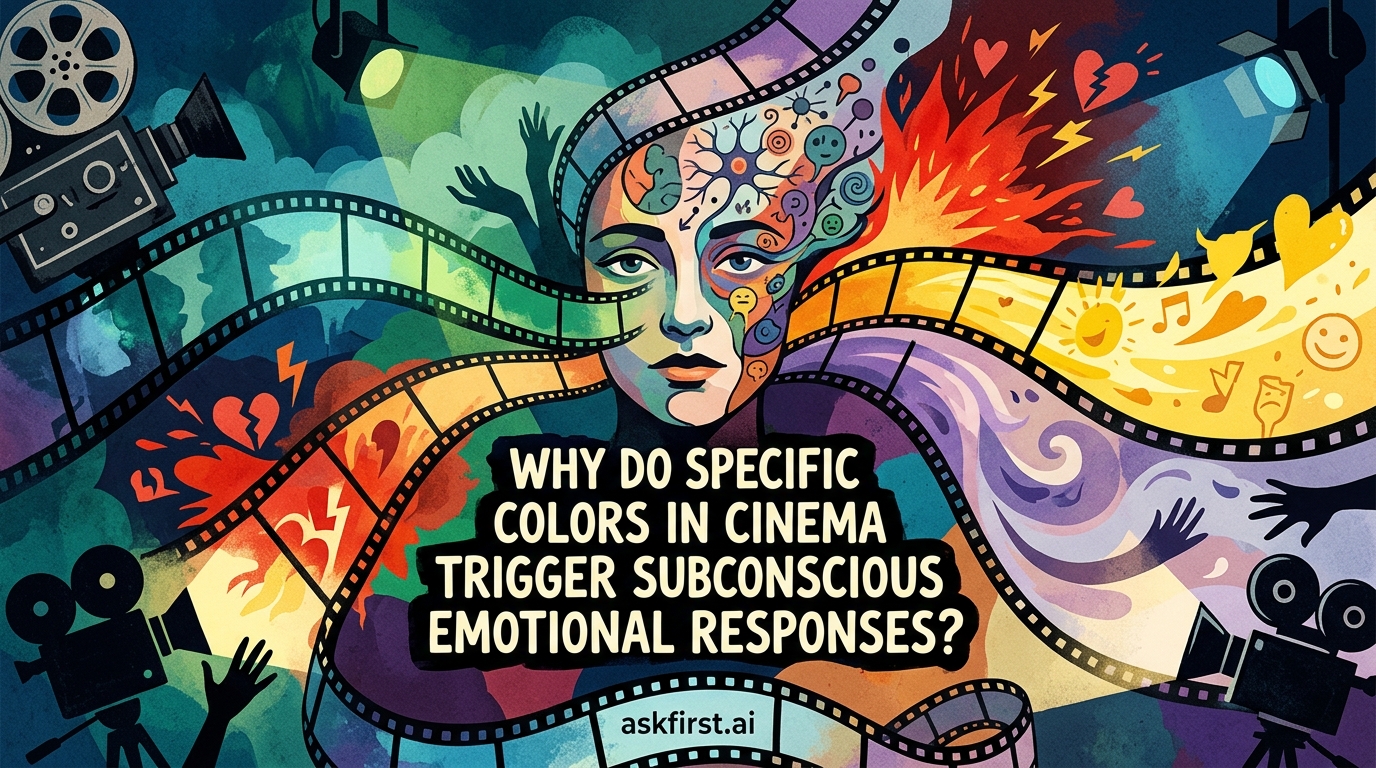
How Movie Colors Secretly Control Your Emotions
The Neuroscience of Cinematic Color Theory
Color in cinema is not merely aesthetic; it is a sophisticated language that interacts directly with the human amygdala, the brain's emotional processing center. Through the deliberate application of color theory, filmmakers manipulate audience perception before a single line of dialogue is spoken. This process relies on evolutionary psychology, cultural associations, and physiological reactions that remain constant regardless of the era.
The Evolutionary Basis of Color Perception
Human brains have evolved to associate specific hues with survival-critical stimuli. Red, for instance, serves as a dual-signifier. In nature, it often denotes danger, fire, or blood, triggering an immediate sympathetic nervous system response—increased heart rate and heightened alertness. Filmmakers leverage this to underscore tension or passion. Conversely, blue hues often mirror the calming properties of water or clear skies. These colors reduce arousal, making them ideal for sequences involving isolation, coldness, or introspective serenity. By tapping into these primal associations, cinema bypasses cognitive appraisal, delivering emotional impact directly to the viewer's subconscious.
The Role of Color Psychology and Cultural Context
While biological roots are foundational, cultural conditioning plays a pivotal role in shaping color response. For example, yellow is frequently utilized in modern cinema to denote sickness or instability, a trend influenced by color-grading palettes in contemporary thrillers. In other contexts, yellow represents joy and vitality. Filmmakers utilize these semiotic associations to establish genre expectations.
- Warm Tones (Oranges and Reds): Often used to create a sense of intimacy, nostalgia, or overwhelming danger. When applied as a global tint, these colors effectively create a subjective, dream-like state or an urgent, frantic reality.
- Cool Tones (Blues and Greens): Frequently used to depict clinical settings, sadness, or detachment. High-contrast cool palettes often signify a world that lacks human warmth, emphasizing technological sterility or social alienation.
Technological Manipulation and Narrative Framing
Modern color grading tools allow for precise control over the viewer's emotional journey. By adjusting saturation, luminance, and hue, cinematographers create 'visual shorthand.' A shift from a warm, saturated aesthetic in an introductory act to a desaturated, cold aesthetic in the climax effectively signals a protagonist's psychological decline without relying on exposition. This technique exploits the brain's reliance on visual consistency; when the expected color palette shifts, the subconscious interprets this as a signal that the internal state of the narrative has fundamentally changed.
Conclusion
Cinema functions as a psychological bridge. By utilizing universal principles of light and hue, directors create an immersive environment where emotions are felt rather than analyzed. Understanding this process reveals that what the eye perceives as 'style' is actually a highly intentional scientific approach to triggering deep-seated human reactions, ensuring that storytelling reaches its audience on a visceral, wordless level.