The Secret Geometry of Success: Leveraging Ancient Architecture for Modern Offices
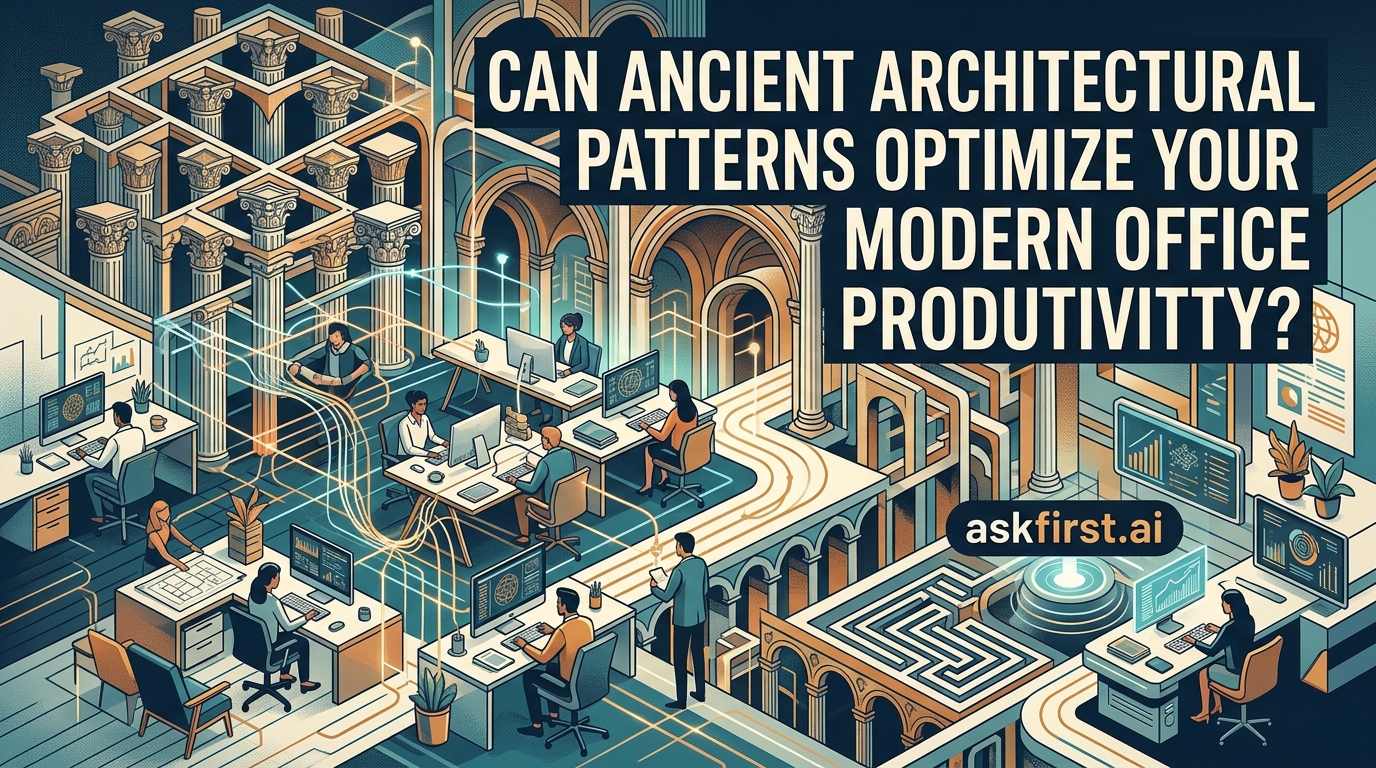
Modern office design often favors sterile minimalism, but history suggests that the secret to peak cognitive performance lies in ancient architectural patterns. By integrating historical principles such as the Golden Ratio, biophilic design, and controlled acoustic environments, architects can create workspaces that intuitively lower stress and sharpen focus. When structures align with human evolutionary psychology, productivity is not merely requested; it becomes a natural byproduct of the environment.
The Fibonacci Sequence and the Golden Ratio
Architecture in Ancient Greece and the Renaissance prioritized the Golden Ratio (phi), a mathematical proportion found repeatedly in nature. Researchers suggest that humans experience aesthetic comfort when viewing structures built on these proportions because they mimic the visual input our brains are hardwired to process efficiently. Implementing these geometric sequences in office layouts—such as furniture placement or room dimensions—can create a sense of harmony that prevents visual fatigue. By reducing environmental visual noise, employees maintain focus for longer durations.
Biophilia: The Ancient Connection to Nature
Long before modern concrete structures, humans thrived in natural landscapes. The architectural movement of biophilia aims to reintroduce natural elements into the built environment. Ancient Roman villas utilized courtyards, natural light, and central water features to regulate temperature and air quality. In a modern context, integrating indoor gardens, fractal patterns that mimic tree branching, and dynamic natural lighting stimulates the autonomic nervous system. This reduces cortisol levels, which is essential for maintaining sustained cognitive effort throughout the workday.
Acoustic Engineering and Sacred Silence
Ancient cathedrals and theaters utilized specific vaulting and geometric shapes to manipulate sound, creating spaces that were either acoustically immersive or conducive to quiet reflection. Modern office productivity often suffers from the "open-office" noise epidemic. Applying historical knowledge of acoustic dampening—using textured surfaces, intentional ceiling geometry, and varied space heights—can create "zones of silence." These zones allow for deep work, mirroring the intentional quietude that ancient libraries and temple archives demanded for intellectual labor.
Implementing Ancient Wisdom Today
To bridge the gap between antiquity and the modern workspace, designers should focus on three primary pillars:
- Proportion and Symmetry: Utilize the Golden Ratio in desk spacing and wall aesthetics to promote cognitive ease.
- Natural Integration: Adopt the atrium models of antiquity to provide employees with constant access to light and greenery.
- Sound Sculpting: Treat office walls and ceilings as active acoustic components rather than static barriers.
By reclaiming these timeless design principles, modern offices transform from simple utilitarian boxes into powerful catalysts for human performance and well-being. These ancient patterns are not nostalgic; they are sophisticated blueprints for the future of work.