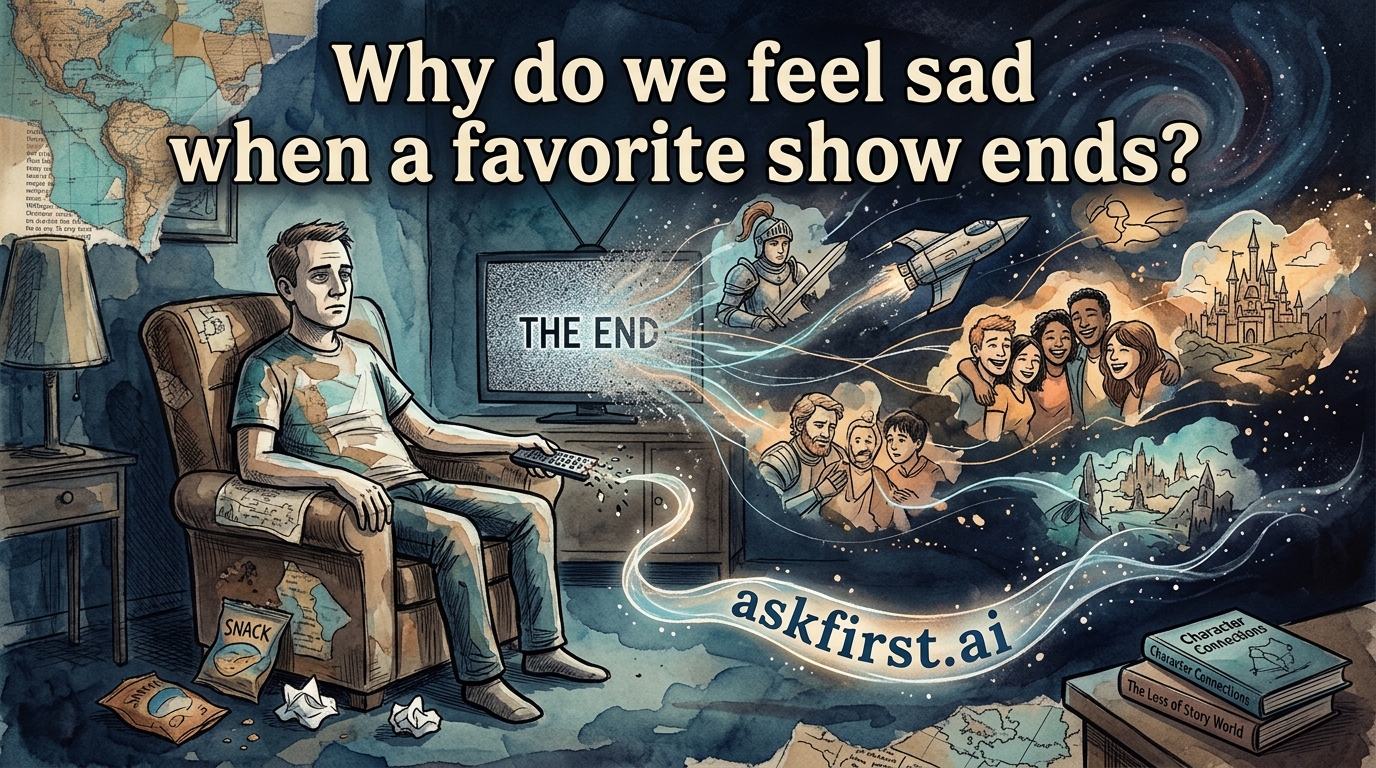
The Psychology of Narrative Closure
When a favorite television series reaches its final episode, many viewers experience a genuine sense of loss often described as 'post-series depression.' This phenomenon is not merely an emotional whim but a complex psychological response rooted in how the human brain processes long-term relationships and narrative immersion. The brain often fails to distinguish between the meaningful connections formed with fictional characters and the bonds established with real-world acquaintances.
Parasocial Interaction Theory
The primary driver of this sadness is Parasocial Interaction (PSI). Coined by researchers Donald Horton and Richard Wohl in 1956, this concept describes the one-sided relationships viewers develop with media figures. Through recurring exposure, the brain begins to treat fictional characters as constant, reliable companions. Because these characters are consistently present in the viewer’s environment—often during vulnerable or reflective moments like late-night relaxation—the psyche begins to perceive them as part of the individual’s social network. When the show ends, the 'social contact' is permanently severed, triggering a grief response akin to a real-life relocation or the loss of a friendship.
The Impact of Narrative Immersion
Beyond social bonding, the human brain is evolutionarily hardwired for storytelling. Engaging with a long-form narrative allows for transportation, a psychological state where an audience becomes fully absorbed into a story world.
- Neural Coupling: Scientific studies, such as those performed at Princeton University, demonstrate that when people listen to compelling narratives, their brain activity syncs with the speaker or the story structure.
- The Reward System: Successful stories activate the brain's reward circuitry, specifically the release of dopamine. A long-running show provides a predictable schedule of dopamine hits, establishing a behavioral loop of anticipation and reward. The conclusion of a show creates an 'anticipatory void,' leading to a sudden drop in these reward chemicals.
The Need for Closure and Identity
Human cognition inherently craves narrative closure. Life is often messy, unpredictable, and devoid of tidy resolutions. Fictional narratives offer the opposite: a structured universe where character arcs reach meaningful conclusions, conflicts are resolved, and themes are solidified.
- Identity Fusion: Frequent viewers often incorporate their favorite characters into their own self-concept. If a viewer identifies strongly with a character’s values or struggles, the end of the show feels like the end of a personal chapter.
- Structural Grief: Psychologists suggest that the sadness is also related to the loss of a 'mental space.' A show often serves as a sanctuary from the stresses of daily life. When the show ceases production, that sanctuary effectively disappears, forcing the individual to readjust their internal coping mechanisms.
Mitigating the Feeling of Loss
Understanding that this response is a testament to the power of human empathy can help navigate the experience. Strategies to cope with the conclusion of a series include:
- Reflective Consumption: Engaging in fan communities or discussions allows for the externalization of feelings, validating the emotional investment.
- Creative Engagement: Many fans turn to fan fiction or analysis to keep the narrative alive in their own minds, effectively transitioning from a passive consumer to an active participant in the story’s legacy.
- Diversification: Introducing new narratives helps bridge the gap, although it is important to acknowledge that the 'search for the next big thing' is often a psychological attempt to replicate the secure attachment experienced with the previous show.
Ultimately, the sadness felt at a series finale is a positive indicator of one’s capacity for emotional connection. It demonstrates that the story was not just entertainment, but a significant psychological anchor. Recognizing that this feeling is a standard, healthy byproduct of high-quality narrative engagement allows fans to appreciate the experience as a form of intellectual and emotional growth rather than a simple mood disruption.