The Phenomenon of Earworms: An Evolutionary and Psychological Perspective
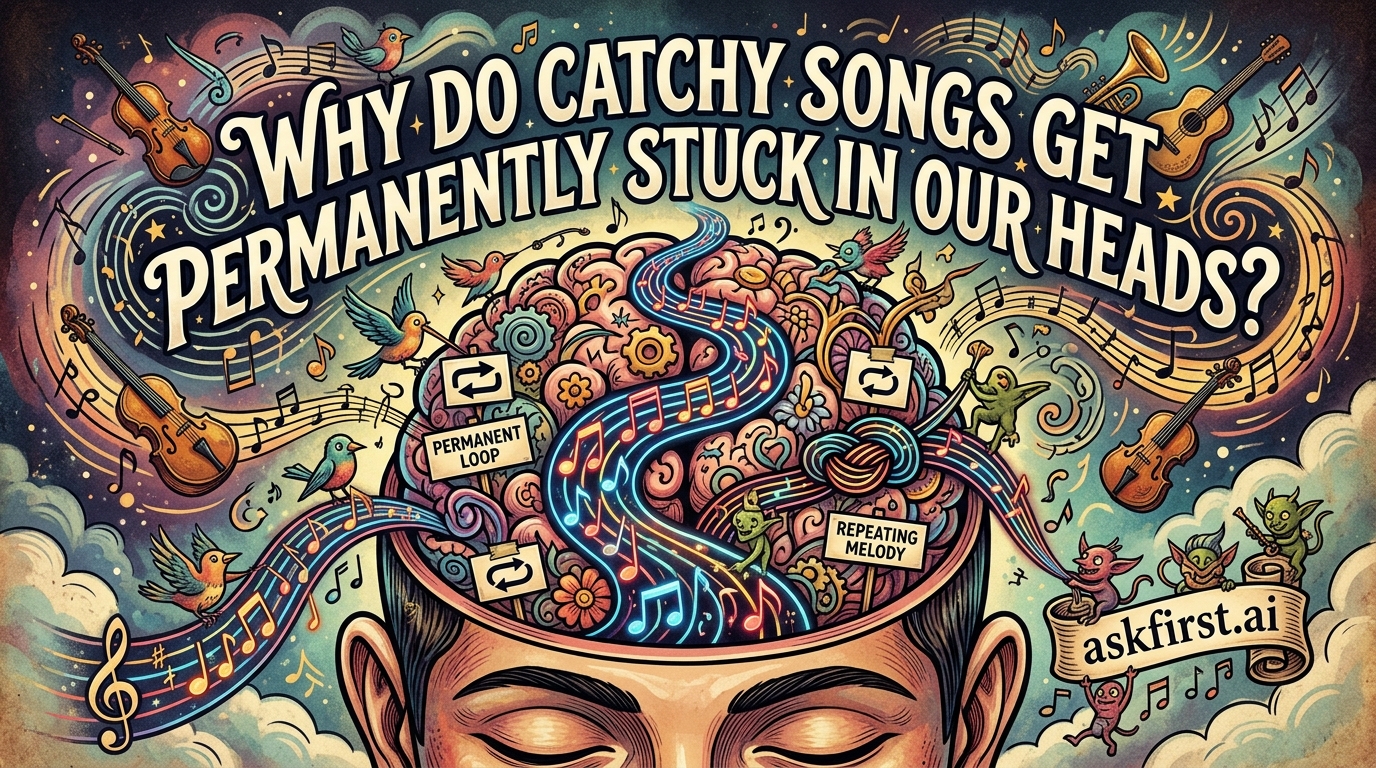
The phenomenon of having a song stuck in one’s head—scientifically referred to as Involuntary Musical Imagery (INMI) or colloquially as an 'earworm'—is a nearly universal human experience. Research suggests that over 90% of the population encounters these musical intrusions at least once a week. Far from being a mere annoyance, the mechanism behind earworms reveals profound insights into how the human brain processes information, stores memory, and seeks pattern recognition. Understanding why specific melodies anchor themselves in our cognitive architecture requires exploring the intersection of neurobiology, musicology, and behavioral psychology.
1. The Power of Pattern Recognition and Simplicity
At the core of the earworm phenomenon is the brain’s relentless drive to identify patterns. The human brain is essentially a prediction engine, constantly attempting to anticipate what comes next in a sensory stream. Songs that tend to become stuck often utilize a structural simplicity that allows the brain to 'solve' the puzzle of the melody quickly. Musicologist Kelly Jakubowski explains that earworms frequently follow a contour reminiscent of popular folk songs: a steady, rising-and-falling melodic arc that is easy to remember but contains just enough interval variation to keep the cognitive loop engaged. This 'Goldilocks' level of complexity—neither too simple to be boring nor too complex to process—triggers a state of cognitive fluency, where the brain finds the melody deeply satisfying to mentally rehearse.
2. The Zeigarnik Effect: Why Unfinished Loops Persist
One of the most compelling psychological theories behind earworms is the Zeigarnik Effect, which posits that the brain remembers uncompleted tasks better than completed ones. When a song fragment is replayed in the mind, the brain perceives it as an open loop. If the listener does not hear the entire song to its conclusion, the brain may enter a repetitive cycle, attempting to 'close' the loop by re-playing the earworm. This is why people often find that singing the entire song from start to finish—or listening to the actual track—can sometimes silence the internal playback. The brain is essentially 'scratching an itch' that it cannot reach, leading to a compulsive repetition of the familiar hook.
3. Emotional Priming and Memory Anchors
Music is uniquely capable of activating the limbic system, particularly the amygdala and the hippocampus, which are central to emotion and long-term memory. Earworms are not random; they are often triggered by contextual associations. A specific word in a conversation, a mood, or a familiar setting can act as a retrieval cue for a song. This is known as Associative Memory Triggering. If a song was present during an emotionally charged event or a period of high focus, the brain creates a strong synaptic link between that stimulus and the music. Consequently, when the brain encounters a similar emotional or environmental context, it reflexively calls upon the music as an anchor, replaying it as a soundtrack for the current situation.
4. Cognitive Under-Load: The Boredom Hypothesis
Earworms are statistically most likely to manifest during periods of low cognitive demand. When a person is engaged in repetitive, automatic tasks—such as washing dishes, driving on a familiar route, or walking—the brain’s 'phonological loop' (a component of working memory) has excess capacity. In this idle state, the brain seeks entertainment. It reaches into the vast database of stored musical memories and pulls out a familiar, low-effort stimulus to keep itself occupied. This is why earworms are less likely to occur during intellectually rigorous work; the brain is too occupied to facilitate a repetitive musical loop.
5. Neurological Replay: The Role of the Auditory Cortex
Neuroimaging studies show that when an individual experiences an earworm, the auditory cortex is active in a manner similar to when a person is actually listening to music. This suggests that the brain is essentially hallucinating the audio. This internal 'playback' mechanism is a testament to the brain's ability to engage in mental simulation. By simulating the auditory experience, the brain reinforces neural pathways associated with the music, effectively practicing the song without external input. This neural plasticity is what allows melodies to become permanently encoded in long-term memory, explaining why a song heard decades ago can suddenly surface in the mind with vivid clarity.
How to Manage Involuntary Musical Imagery
While earworms are generally harmless, their persistence can be distracting. To mitigate the effect, experts suggest:
- Engagement in Cognitive Tasks: Solve a puzzle, read complex text, or perform a task that requires verbal working memory to 'displace' the melody.
- The 'Full Track' Solution: Listen to the song from beginning to end to allow the brain to finish the loop.
- Strategic Distraction: Replace the melody with a different 'cure' song—a tune that is known to be less 'sticky' or serves as a cognitive placeholder.
In conclusion, earworms are not just annoying melodies; they are symptoms of a highly efficient, pattern-seeking organ. They represent the brain's innate capacity for memory, its need for emotional regulation, and its tireless pursuit of cognitive stimulation. By understanding the triggers and mechanisms behind these musical loops, we gain a greater appreciation for the complex interplay between culture, memory, and the human mind.