The Illusion of Static Vision: Debunking the Eye Resolution Myth
Many individuals harbor the long-standing misconception that human eyes function like fixed-resolution hardware, such as a camera sensor that remains constant from birth until death. However, biological reality paints a significantly more complex and dynamic picture. The answer is a definitive no; human visual resolution is not static. It is a highly fluid capability that evolves, matures, and eventually declines due to both anatomical shifts within the ocular structure and neurological adaptation in the brain.
The Developmental Phase: From Blur to Clarity
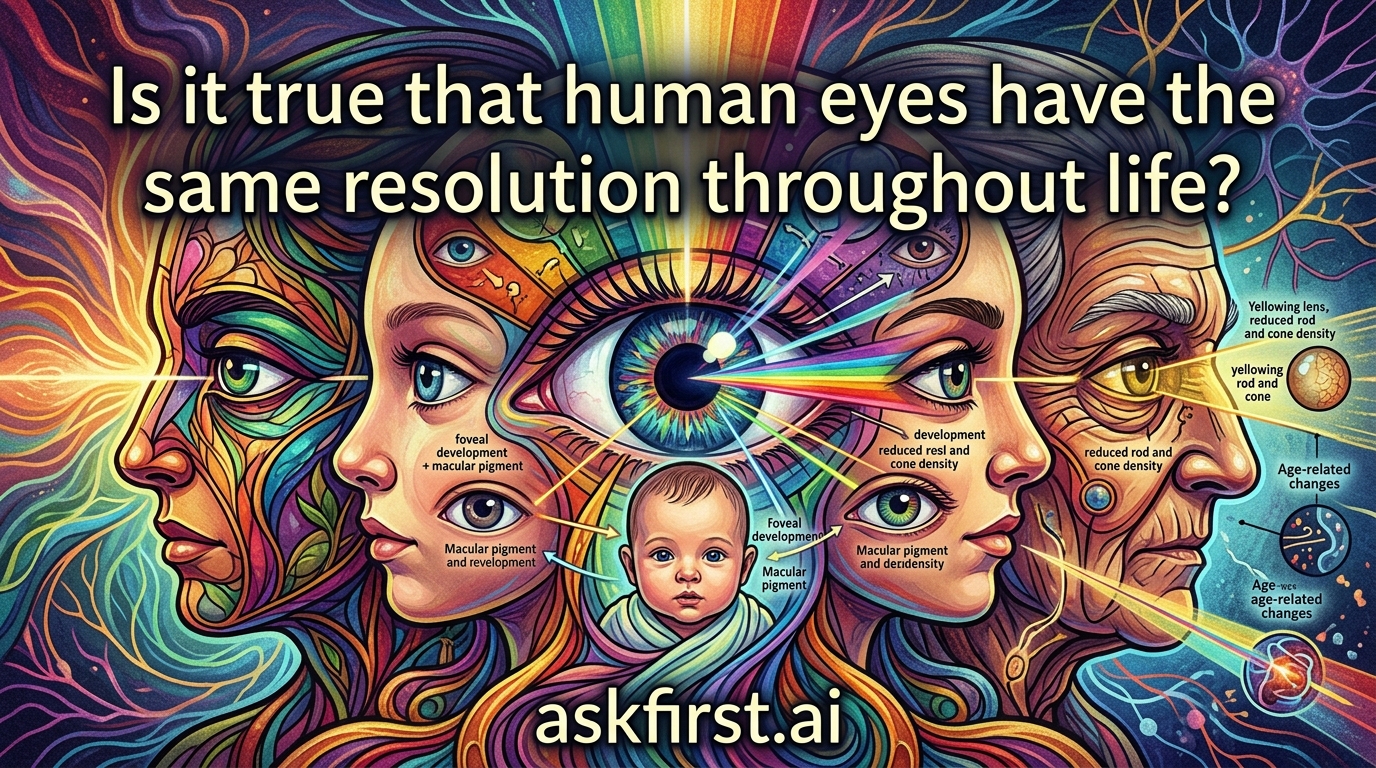
At the moment of birth, the human visual system is remarkably underdeveloped. Newborns possess extremely low visual acuity, often estimated at 20/400 or worse. The biological hardware—the cornea, lens, and retina—is present, but the neural pathways linking the eyes to the primary visual cortex in the brain are still establishing essential connections. During the first few months of life, visual resolution improves exponentially as the fovea, the central portion of the retina responsible for sharpest vision, finishes its development. This process demonstrates that resolution is not just about ocular optics; it is fundamentally linked to neurological maturation.
The Peak Performance Years: Young Adulthood
By early adulthood, most individuals achieve their peak visual resolution. This is characterized by the eye’s ability to resolve fine detail and maintain contrast sensitivity under various lighting conditions. During these years, the crystalline lens is exceptionally flexible, allowing for precise accommodation—the process by which the eye changes focus between near and distant objects. This mechanical flexibility is a cornerstone of effective resolution. A perfectly healthy young eye is often touted as capable of resolving details that challenge the very diffraction limits of the pupil, showcasing nature's masterclass in optical engineering.
The Anatomy of Decline: Why Resolution Fades
As humans advance into middle age and beyond, several physiological transformations inevitably degrade the resolution capacity of the eyes:
- Presbyopia: The most common change, starting typically in the mid-forties, involves the hardening of the crystalline lens. This loss of elasticity directly impacts the ability to focus on near objects, effectively reducing functional resolution for tasks like reading.
- Lens Opacification: Over decades, the lens can begin to yellow or become slightly opaque, a precursor to cataract development. This acts like a dirty camera lens, scattering light and significantly reducing contrast sensitivity, which makes fine details blurrier.
- Retinal Changes: The density of photoreceptor cells, specifically the cones in the macula, can subtly decrease over time. Since these cells are responsible for color vision and acute detail, their decline naturally lowers the resolution potential of the visual system.
- Pupillary Changes: The pupil, which acts as the aperture of the eye, often becomes smaller and less reactive with age. While a smaller aperture can sometimes increase depth of field, it reduces the total amount of light entering the eye, which lowers resolution in dim conditions.
The Neurological Component: The Brain as the Ultimate Processor
It is vital to recognize that resolution is not just about the light hitting the retina. It is about how the brain interprets the data. Even if the optics of the eye remained perfectly youthful, the brain's visual processing pathways undergo changes over time. Neuroplasticity allows the brain to compensate for minor optical degradations through pattern recognition and predictive processing. Yet, this mental 'sharpening' cannot fully counteract the structural changes occurring in the ocular apparatus. Therefore, the total resolution of the visual system—the output of the eye-brain loop—undeniably fluctuates as a result of aging.
Can Resolution Be Preserved?
While the biological clock exerts influence, lifestyle factors play a significant role in maintaining visual clarity. Proper ocular hygiene, protection against excessive ultraviolet exposure, and a diet rich in lutein and zeaxanthin are documented to support retinal health. Furthermore, modern corrective technologies, including refractive surgeries and advanced lens replacements, serve as artificial means to 'reset' or enhance the eye's resolution capabilities when natural processes diminish them.
Conclusion
In summary, the human eye is not a static instrument. It is a biological marvel that undergoes a distinct lifecycle of acquisition, optimization, and gradual modification. Recognizing that visual resolution is a dynamic attribute rather than a fixed standard helps foster a deeper appreciation for the complexity of human biology. Far from being a flaw, this change is a natural consequence of the ocular system's ongoing adaptation to the environment over the span of a human lifetime.