The Cocktail Party Effect and Biological Attunement
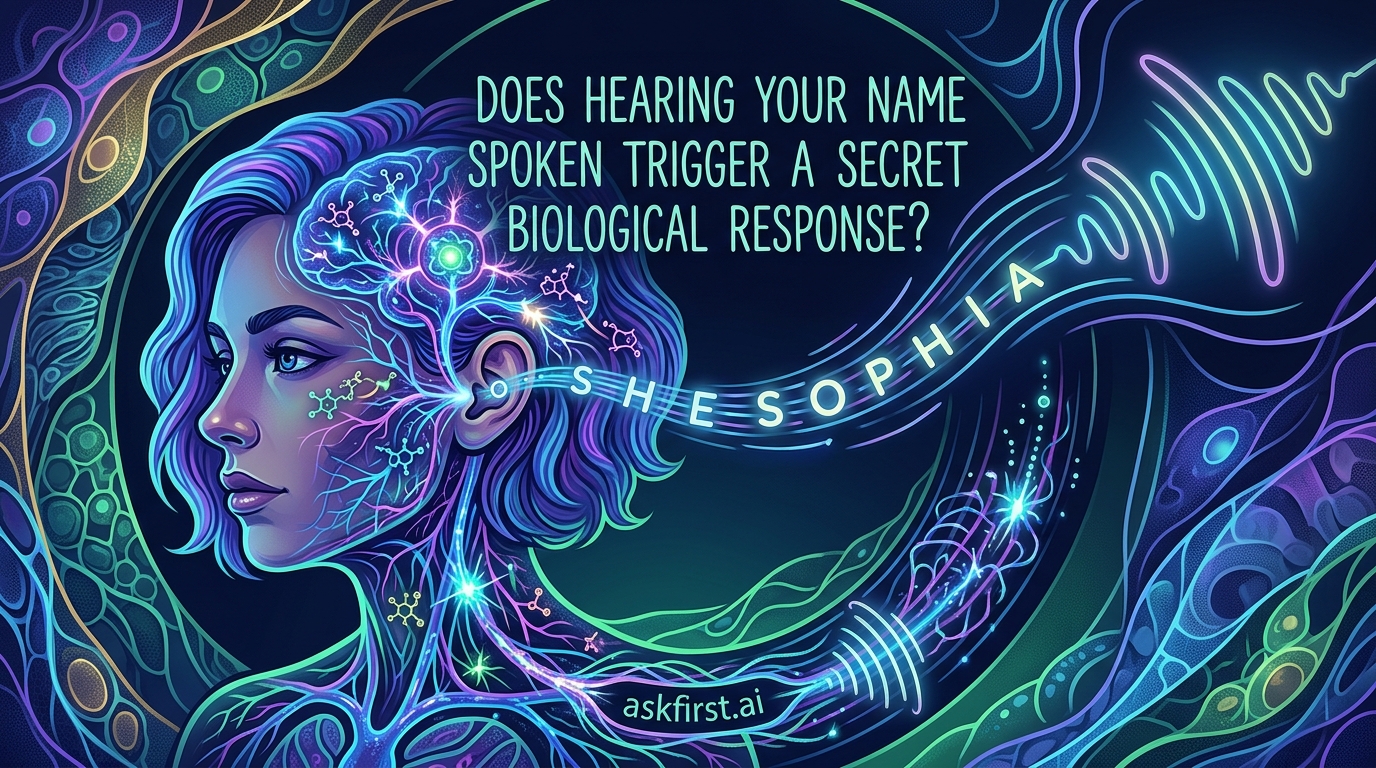
The phenomenon of hearing one's name in a crowded room, often referred to as the 'Cocktail Party Effect,' is a classic topic in cognitive psychology and neuroscience. When a person hears their own name, it triggers a unique neurological signature that differs from the processing of generic environmental sounds. This response is not merely a social reaction; it is a hardwired survival mechanism rooted in evolutionary biology.
The Neurological Gateway: The Brain's Preattentive Processing
Research indicates that the human brain remains in a constant state of preattentive processing. Even when an individual is focused on a task or engaged in a conversation, the auditory cortex is continuously scanning the environment for high-salience stimuli. A name acts as an acoustic 'hook.' Studies using Event-Related Potentials (ERPs) have demonstrated that the P300 wave—a positive electrical deflection in the brain—peaks significantly faster when one's own name is processed compared to other auditory stimuli. This suggests that the name acts as an automatic interrupt signal for the central nervous system.
Why the Brain Prioritizes Self-Referential Data
Evolutionary Vigilance: In ancestral environments, the ability to rapidly detect one’s own identity or status in a call was vital for social hierarchy and physical safety. Responding quickly to a social signal could mean the difference between inclusion in a resource-sharing group or exclusion.
Neural Pathway Efficiency: Because names are heard thousands of times throughout a lifetime, the neural pathways associated with them are highly myelinated. This biological adaptation allows for ultra-fast signal conduction. The brain essentially creates a 'high-speed lane' for auditory patterns corresponding to one's name.
Self-Referential Processing Centers: Neuroimaging studies identify the medial prefrontal cortex (mPFC) as the hub for self-referential thought. When a name is uttered, the mPFC is instantly activated, integrating the auditory input with one’s self-concept, which creates an involuntary surge of alertness.
The Physiological Response
When the brain flags a name as 'self,' it triggers a cascade of physiological changes beyond just conscious awareness. This includes:
- Skin Conductance Response (SCR): Micro-fluctuations in skin conductivity occur due to momentary sweat gland activation, a classic sign of sympathetic nervous system arousal.
- Heart Rate Variability (HRV): A temporary deceleration or acceleration of the heart rate occurs as the autonomic nervous system prepares the body to 'orient' toward the source of the sound.
- Pupillary Dilation: The pupils may slightly dilate in response to the increased cognitive load and sudden arousal, an indicator that the brain has diverted processing power toward the incoming auditory signal.
Debunking Myths: Is It Psychic or Scientific?
Many pop-culture sources attribute this response to 'vibrational frequencies' or psychic sensitivity. However, mainstream neuroscience firmly places this as an attentional bottleneck. It is a byproduct of selective attention rather than a metaphysical trait. The brain is effectively filtering out millions of bytes of data per second; the name survives this filter because of its long-term associative memory weight.
Clinical Implications and Future Research
This robust response is so predictable that it is used in clinical diagnostics to assess levels of consciousness in patients with severe brain injuries. If a patient shows an ERP response to their own name when they fail to respond to other stimuli, it indicates preserved cognitive function in specific subcortical pathways.
Furthermore, the study of 'Self-Relevant Stimuli' continues to grow in the field of Artificial Intelligence. By understanding the biological trigger that names create, engineers are better able to design human-computer interfaces that mimic natural interaction, thereby increasing the user's perception of responsiveness.
Conclusion: A Constant Sentinel
In essence, hearing your name is a powerful biological interrupt. It proves that despite the digital noise and complexity of the modern world, the brain remains a vigilant, self-referential sentinel. This mechanism ensures that no matter how distracted the conscious mind becomes, the biological core remains anchored in the individual's social existence.