The Harmony of Personality: Decoding the Sonic Self
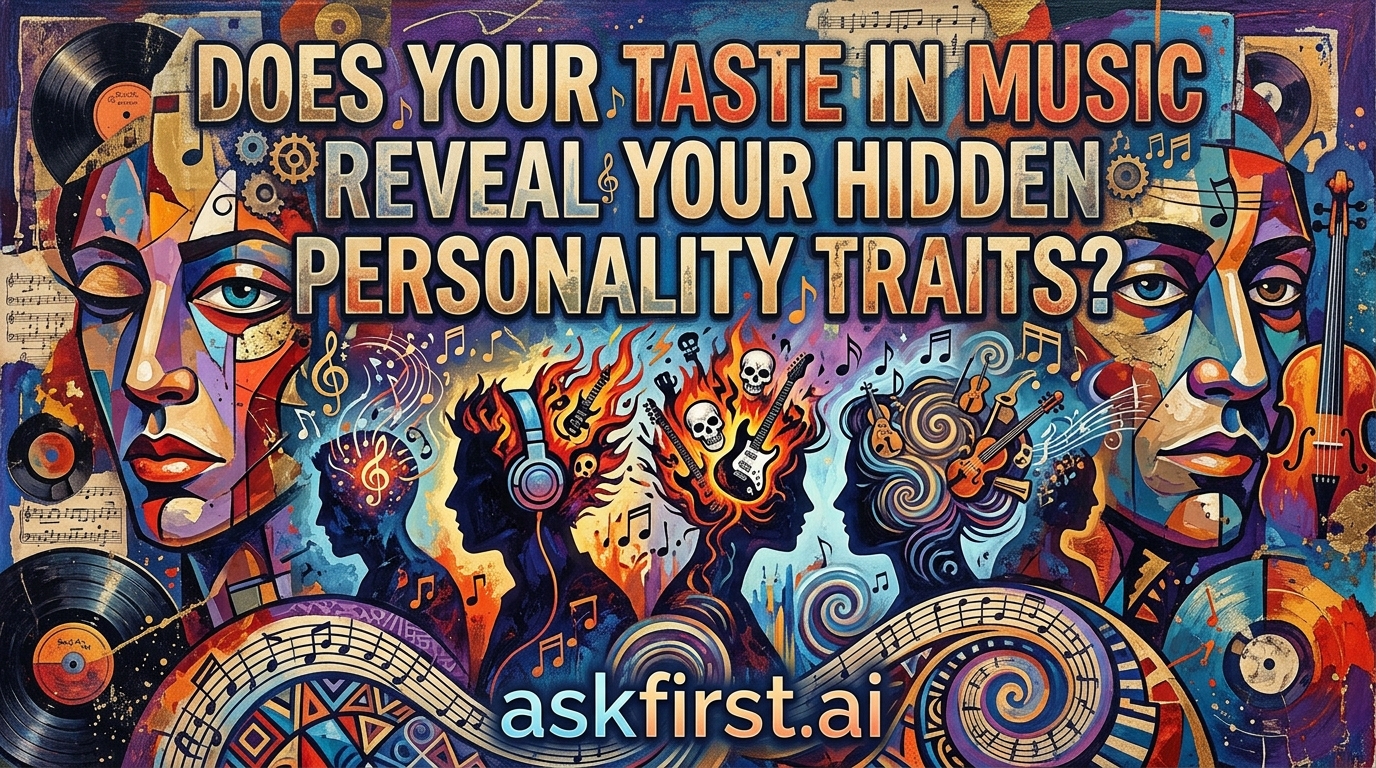
For decades, psychological research has investigated the profound connection between auditory preferences and individual human temperament. The assertion that 'you are what you listen to' is not merely a colloquial idiom; it is a hypothesis supported by empirical data from fields as diverse as personality psychology and neuroscience. The intersection of musical genre and personality trait expression reveals that musical choices often act as a psychological mirror, reflecting deep-seated cognitive and emotional architectures.
The Five-Factor Model and Auditory Preference
Psychologists frequently utilize the Five-Factor Model, also known as the 'Big Five,' to categorize human personality. These dimensions include Openness to Experience, Conscientiousness, Extraversion, Agreeableness, and Neuroticism. Research published in journals like the Journal of Personality and Social Psychology has demonstrated distinct correlations between these traits and musical appetites:
- Openness to Experience: High scorers in this domain are statistically prone to prefer complex and unconventional musical styles. This encompasses genres such as jazz, classical, blues, and world music. These individuals tend to exhibit intellectual curiosity and a preference for non-conforming, multi-layered aesthetic experiences.
- Extraversion: Extroverts often gravitate toward music characterized by strong rhythmic components, high energy, and social resonance. Genres like electronic dance music (EDM), pop, and hip-hop are frequently favored. These genres serve as social lubricants, providing a baseline for high-arousal environments.
- Agreeableness: Individuals who score highly in agreeableness—often characterized by empathy and cooperative nature—frequently prefer 'mellow' and upbeat music. This includes soft pop, soul, and rhythm and blues. These tracks often mirror a social landscape that prioritizes emotional connection over dissonance.
The Role of Complexity and Arousal
At the core of the psychological investigation into music is the 'Arousal-Mood' hypothesis. This theory posits that individuals select music to regulate their emotional state, moving toward either high-arousal or low-arousal stimuli based on their existing personality baseline.
- Complex Music: Fans of avant-garde or progressive rock often possess a higher capacity for tolerance regarding ambiguity. Their personality traits suggest a brain that seeks stimulation through intellectual challenge rather than mere rhythmic repetition.
- Simple Music: Conversely, a preference for straightforward, repetitive pop structures does not denote a lack of intelligence; rather, it often aligns with personality types that find comfort in consistency, predictability, and emotional clarity. These listeners value the immediate gratification and relatable narratives provided by the music.
Busting the Myth of 'Musical Intelligence'
One pervasive myth is that specific genres represent higher 'intellectual' capacity. Psychology largely debunks this notion. Music preference is a matter of personality-trait matching rather than a hierarchy of competence. A person who prefers heavy metal may exhibit high levels of curiosity and risk-taking, whereas a classical music enthusiast might demonstrate high conscientiousness and emotional regulation. The style of the music is simply a language through which different personality traits communicate their internal reality.
The Neuroscience of Musical Resonance
When listeners engage with music, the brain releases dopamine in the striatum, the same system involved in reward and addiction. Personality traits influence how this reward system responds to various frequencies and structural complexities. Those with high neuroticism, for instance, might rely on sad or melancholic music as a mechanism for emotional regulation, a practice known as 'rumination-reduction.' By engaging with melancholic sounds, the listener experiences a cathartic processing of internal distress, which is a highly sophisticated form of psychological self-care.
Practical Applications: The Sonic Signature
Understanding these links allows for a deeper appreciation of human diversity. In environments such as clinical psychology, analyzing a patient's 'soundscape' can offer therapists insights into their emotional regulation strategies. Furthermore, in the modern digital age, the algorithmic curation of music serves as an inadvertent personality profile. When digital platforms recommend a playlist, they are effectively confirming the listener's personality alignment, creating a feedback loop that reinforces the individual's existing psychological framework.
Conclusion
Ultimately, musical taste acts as a subtle but persistent indicator of individual identity. While music does not determine personality, it provides a unique window into the cognitive, emotional, and social preferences that define the human condition. Whether a listener favors the chaotic complexity of jazz or the rhythmic reliability of pop, their choices constitute a sonic footprint of their innermost self. Recognizing these patterns empowers individuals to better understand their own emotional needs, fostering a deeper sense of self-awareness that bridges the gap between sound and psyche.