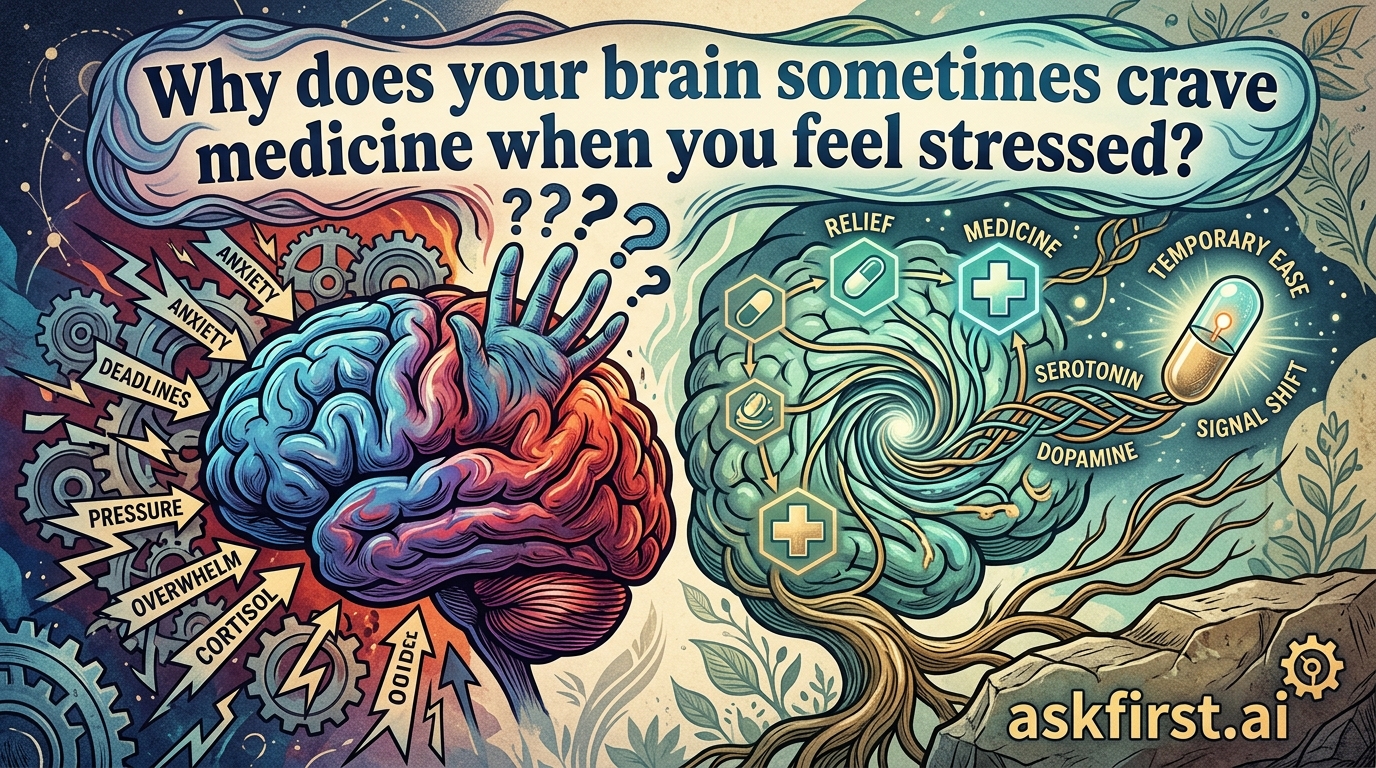
The Neurobiology of Stress and Compensation
When the human brain encounters perceived stressors, the hypothalamic-pituitary-adrenal (HPA) axis initiates a complex cascade of chemical signals designed for survival. However, in modern contexts, this evolutionary mechanism often misfires, leading to a phenomenon where the brain instinctively searches for external 'medicine' or soothing agents. This is not merely a sign of weakness but a complex interplay of neurochemistry, homeostatic drives, and cognitive conditioning.
The Dopaminergic Reward System and Stress Relief
At the core of the brain’s craving mechanism lies the mesolimbic pathway, specifically the release of dopamine. When an individual experiences stress, the brain enters a state of 'allostasis'—trying to achieve stability through change. The brain recognizes that its internal equilibrium is threatened by cortisol and adrenaline. Consequently, it prompts a search for substances or activities that provide rapid feedback, often misinterpreted by the subconscious as 'medicine' or relief. This mechanism is an attempt to bypass the slow process of physiological recovery by triggering an immediate release of neurotransmitters that counteract the unpleasant sensations of tension.
Psychological Conditioning and Placebo Dynamics
Human cognition is highly susceptible to associations. If a person has historically found relief—whether through pharmaceutical aids, supplements, or even comfort items—from stressful situations, the brain creates a strong neural pathway linking 'stress' to 'medication.' This is known as Pavlovian conditioning. The brain begins to anticipate the soothing effect before the agent is even introduced, effectively hijacking the prefrontal cortex’s rational decision-making processes. Research indicates that the mere ritual of taking a substance can trigger a conditioned response, suggesting that the brain views the 'medicine' as a necessary tool to regulate its internal emotional environment.
The Role of Executive Function Impairment
Chronic stress significantly impacts the prefrontal cortex, the area responsible for impulse control and long-term planning. When this region is compromised by high levels of circulating cortisol, the primitive brain—specifically the amygdala—takes control. This shift makes it increasingly difficult to engage in long-term coping mechanisms like meditation, exercise, or therapy. Instead, the brain defaults to 'survival mode,' seeking immediate, tangible interventions. Because modern society often labels medication as a quick-fix solution, the stressed brain prioritizes this option as a shortcut to return to homeostasis.
Homeostasis and the Search for Equilibrium
Biological systems are inherently wired to defend their internal state. When stress pushes the system out of balance, the brain creates a 'homeostatic hunger.' Just as a body deficient in salt craves electrolytes, a brain suffering from emotional turbulence craves anything it perceives will dampen the signal. This is why the brain might 'crave' a painkiller, a sedative, or a supplement; it is literally trying to perform biological self-medication to silence the alarm bells triggered by the sympathetic nervous system.
Strategies for Reconditioning the Brain
Understanding that this craving is a biological default rather than a moral failure allows for the development of healthier neuroplastic pathways:
- Mindfulness Integration: By actively engaging the prefrontal cortex through focused breathing, individuals can dampen the amygdala's demand for external intervention.
- Cognitive Reappraisal: Consciously labeling stress as 'arousal' rather than 'threat' reduces the perceived need for a chemical buffer.
- Environmental Cues: Changing the physical space or activity during a stress response can break the Pavlovian loop that triggers the craving for medicine.
Conclusion
The brain’s craving for medicine during stress is a sophisticated, albeit sometimes counter-productive, survival mechanism. It is a testament to the brain's dedication to maintaining balance. By recognizing that these urges are biological 'shortcuts' developed through conditioning and systemic fatigue, individuals can begin to replace reactive habits with proactive, sustainable strategies for emotional regulation. The goal of mental health is not to eliminate stress entirely, but to provide the brain with better tools than those it reflexively reaches for during moments of crisis.