The Anatomy of the Inner Voice
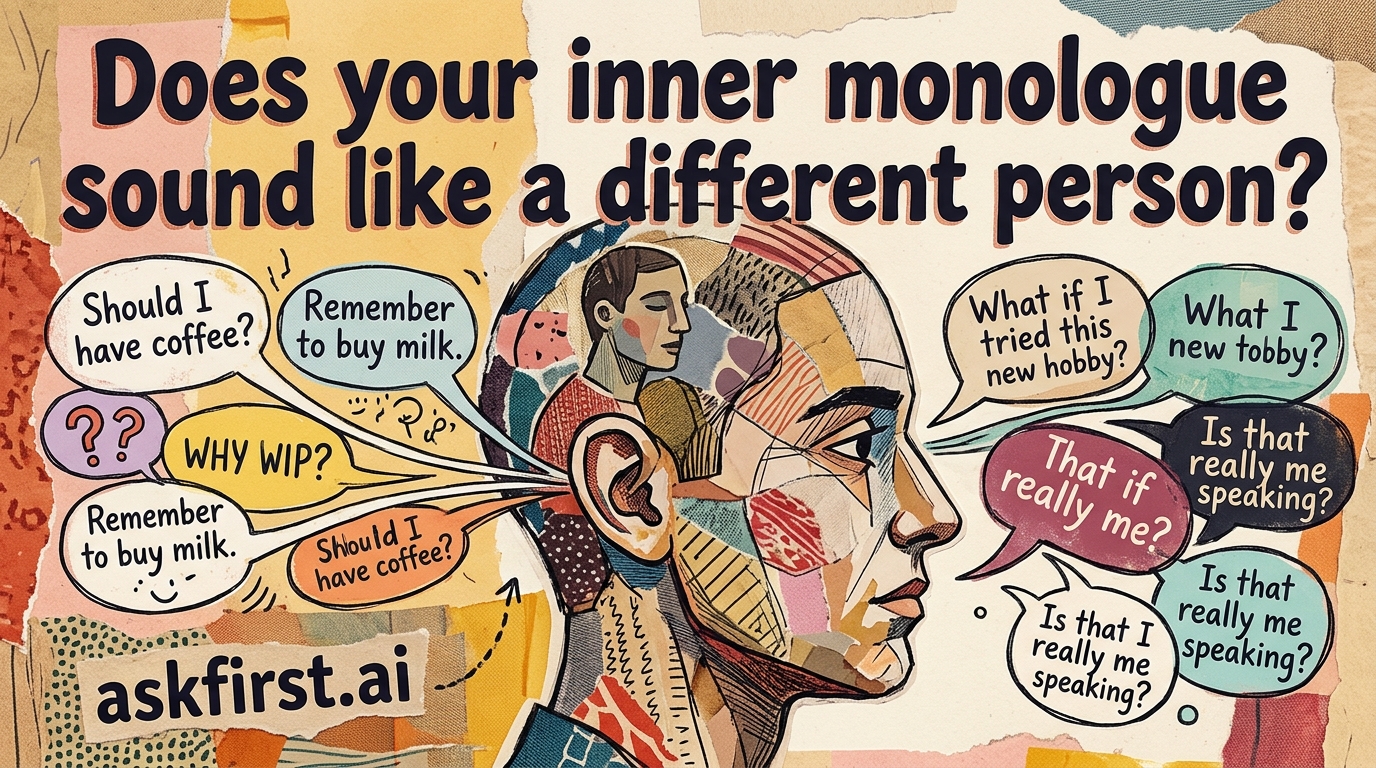
The internal monologue, often referred to as 'endophasia,' acts as a silent narrator within the human mind. Many individuals report that this voice does not merely mimic their own speaking style, but instead manifests as a distinct entity, complete with its own cadence, tone, and vocabulary. This phenomenon triggers profound curiosity regarding the nature of consciousness and identity. Scientists have debated whether this internal 'other' is a separate personality component or simply a cognitive shortcut for processing complex information through linguistic framing. Research indicates that the brain utilizes the same motor pathways for internal speech as it does for audible communication, which explains why the internal narrator feels so vivid and externalized.
The Psychological Spectrum of Internal Narrators
Not everyone experiences an inner voice in the same way. Some people possess an 'anendophasic' mind, characterized by a lack of continuous verbal thought, preferring instead to think in imagery, emotions, or abstract patterns. For those who do experience an inner dialogue, the voice often functions as a consultant. This voice provides guidance, critiques choices, and rehearses social interactions. When it sounds like a different person—perhaps an authoritative figure from childhood, a mentor, or a synthesized archetype—it is often because the brain is utilizing a heuristic framework to categorize different types of thought. By projecting thoughts onto a 'different' internal persona, the mind can compartmentalize objective logic versus subjective desire.
Why the Voice Feels 'Different'
- Cognitive Distancing: When the inner voice sounds distinct, it allows for cognitive distancing. By creating a 'second person' perspective, individuals can evaluate their own ideas more critically. This is a common technique in decision-making psychology, often called 'self-distancing.'
- The Internal Echo Effect: Memories are stored with sensory context. If a significant person in a life once provided repetitive, formative feedback, the brain may internalize that specific linguistic pattern, resulting in an inner monologue that mirrors the pitch or inflection of that individual.
- Social Conditioning: Since language is acquired socially, the inner voice is naturally an echo of the external world. People rarely invent entirely new dialects; they adopt and adapt the patterns they hear, leading to a synthesized internal sound.
Scientific Perspectives and Neurobiology
Neuroscientific studies, such as those conducted using fMRI scans, reveal that the Broca’s area (associated with speech production) becomes active during bouts of intense inner monologue. Interestingly, when the inner monologue takes on a different persona, the neural patterns often resemble the activation seen when an individual mimics another person out loud. This suggests that the mind is highly capable of simulation. The brain treats these internal simulations as 'as-if' models. By playing the role of a different 'actor' within the mind, the brain can simulate how a third party might react to a situation, effectively training the individual for social success.
Developmental Origins and Identity
The development of the inner voice is closely tied to early childhood development. According to developmental psychologist Lev Vygotsky, language serves as the primary tool for cognitive development. Children start by speaking their thoughts aloud to regulate their actions. As they age, this external speech is 'internalized.' If a child grows up hearing distinct parental or societal voices, those cadences become the raw material for their internal narrator. Consequently, the internal monologue is not always an expression of the 'Self' in a vacuum; it is a collaborative work of the internal and the external.
Managing the Internal Dialogue
Understanding the nature of the inner voice is crucial for emotional regulation. While many people enjoy the comfort of a reliable 'second voice,' others find it overwhelming. Techniques such as mindfulness-based cognitive therapy teach individuals to recognize that these internal narrators—regardless of whether they sound like the self or someone else—are simply patterns of thought. By viewing the inner monologue as a stream of data rather than an immutable truth, one gains agency over their own mental environment.
Is It Useful?
Yes, absolutely. The ability to simulate a different voice can be highly beneficial for:
- Enhanced Problem Solving: By 'consulting' an inner persona, one can approach a problem from multiple angles.
- Stress Management: Adopting a calm, composed 'other' voice during crisis situations can regulate heart rate and decision-making accuracy.
- Learning New Languages: Students who practice thinking in a persona native to the language they are learning often show higher proficiency than those who do not.
Final Synthesis
Ultimately, the inner monologue is a testament to the plasticity and versatility of the human mind. Whether it sounds like a peer, a parent, or an entirely synthesized stranger, it serves as a powerful instrument for internal reflection. It is not necessarily a sign of a disjointed personality, but rather an advanced evolutionary tool that allows for perspective-taking, risk assessment, and social preparation. Embracing the diversity of one's internal voices can lead to a deeper understanding of the Self and a more agile approach to navigating the complexities of human existence.