The Harmony of the Mind: Music and Personality
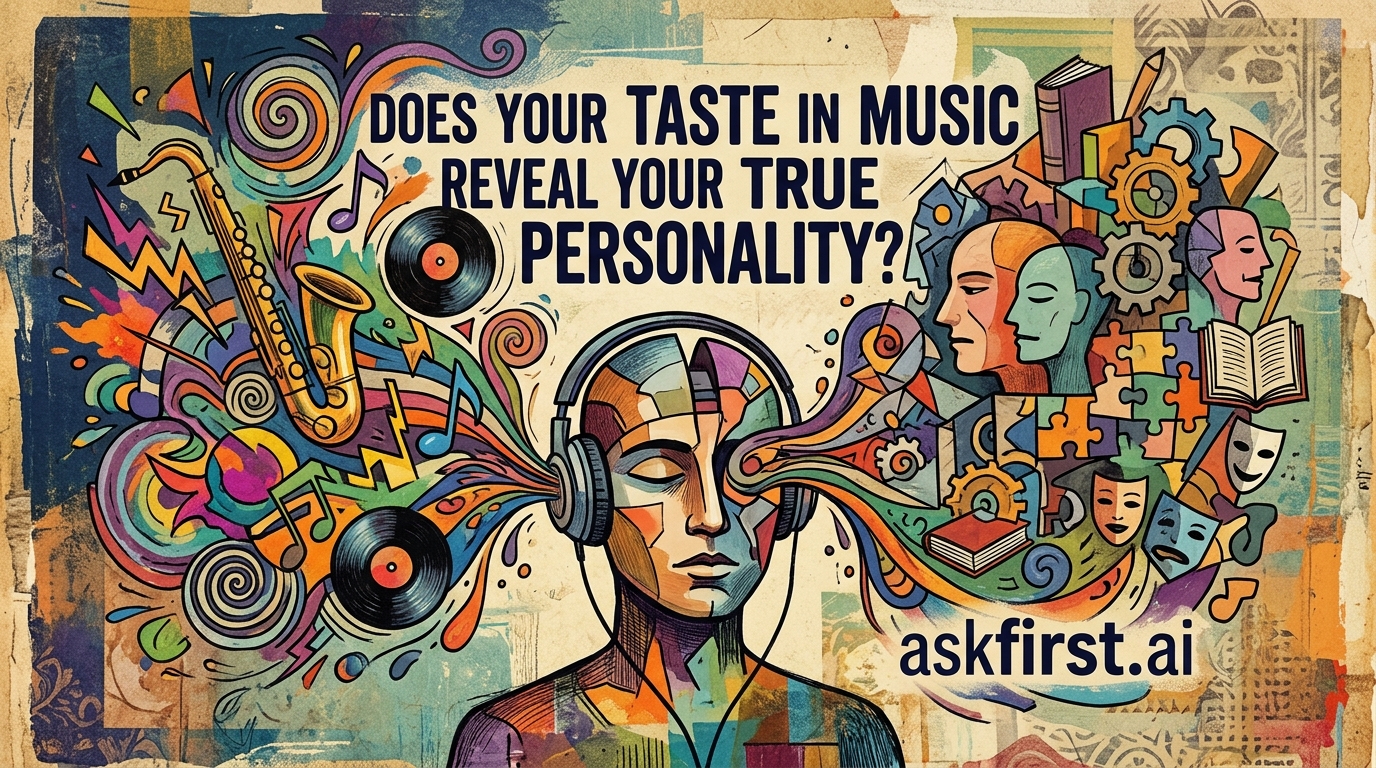
For decades, researchers in the field of psychology have probed the relationship between auditory preferences and individual traits. The notion that musical taste acts as a gateway to the subconscious is not merely folk wisdom; it is a subject of rigorous empirical investigation. Does the rhythmic pulse of a hip-hop track or the intricate complexity of a classical symphony mirror the structural integrity of a personality? Evidence suggests that music serves as a unique diagnostic tool for mapping the topography of human character.
The OCEAN Model of Personality
To understand this connection, experts frequently utilize the Big Five personality traits, also known as the OCEAN model: Openness to Experience, Conscientiousness, Extraversion, Agreeableness, and Neuroticism. Each of these pillars correlates with specific sonic profiles:
- Openness to Experience: Individuals who score high in openness often gravitate toward complex, experimental, or intellectual music. This includes genres like jazz, classical, folk, and progressive rock. These listeners prioritize aesthetic sophistication and cognitive stimulation over traditional, formulaic structures.
- Extraversion: Studies indicate that extraverts tend to prefer music with strong, rhythmic qualities and high energy. The upbeat, social nature of dance, pop, and electronic music aligns with the extraverted preference for stimulation and high-arousal environments.
- Agreeableness: Those who display high levels of agreeableness—characterized by empathy and kindness—often favor soft, gentle, or acoustic sounds. The preference here leans toward upbeat but mellow tracks that emphasize positive emotional states and social cohesion.
- Conscientiousness: This trait, associated with organization and discipline, often links to a preference for structured, familiar, or traditional music. These individuals may find comfort in music with a clear narrative or predictable harmonic patterns, reflecting a preference for order.
- Neuroticism: Sometimes linked to the use of music as an emotional regulator, individuals high in neuroticism may listen to more intense, emotive, or melancholy music. Music functions here as a coping mechanism, a way to process, vent, or validate complex internal feelings.
The Role of Musical Sophistication
Beyond basic personality traits, musical sophistication—the degree to which an individual understands and engages with the technical elements of music—plays a pivotal role. Highly sophisticated listeners perceive musical structure, timbre, and technical proficiency, which shifts the focus from purely emotional resonance to cognitive appreciation. Consequently, these individuals may bridge multiple genres, demonstrating that personality traits do not trap a person into a single 'musical box,' but rather influence the lens through which they interpret auditory information.
The Psychology of Social Signaling
Music is rarely an isolated experience; it acts as a badge of identity. A core pillar of the social identity theory is that individuals use their cultural consumption to define themselves to others. By choosing to listen to specific genres, individuals signal their social values, lifestyle, and intellectual allegiances. For instance, the 'rebellious' teenager choosing heavy metal or the 'sophisticated' intellectual choosing avant-garde minimalism are utilizing music to communicate who they are to their peers. This signaling function explains why music taste is often a major factor in initial interpersonal compatibility.
Myths and Realities: The 'Musical Archetype' Fallacy
It is essential to clarify that musical taste does not provide a flawless portrait of a human being. It acts more like a statistical indicator rather than a predictive absolute. People are multidimensional, and cultural exposure, social upbringing, and fleeting environmental circumstances constantly influence what someone enjoys listening to at any given moment. Relying solely on a playlist to judge someone would be as scientifically inaccurate as relying on a zodiac sign. However, the consistent patterns identified across large-scale data sets reveal that these preferences are far from random; they are deeply woven into the fabric of individual cognition and emotional processing.
Conclusion
Ultimately, the science confirms that the connection is profound. Music is not just entertainment; it is an externalization of internal cognitive and emotional rhythms. While one should avoid reductive stereotyping, understanding that musical preference correlates with core personality traits offers a fascinating window into how the human mind operates. By studying these auditory patterns, one gains deeper insight not only into the 'who' of other people but also into the complex, beautiful, and vibrant nature of one's own internal identity.